Space Factories? The Future of Chips is Blasting Off!

Space Factories? The Future of Chips is Blasting Off!
Forget Earth's cleanrooms! A startup is teaming up with SpaceX to build semiconductor factories in orbit, leveraging the vacuum of space for ultra-clean chip production. The first 'fabships' are already flying!
Space Manufacturing: The Next Frontier for Semiconductor Production
Imagine a world where the cleanest, most advanced semiconductors aren't made in sterile, pressurized factories on Earth, but in the ultimate vacuum of space. This isn't science fiction anymore, folks. We're on the cusp of a revolutionary shift, with companies literally launching chip production into orbit.
Traditionally, manufacturing advanced semiconductors on Earth is an insane infrastructure challenge. Think massive clean rooms, constant battle against microscopic dust and contaminants, all to ensure a flawless chip. But what if there was a better way, where the physics naturally worked in your favor?
Why Space? The Ultimate Clean Room
Enter Besxar, a startup founded by former OpenAI staffer Ashley Pilipiszyn.
Their mission is brilliant in its simplicity: take advantage of the natural vacuum of space to create key precursors for advanced semiconductors. 'We're at a time where it's actually more cost-effective to go where the physics already works,' Pilipiszyn explained.
'Don't do it on Earth where you're fighting physics.' This approach could eliminate many of the terrestrial headaches and costs associated with maintaining ultra-clean environments.
Besxar isn't just dreaming big; they're actively doing it. They've raised almost $14 million, including a significant $9 million seed round led by Dauntless Ventures and Overture VC. Even more incredibly, they've convinced Elon Musk's SpaceX to let them prototype an orbital semiconductor factory across a dozen flights with the Falcon 9 booster.
That's right, the same Falcon 9 that made 163 round trips last year and over 100 this year!
From Earth to Orbit: The 'Fabship' Pioneer
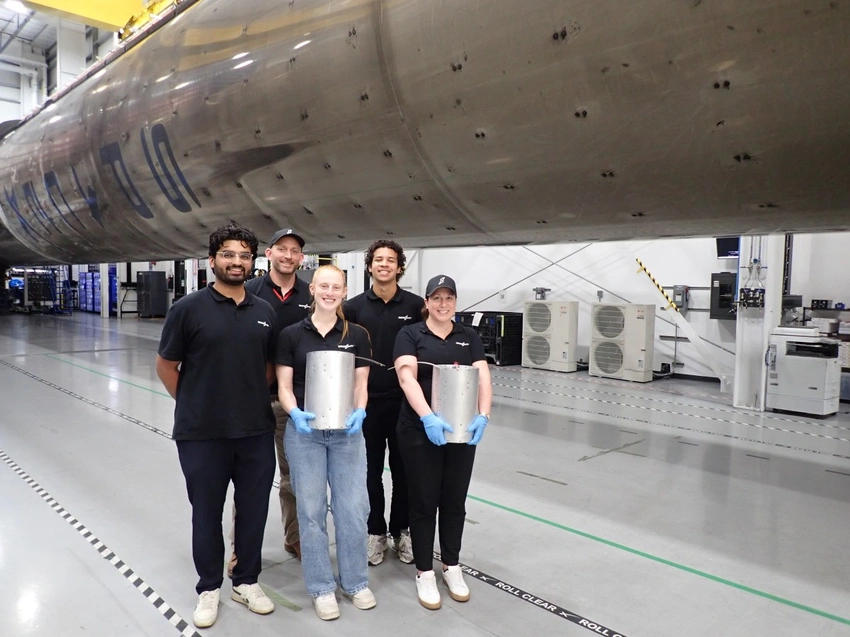
The journey has already begun. Besxar's first two 'fabships', small canisters designed to carry and test semiconductor materials, launched on a Starlink mission in July. These initial flights aimed to prove crucial points: that the canisters could survive launch, protect wafer samples from contamination, and expose them successfully to the vacuum of space.
And guess what?
They succeeded!
Despite a minor hiccup with a flight data system malfunction in one canister, the core objectives were met. The results were astounding:
The flown samples were the cleanest and had the least amount of particulate matter compared to… nonflown samples,
a statement that speaks volumes about the potential of this technology.
What's Next for Orbital Manufacturing?
It's about rethinking the entire manufacturing paradigm. If Besxar can scale this, we could see a future where high-value, ultra-sensitive components are routinely produced off-world. This could revolutionize industries from AI to quantum computing, where even the slightest imperfection can derail performance.
The idea of an orbital semiconductor factory is no longer a distant dream, but a rapidly approaching reality, fueled by innovation and the relentless pursuit of better physics.
