No Wiring vs Traditional BMS: A Smarter Way to Automate Hotels

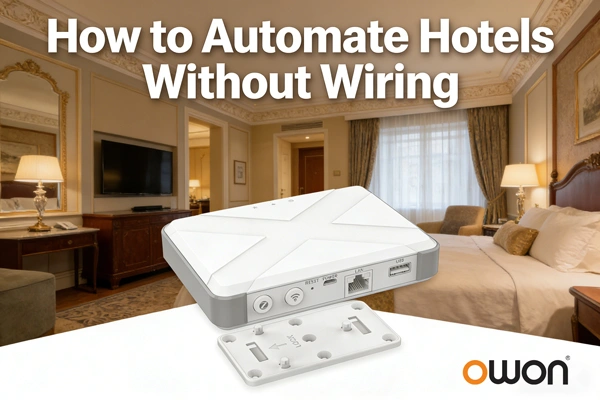
No Wiring vs Traditional BMS: A Smarter Way to Automate Hotels
Automate hotels without wiring using wireless IoT systems. Learn how Zigbee devices, gateways, and APIs enable fast, cost-effective hotel upgrades.
Introduction: Can Hotels Be Automated Without Rewiring?
For many hotel owners and operators, upgrading to a smart automation system sounds appealing—until they consider the cost and disruption of rewiring.
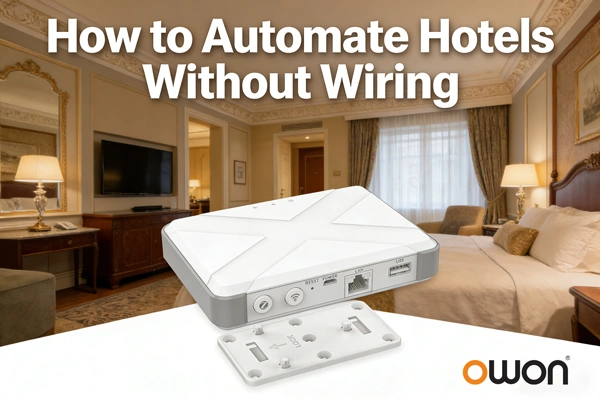
This is especially true in Europe, where a large number of hotels and serviced apartments are located in existing buildings. Traditional automation systems often require:
- Extensive cabling work
- Long installation timelines
- Temporary closure of rooms or entire floors
So the key question becomes:
Is it possible to automate a hotel without rewiring?
The answer is yes—by using a wireless hotel automation system designed specifically for retrofit projects.
Why Traditional Wired Systems Fall Short
Traditional Building Management Systems (BMS) were originally designed for new construction projects, not upgrades.
In retrofit scenarios, they introduce several challenges:
- High installation costs due to wiring and labor
- Limited flexibility when adding or modifying devices
- Long deployment cycles, often disrupting operations
- Complex integration with modern digital platforms
For hotels that need fast, scalable, and cost-effective upgrades, wired systems are often not practical.
What Is a Wireless Hotel Automation System?
A wireless hotel automation system is an IoT-based solution that enables centralized control of hotel room devices without requiring new wiring.
👉 Learn more about a complete solution: wireless hotel automation system 🔗
A typical system includes:
- Wireless smart devices (e.g., Zigbee-based)
- An IoT gateway to manage devices
- A server or platform connected via APIs
Instead of relying on physical cables, devices communicate wirelessly, making installation faster and more flexible.
How Wireless Hotel Automation Works
At a high level, the system follows a simple architecture:
Key characteristics:
- No rewiring required
- Devices communicate wirelessly
- The gateway aggregates and manages all devices
- APIs enable integration with hotel systems
This approach allows hotels to deploy automation without modifying existing infrastructure.
Key Technologies Behind Wireless Automation
Zigbee for Reliable Device Communication
Zigbee is widely used in smart hotel environments because it offers:
- Low power consumption
- Stable mesh networking
- Reliable communication in dense device environments
IoT Gateway for Centralized Control
The IoT gateway plays a central role in the system:
- Aggregates all smart devices
- Manages communication between devices
- Connects to backend systems via APIs
👉 It acts as the bridge between physical devices and hotel software platforms.
API Integration with Hotel Systems
Modern hotel automation requires integration with existing systems such as:
- Property Management Systems (PMS)
- Energy management platforms
- Custom hotel dashboards
API-based integration ensures that all devices can be monitored and controlled centrally.
Use Case: Automating a Hotel Without Rewiring
A serviced apartment project required a full smart upgrade but faced several constraints:
- No structural modifications allowed
- Limited installation time
- Budget constraints
- Need for centralized device control
Solution:
- Zigbee-based smart devices installed in rooms
- IoT gateway used to manage all devices
- API integration with the hotel management platform
- Touchscreen control panels deployed in premium rooms
Results:
- No rewiring required
- Faster deployment timeline
- Reduced installation costs
- Seamless integration with existing systems
This approach allowed the hotel to modernize its infrastructure without disrupting operations.
What Can Be Automated in a Hotel Room?
A wireless automation system can control a wide range of devices:
- Lighting systems
- Fan coil thermostats (HVAC)
- Curtain and blind control
- Door and window sensors
- Occupancy detection
- Energy monitoring devices
Together, these components enable a fully automated and energy-efficient room environment.
Benefits of Wireless Hotel Automation Systems
Compared to traditional wired systems, wireless solutions offer significant advantages:
✔ No Wiring Required
Avoid costly and disruptive infrastructure changes
✔ Faster Deployment
Install devices quickly with minimal downtime
✔ Lower Costs
Reduce labor and installation expenses
✔ Flexible Expansion
Easily add or modify devices in the future
✔ Easy Integration
Connect with existing hotel platforms via APIs
When Should Hotels Choose Wireless Automation?
Wireless automation is particularly suitable for:
- Hotel retrofit and renovation projects
- Serviced apartment upgrades
- Phased deployment strategies
- Cost-sensitive projects
- Buildings where rewiring is impractical
In these scenarios, wireless systems provide a more efficient and scalable solution.
Conclusion: A Smarter Way to Upgrade Hotels
Hotel automation no longer requires complex wiring or expensive infrastructure upgrades.
Wireless IoT-based systems offer a practical alternative that is:
- Faster to deploy
- More cost-effective
- Easier to scale
- Better suited for modern integration needs
For hotel owners and system integrators, this approach opens the door to smart automation—without the limitations of traditional systems.

Login to comment.
No thots yet. Be the first to share your thoughts!