AI's Next Frontier: Crafting Life's Molecules Beyond Nature

AI's Next Frontier: Crafting Life's Molecules Beyond Nature
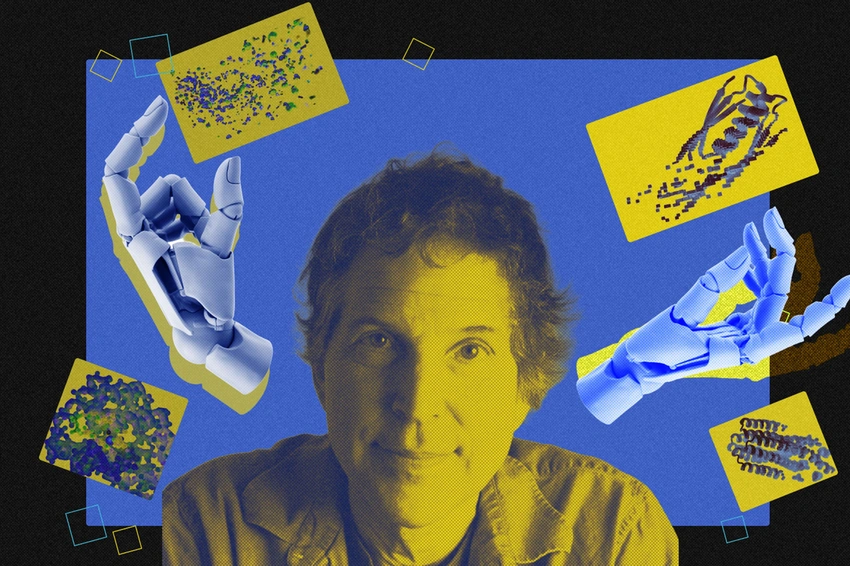
Nobel winner David Baker's AI BioDesign project is revolutionizing biology, creating molecules and functions never seen in nature. Imagine cures, clean tech, and new materials, all AI-designed.
Generative AI's Next Frontier: Designing Life's Building Blocks Beyond Nature
The natural world, as we understand it, represents just a tiny fraction of what's physically and chemically possible. This mind-bending concept is the driving force behind AI BioDesign: a groundbreaking scientific endeavor that's blending artificial intelligence with massive laboratory experiments. The goal?
To design and test brand-new molecules and biological functions that have never existed in nature, yet are entirely feasible.
Unleashing Unseen Potential
This isn't just theoretical musing. Researchers are actively creating vast databases, sophisticated models, and powerful tools that could become the “seeds” for tomorrow's medicines and technologies. Think along the lines of novel drugs for cancer or neurodegenerative diseases, or enzymes engineered to break down plastics in our oceans.
The vision is clear: using AI to design and construct proteins that are technically possible, even if evolution never stumbled upon them.
Leading this ambitious initiative are powerhouses like the Allen Institute, a biomedical research nonprofit in Seattle, in collaboration with the University of Washington and the Fred Hutchinson Cancer Center. At the helm is David Baker, who recently shared the 2024 Nobel Prize in Chemistry for his pioneering work in computational protein design.
For eons, biology has focused on understanding what nature has already produced.
Now, we're exploring possibilities that nature simply never got around to.
A New Industrial Revolution?
This fundamentally new approach is so transformative that some leaders in the field are comparing its potential to historic shifts like industrialization, electrification, and even the digital revolution itself. David Baker, chief scientific officer at AI BioDesign, passionately articulated this, stating,
What’s exciting about biology is that nature has explored only a fraction of what is physically and chemically possible, which opens a world of possibilities for what we could design.
His team has some lofty goals: envisioning a future where a cure for a new disease is developed in weeks, not decades. A world where our air, water, and soil are clean because we've removed pollutants and reimagined the processes that contaminated them. Where crops thrive in conditions that once destroyed them.
Where molecular machines can extract critical minerals from waste and repair essential infrastructure.
Proteins are life's molecular machines, and unlocking their full, untapped potential is the key.
Navigating the Uncharted: Risks and Safeguards
Venturing into entirely novel biological territory naturally raises important questions about potential risks. Baker is upfront about these, noting that the primary concerns—unintended interactions with living systems, unexpected environmental effects, or misuse—are similar to those associated with any new biological technology.
However, the computational design capabilities we now possess offer a significant advantage.
The advantage we have today is that computational design allows us to evaluate many of these risks before a molecule is ever synthesized,
Baker explains. Scientists can computationally screen designs, extensively test them in contained laboratory environments, and subject them to increasingly realistic experimental validation before even considering any real-world application.
This rigorous, multi-stage process is vital for responsible innovation.
What’s Next for Life’s Code?
The ability to predict and design new molecules and biological functions gives us unprecedented power. How far can this capability truly take us? From revolutionary drugs to plastic-degrading enzymes and even biological computers, the applications are as boundless as our imagination.
We are truly on the cusp of an era where biology is not just observed, but intelligently engineered, reshaping our world in profound and powerful ways.

Login to comment.
No thots yet. Be the first to share your thoughts!