Chandigarh blast case solved: 5 held in ISI-backed attack outside BJP HQ

Chandigarh blast case solved: 5 held in ISI-backed attack outside BJP HQ
Punjab police say ISI-backed module tied to foreign handlers was behind the Chandigarh BJP office blast; five arrested and weapons recovered.
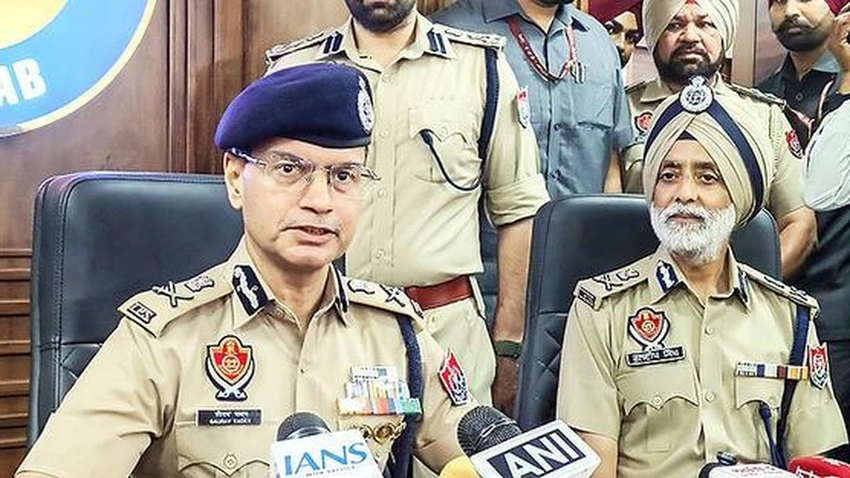
Punjab police, in a joint operation with Chandigarh police, said on Saturday that they have solved the grenade attack outside the BJP office in Chandigarh. Five accused were arrested, and investigators recovered one hand grenade and one .30 bore Zigana pistol along with ammunition from their possession. The operation was announced on April 4, 2026, highlighting a breakthrough in the investigation.
Police identified the accused as Balwinder Lal alias Shami of Majari village, Jasvir Singh alias Jassi of Bharapur, Charanjit Singh alias Channi of Sujawalpur in Shaheed Bhagat Singh Nagar district, Mandeep alias Abhijot Sharma of Dhuri village in Sangrur district, and Rubal Chauhan of Thana in Shimla district, Himachal Pradesh. The DGP stated these individuals were part of a module involved in the attack and that their network included multiple cutouts and sub-modules designed to execute the strike.
Director General of Police Gaurav Yadav said preliminary investigations reveal the module was backed by Pakistan’s ISI and operated under foreign-based handlers located in Portugal and Germany. He added that two key perpetrators have been identified, and investigators are working to establish forward and backward linkages to map the full operational network.
The blast occurred outside the BJP office at Sector 37 in Chandigarh on April 1. A case has been registered under section 25(1)(B) of the Arms Act and section 61(2) of the Bharatiya Nyaya Sanhita (BNS) at Sahibzada Ajit Singh Nagar in Punjab’s Mohali district. Further investigations are ongoing to piece together the network and its broader links.
Authorities emphasized that the case is being treated with high priority as they pursue complete clarity on the network, its international connections, and potential implications for regional security.
