India Rolls Out First Green Hydrogen Train: A Leap Towards Sustainable Future

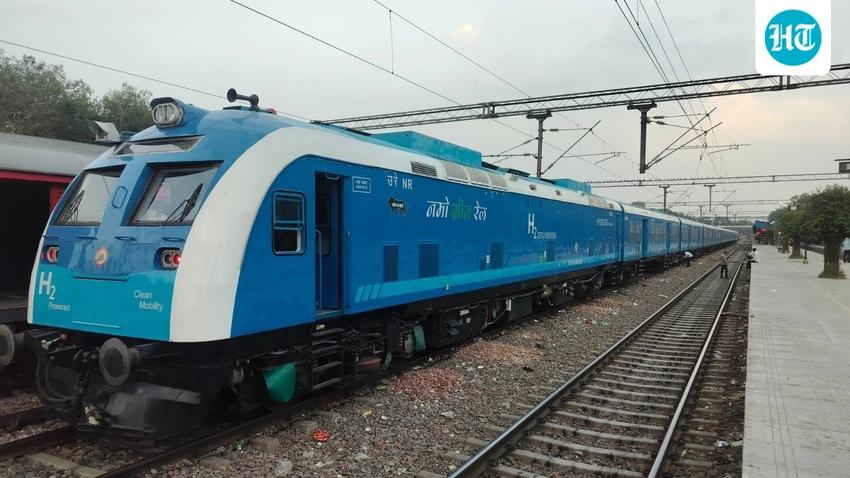
India Rolls Out First Green Hydrogen Train: A Leap Towards Sustainable Future
India takes a significant step towards clean energy with its first green hydrogen train, tested on the Jind-Sonipat line. Explore its potential, technology, and the challenges ahead for a sustainable future.
India is making a bold stride towards a greener future with the successful testing of its first green hydrogen-powered train. This innovative railway system, designed to generate electricity and emit only water vapour, recently underwent crucial braking and stability tests on the Jind-Sonipat line, marking a significant milestone in the nation's clean energy ambitions.
The introduction of green hydrogen trains aligns with India's broader climate goals and its commitment to decarbonization. Unlike "grey" hydrogen, which is derived from fossil fuels, green hydrogen is produced by splitting water using renewable electricity, making it a truly clean fuel source. This technology has the potential to revolutionize transportation and significantly reduce carbon emissions.
However, the path to widespread adoption of hydrogen rail technology is not without its hurdles. While countries like Germany have seen commercial hydrogen trains since 2018, and companies like Stadler have achieved impressive records for non-stop operation, India faces unique challenges. One major concern is the high cost associated with producing green hydrogen at scale, primarily due to the expense of electrolysers and the renewable power required.
Storage and compression also present significant technical challenges. Hydrogen has a very low volumetric energy density, necessitating compression to high pressures (typically 350-700 bar) for practical onboard storage. This compression process itself consumes a substantial portion (6-10%) of the gas's energy content. Furthermore, hydrogen's small molecular size can lead to hydrogen embrittlement, weakening metal storage cylinders over time – a recognized safety concern. Corrosion of metal storage and refueling components from prolonged hydrogen exposure is another well-documented problem, pushing designs towards composite materials.
India's diverse and often extreme climate conditions, along with demanding duty cycles, could further test the resilience of fuel cells in ways not fully proven in more temperate operating environments. The long-term cost efficacy and scalability of hydrogen-powered trains remain critical issues that need to be addressed for this promising technology to truly take off across the nation. Despite these challenges, India's commitment to exploring and implementing green hydrogen solutions underscores its dedication to achieving a sustainable and environmentally friendly transportation network.
#GreenHydrogenTrain #IndiaCleanEnergy #SustainableRail #HydrogenFuture
