Trump Says US Will Run Venezuela After Maduro Capture, Oil Restructuring

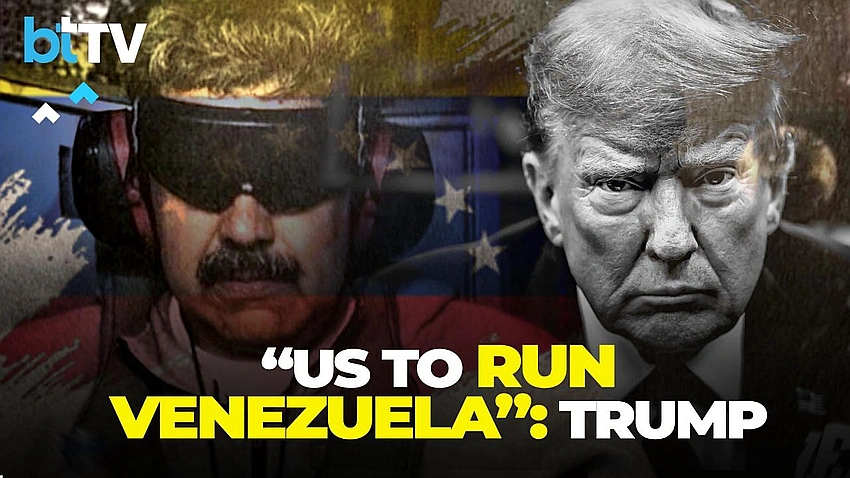
Trump Says US Will Run Venezuela After Maduro Capture, Oil Restructuring
Trump announces the U.S. will take charge of Venezuela after Maduro's capture, signaling oil sector reforms and delayed elections amid geopolitical tension.
In a dramatic turn that upends regional politics, U.S. President Donald Trump declared that the United States would be in charge of Venezuela following a high-profile operation that captured President Nicolás Maduro. Speaking aboard Air Force One, Trump said Venezuela must be brought back and hinted at sweeping reforms to its oil sector as part of a broader effort to restore stability. He characterized the regime as a dead country and suggested that elections could be delayed while Washington works with remnants of the government to reset the country’s political and economic path.
Maduro is in U.S. custody in New York, awaiting court proceedings on drug-trafficking charges. Washington says it will cooperate with whatever elements of the regime remain to guide a transition that aligns Venezuela with American interests while restructuring the oil industry to fit a new strategic posture. The remarks signal a long, uncertain road ahead for a country whose oil output has been a linchpin of Latin American energy politics.
Analysts warn the plan’s success depends on substantial American investment and the ability to scale production under a new governance framework. Some energy experts estimate that Venezuela could push output higher over the next two to three years, potentially reaching 2.5 to 3.3 million barrels per day, a move that would broaden global supply and influence prices in a geopolitically fraught landscape. Yet the timetable remains uncertain, contingent on security, governance reforms, and the smooth integration of foreign investment.
Markets have reacted with caution. Early signals show muted volatility as investors weigh long-term implications rather than immediate price shifts. Oil prices dipped slightly while equities in several regions edged up, reflecting a belief that the most consequential effects will unfold over months and years rather than days. For energy-importing economies, including India, the prospect of increased Venezuelan output could ease some near-term import costs, though the upside hinges on stable governance and transparent business practices.
For Venezuela’s people, the next steps will determine whether this shift translates into tangible improvements in availability, pricing, and public services or if the country merely enters another phase of political theater. The world will be watching closely as the United States seeks to translate a tactical win into durable governance and reliable energy output, with implications for regional security and global energy markets.
