Macklemore & 'Free Palestine': Is Canceling Artists The Answer?

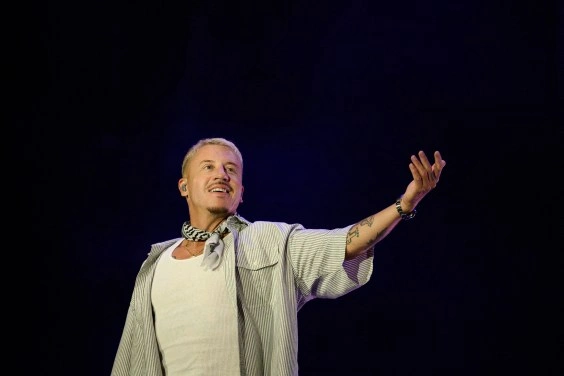
Macklemore & 'Free Palestine': Is Canceling Artists The Answer?
Artists are increasingly using their platforms for political statements, leading to heated debates and calls for 'cancellation.' Is this the future of art, or a dangerous precedent?
When an artist steps onto a stadium stage and declares, 'Free Palestine!', it inevitably ignites a firestorm. This isn't just about Macklemore's recent tour stop with Ed Sheeran at MetLife Stadium; it’s about a larger, enduring question: should artists be 'canceled' for their political stances?
We've seen Macklemore use his platform consistently, advocating for an end to Israel's actions in Gaza.
His impassioned speeches, like the one recently shared on Instagram, are a deliberate choice to leverage his reach.
And, predictably, there's been a backlash.
A pro-Israel group has launched a petition to remove him from the tour, sparking a debate about artistic freedom versus public expectation.
The Power of the Platform
Artists like Macklemore, with their massive following, have an undeniable microphone. When Macklemore says, 'I want those words to be loud and clear so that people from Gaza, all the way to the occupied West Bank know that we have not forgotten them,' he isn't just singing, he's making a powerful political statement.
He even dedicated his song 'Hind's Hall' to the bravery of Columbia University students involved in encampment movements, directly linking his art to activism.
This isn't new territory. Art has always been intertwined with social commentary. From protest songs of the 60s to modern-day viral anthems, music often reflects and shapes public opinion.
Macklemore explicitly states his message is for peace and dignity, clarifying, 'Criticism of Israel, criticism of apartheid, being against genocide in no way is a criticism of you. My message is for peace. Love.' He extends his advocacy to 'Free Lebanon,' 'Free Cuba,' 'Free Congo,' 'Free Sudan,' and even calls out ICE.
The 'Cancel' Culture Conundrum
So, when an artist expresses views that some find offensive or inappropriate for a concert setting, should they be silenced?
The 'cancel culture' phenomenon suggests that public figures who step out of line, perceived or real, should face severe professional consequences. Petitions like the one against Macklemore are a direct manifestation of this.
But here's the rub: if we expect artists to be bland, apolitical entertainers, are we stripping art of its soul? Art often thrives on challenging norms, provoking thought, and reflecting the world's complexities. To demand silence on pressing global issues from those with the loudest voices might be to diminish the very purpose of their craft.
Where Do We Draw the Line?
Perhaps the conversation shouldn't be about 'canceling' artists, but about engaging with their messages, however uncomfortable. Do fans have a right to expect a politically neutral performance? Absolutely.
But does an artist have the right to use their platform for causes they deeply believe in? Absolutely.
The tension between these rights is where the real dialogue lies.
Ultimately, Macklemore's actions remind us that the stage isn't just for entertainment; sometimes, it's a pulpit. And whether we agree with his message or not, his decision to speak out forces us to confront our own comfort with activism in the arts. It's a challenge to both artists and audiences: how do we navigate a world where conviction and performance increasingly collide?

Login to comment.
No thots yet. Be the first to share your thoughts!