German Town Halts Holocaust Memorials Amid Far-Right Pressure

German Town Halts Holocaust Memorials Amid Far-Right Pressure
Outrage erupts in Heidenau, Germany, as the city council, backed by far-right and conservative parties, votes to stop installing 'Stolpersteine' Holocaust memorial plaques. Discover why this decision is sparking internat
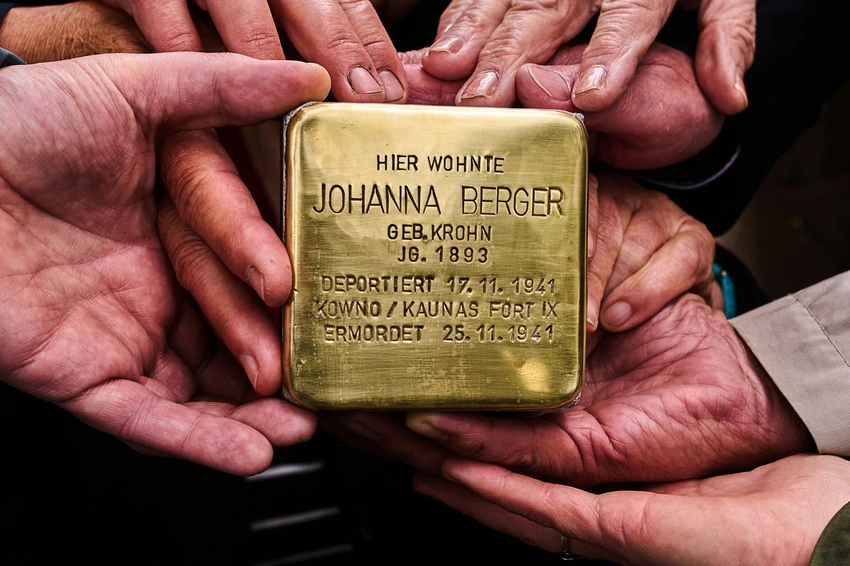
A controversial decision by the Heidenau city council in eastern Germany has sparked widespread outrage, as it voted to halt the installation of 'Stolpersteine', the poignant brass memorial plaques honoring Holocaust victims. This move, supported by both the far-right Alternative for Germany (AfD) and some conservatives from Chancellor Friedrich Merz's Christian Democratic Union (CDU), has been condemned as a blow to Germany's culture of remembrance.
The 'Stolpersteine', meaning 'stumbling blocks', are palm-sized brass plaques inscribed with the names and fates of Jews and others persecuted by the Nazis. Created by German artist Gunter Demnig, these blocks are typically laid into sidewalks, often near the last known residences of the victims, serving as a powerful and intimate form of Holocaust remembrance.
Since the first block was laid in Cologne in 1992, over 126,000 have been installed across more than 30 European countries, commemorating some of the 6 million victims. The city councilors behind the action claimed that some relatives of Holocaust victims find the stones an inappropriate form of remembrance because passersby walk over them. However, this reasoning has been widely rejected by critics.
Israel's ambassador to Germany, Ron Prosor, expressed his shame, noting that plaques in Berlin commemorate his own relatives.
And in Germany in the year 2026, a city council decides to no longer install new Stolpersteine,
he wrote on X, highlighting the gravity of the decision. Christian Meyer-Heidemann, the state commissioner for political education in Schleswig-Holstein, sharply criticized the council's vote, calling it “a deliberate attack on our culture of remembrance.” For many Jewish families, these plaques represent the closest thing to a grave for loved ones who perished in concentration camps, often without a burial site.
This decision comes amidst a rising wave of popularity for the anti-immigration AfD, particularly in eastern Germany, where the party has seen significant electoral successes. The AfD has frequently been criticized for attempting to downplay or revise the history of Nazi-era crimes, a stance that deeply influences Germany's post-war political landscape.
Artist Gunter Demnig suggested this development was to be expected given the AfD's recent gains, and accused the CDU of abandoning its "Christian roots" by aligning with the far-right on this issue. While Heidenau is not the only municipality to have reservations about the 'Stolpersteine', Munich, for instance, offers alternative memorials citing similar concerns about the stones being walked upon, the involvement of mainstream conservative parties alongside the AfD in this decision has raised serious alarms about the erosion of historical memory and the mainstreaming of far-right narratives in German politics.
", "city": "Heidenau
