Monitoring IoT with High-Performance Ethernet Devices


Monitoring IoT with High-Performance Ethernet Devices
To support growing data demands, ethernet devices offer the scalability and speed modern IoT systems can’t compromise on.
Data is the currency of modern industry, and IoT devices are the sensors and engines collecting it around the clock. But without reliable transmission, even the smartest sensors fall silent. That’s why ethernet devices 🔗 have become essential for monitoring IoT systems—delivering consistent, secure, and high-speed communication that wireless alternatives can’t always guarantee.
As more businesses lean into automation, predictive analytics, and real-time system control, the pressure on network infrastructure increases. Monitoring IoT environments 🔗—where delays can cause disruptions or safety risks—demands a connectivity solution that’s not just fast but rock-solid. Ethernet provides that foundation, and modern hardware has elevated it far beyond simple cabling.
Why Reliability Is Non-Negotiable
Industrial environments, medical facilities, energy networks, and logistics operations all rely on constant streams of data. In these settings, losing visibility for even a few seconds can mean halted production, missed alerts, or inaccurate system behavior.
Ethernet brings a level of stability that’s crucial for IoT monitoring. Unlike Wi-Fi, which competes for bandwidth and suffers from environmental interference, ethernet provides a dedicated path from device to server. Data travels without collisions, buffering, or signal loss—giving operators confidence that their systems are working as intended.

Defining Ethernet Devices in the IoT Stack
When we talk about ethernet devices in the context of IoT, we’re referring to the network infrastructure that makes wired data transmission possible. This includes:
- Ethernet switches, which connect multiple devices and manage traffic across the network.
- Gateways, which convert local protocols like Modbus 🔗 or BACnet into formats like MQTT or HTTPS for cloud services.
- Edge routers, often with industrial-grade durability, that manage local-to-wide area communication.
- PoE (Power over Ethernet) devices, which transmit both data and power to endpoints such as IP cameras and remote sensors.
Together, these components enable a structured, high-availability environment where data doesn’t just move—it moves intelligently, securely, and efficiently.
Performance Advantages Over Wireless Solutions
There’s a place for wireless in IoT, but when the stakes are high—like in healthcare or smart manufacturing—ethernet wins. It offers lower latency, higher bandwidth, and immunity to electromagnetic interference. These qualities are essential when milliseconds count or when hundreds of devices are transmitting simultaneously.
One major advantage is predictability. Ethernet operates within known performance parameters. There’s no concern about neighboring networks or fluctuating signal strength. This is especially important when monitoring IoT data that feeds into real-time dashboards or triggers automated responses.
In harsh industrial zones or densely packed facilities, Wi-Fi often struggles. High-performance ethernet devices, designed for vibration, heat, and dust resistance, continue performing under stress.
Real-Time Monitoring and Response
IoT is no longer just about collecting data. It’s about reacting to it in real time. Whether it's adjusting ventilation in a smart building or stopping a robotic arm on a factory floor, the network must support instant communication.
Ethernet’s low latency ensures that data from sensors and controllers arrives at its destination without delay. This minimizes system lag, reduces false alarms, and enables faster decision-making. That’s a significant advantage when milliseconds impact safety or performance.
With ethernet, packet delivery is more reliable. There’s less risk of data loss or retransmission, and quality-of-service (QoS) settings allow network administrators to prioritize critical data.
Network Management and Control at Scale
The more IoT devices deployed, the more important it becomes to manage them effectively. Ethernet infrastructure allows for centralized control and monitoring of all connected endpoints.
Managed switches provide deep visibility into network health—reporting port status, traffic load, and errors. VLANs (Virtual LANs) allow segmentation by device type or department, improving security and reducing congestion.
SNMP (Simple Network Management Protocol) support means IT teams can proactively identify and resolve issues before they escalate. Tools like port mirroring and logging also support diagnostics and compliance.
Integrating Ethernet into the IoT Architecture
A well-designed IoT network blends local and cloud resources. Ethernet plays a vital role in connecting the “things” at the edge—sensors, actuators, PLCs—to edge gateways and then to centralized servers or cloud platforms.
Ethernet’s reliability makes it the go-to backbone for edge computing environments. Edge devices require consistent communication to run analytics and make split-second decisions. Downtime here can result in missed insights or production errors.
Many ethernet gateways support protocol translation and data normalization, enabling seamless communication across heterogeneous devices. They also support encryption and device authentication, aligning with enterprise security policies.
Security Through Physical and Logical Isolation
While Wi-Fi is more exposed to outside threats, ethernet’s physical nature gives it a built-in security advantage. It’s much harder to tap into a wired network unnoticed, especially when devices are protected inside cabinets or mounted in inaccessible locations.
Ethernet networks can also be segmented and secured using access control lists, MAC filtering, and port-based authentication (802.1X). Traffic can be monitored, logged, and encrypted—ensuring sensitive monitoring IoT data isn’t exposed or intercepted.
For healthcare, financial, or critical infrastructure use, this level of security is often mandatory. And ethernet provides the foundation without adding complexity or instability.
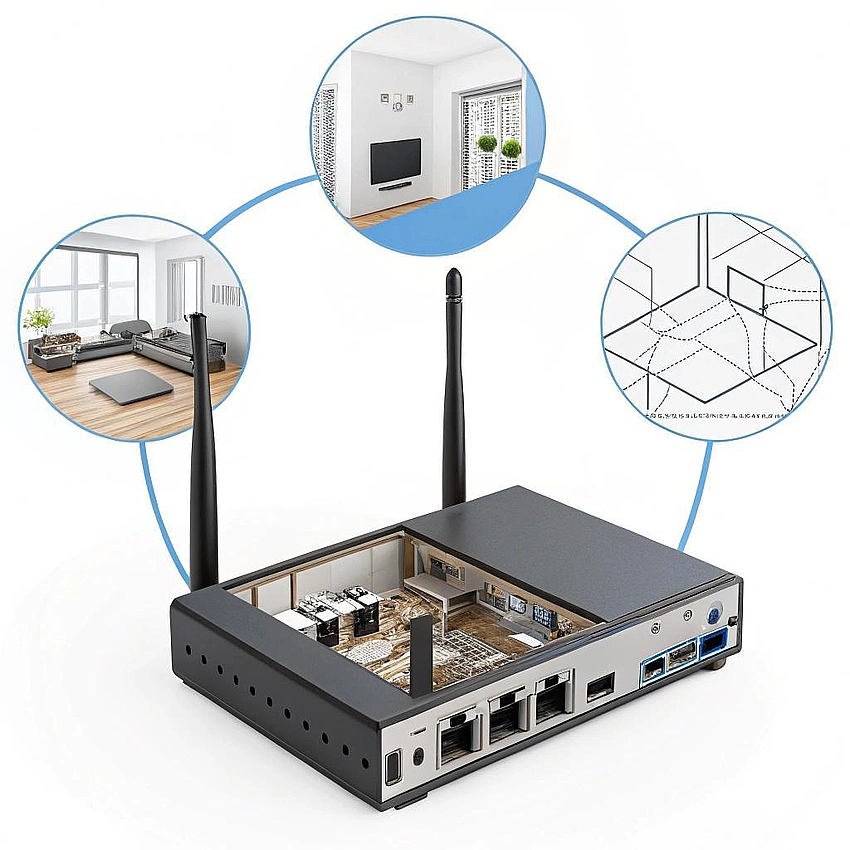
Overcoming Deployment Hurdles
Of course, deploying wired infrastructure isn’t without its challenges. Buildings without structured cabling, or legacy environments with limited ports, require planning and investment.
Yet modern solutions exist. Media converters can extend ethernet over fiber or coaxial lines. Ethernet extenders and rugged switches allow installations in outdoor or industrial spaces. PoE simplifies sensor deployment by eliminating the need for separate power lines.
By leveraging these tools, organizations can retrofit older environments without a complete overhaul.
Even in retrofit scenarios, high-performance ethernet devices make it possible to scale IoT systems without compromising reliability or security.
The Road Ahead: Emerging Ethernet Technologies
Ethernet continues to evolve. Two technologies poised to transform industrial IoT are:
- TSN (Time-Sensitive Networking): Adds time guarantees and low jitter to Ethernet, ideal for automation and robotics.
- Ethernet-APL (Advanced Physical Layer): Extends Ethernet to hazardous and process environments like oil refineries or chemical plants, supporting long cable runs and intrinsic safety.
Expect to see smarter ethernet devices with built-in diagnostics, AI-based traffic optimization, and automated failover. These innovations will further integrate IT and OT systems, breaking down silos and enabling fully synchronized environments.
Conclusion
Monitoring IoT systems requires more than just smart devices—it demands a strong, dependable network foundation. High-performance ethernet devices provide the reliability, speed, and control necessary to support everything from real-time analytics to predictive maintenance.
As IoT deployments grow in scale and sophistication, the limitations of wireless become more apparent. Ethernet remains the trusted standard for mission-critical environments, offering the consistency and resilience that monitoring systems depend on.
Whether you're building a smart city, managing a digital factory, or modernizing legacy infrastructure, investing in the right ethernet hardware isn't just a technical decision—it’s a strategic one.
FAQs: Ethernet Devices and Monitoring IoT Systems
1. What are ethernet devices in IoT?
Ethernet devices in IoT include switches, routers, gateways, and PoE components that enable wired communication between sensors, controllers, and monitoring systems. They ensure stable, low-latency data transfer across the network.
2. Why is ethernet better than Wi-Fi for monitoring IoT?
Ethernet provides more reliable and consistent connectivity, especially in environments with interference, high device density, or mission-critical operations. It offers lower latency, no signal dropouts, and enhanced security.
3. Can ethernet devices be used in industrial environments?
Yes. Industrial-grade ethernet devices are designed to withstand harsh conditions like temperature extremes, vibration, moisture, and electromagnetic interference, making them ideal for factories, utilities, and field operations.
4. How does PoE (Power over Ethernet) help IoT deployments?
PoE allows data and power to be transmitted over a single cable, reducing the need for separate electrical wiring. This simplifies installation and enables remote IoT devices like sensors and cameras to operate in hard-to-reach areas.
5. What role do gateways play in ethernet-based IoT networks?
Gateways connect edge devices to cloud or centralized systems and often translate industrial protocols (e.g., Modbus, OPC UA) into IoT-friendly formats like MQTT or HTTP. They also help filter and preprocess data locally.
6. Are ethernet devices scalable for large IoT deployments?
Yes. With managed switches, VLANs, and structured cabling, ethernet networks can scale to support thousands of devices while maintaining performance, security, and manageability.
7. Is ethernet more secure than wireless for IoT monitoring?
Generally, yes. Wired networks have a smaller attack surface and are harder to access without physical intrusion. Ethernet also supports robust security features like MAC filtering, port authentication, and traffic encryption.
8. What are the limitations of using ethernet in IoT?
Challenges include installation complexity in legacy buildings, cable length limitations, and reduced mobility compared to wireless. However, solutions like fiber, PoE extenders, and rugged switches help address these issues.
9. How does ethernet support real-time monitoring?
Ethernet’s low latency and high throughput make it ideal for transmitting time-sensitive data like sensor readings or control signals. It supports deterministic communication required by real-time systems.
