Two Shell's AI Revelation: Game Changer or Creative Crutch?

Two Shell's AI Revelation: Game Changer or Creative Crutch?
Dive into the controversial admission from electronic duo Two Shell about their extensive use of generative AI in music production. Is this the future of sound?
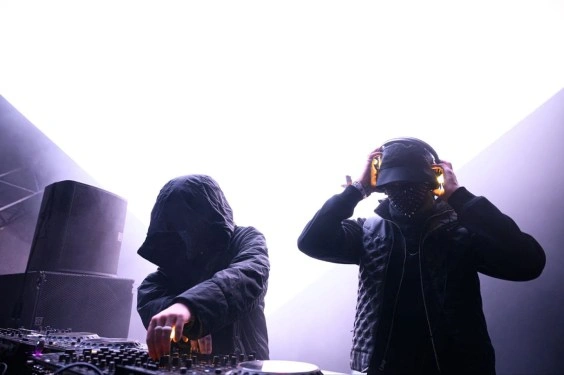
Two Shell has always been something of an enigma in the dance music scene. The masked, anonymous duo has consistently pushed boundaries, but a recent revelation has sent ripples through the industry: they openly admit to using generative AI in their music production. One of the duo's members shared in a Resident Advisor interview that AI has been a tool for them 'for a couple of years now,' viewing it simply as 'just another instrument, really.'
This admission sparks a pivotal conversation. For years, whispers and theories have circulated about how Two Shell manages to churn out so much distinctive material. Now we have an answer, and it's forcing everyone, from artists to labels to fans, to re-evaluate their understanding of creativity and authenticity in the digital age.
Think about it: an 'instrument.' That's a powerful statement, reframing AI not as a replacement for human artistry but as an extension of it. Just as synthesizers revolutionized music in the last century, AI could be poised to do the same for our current one.
This isn't about AI writing entire songs from scratch and artists just pressing 'play.' It's about leveraging advanced algorithms to generate new ideas, textures, and sonic landscapes that might be impossible or incredibly time-consuming for humans to conceive alone. It opens up avenues for rapid prototyping of sounds, exploring complex melodic structures, or creating entirely new rhythmic patterns that defy conventional composition.
The implications are massive. On one hand, it democratizes music creation even further, potentially allowing artists with fewer traditional technical skills to realize sophisticated sonic visions.
On the other hand, it raises questions about originality and the 'soul' of music.
If a significant portion of a track is AI-generated, where does the human touch truly lie? Is it in the curation, the arrangement, the selection of the best AI outputs, or the initial prompt that guides the AI?
Two Shell's transparency is commendable, especially in an industry often hesitant to pull back the curtain on its creative processes. By bringing this topic into the open, they're forcing a necessary dialogue. It's a foundational shift.
How we define authorship, intellectual property, and even the role of the artist will inevitably evolve. Labels will grapple with how to credit, producers with how to collaborate with non-human entities, and listeners with how to appreciate music knowing its genesis.
Ultimately, Two Shell's work, like their track “Closer To The Sound,” isn't just music; it's a statement.
It embodies a future where the lines between human and machine creativity are increasingly blurred. Whether you're excited, skeptical, or somewhere in between, one thing is clear: the AI remixers are here, and they're reshaping the sound of tomorrow.
It's a harbinger for the entire creative economy.
The conversation has only just begun.
