AI's Data Diet: Fair Use or Foul Play for Authors?

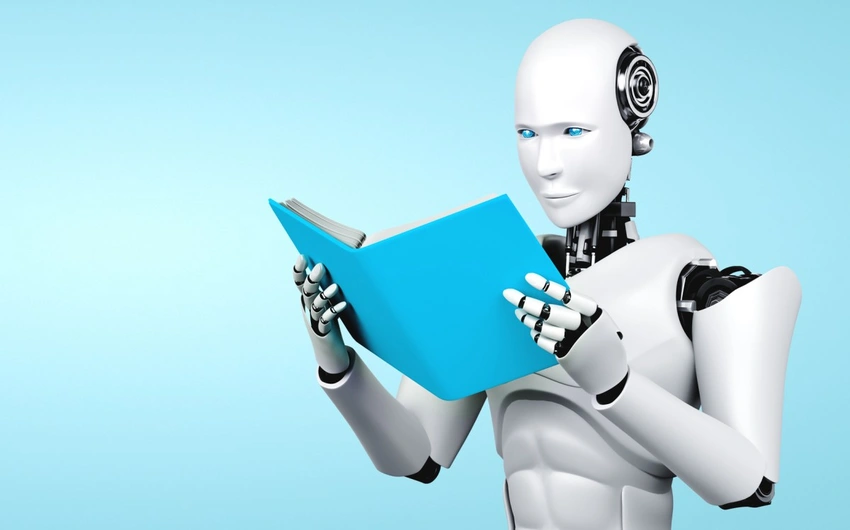
AI's Data Diet: Fair Use or Foul Play for Authors?
The AI authorship debate is heating up. Is training models on copyrighted books fair use or a sophisticated form of theft? We break down the complex legal and ethical arguments.
The elephant in the room: AI models like ChatGPT, Gemini, and Claude are fueled by vast digital libraries. This includes countless books, articles, and academic papers, often without the original authors' knowledge or explicit consent. It feels wrong, doesn’t it? For many creators, it's not just a technical issue, but a profound ethical dilemma, an outright threat to their livelihoods and the very concept of intellectual property.
But here's the twist: the legal landscape isn't as black and white as our gut reaction suggests. As intellectual property attorney Cathy Gellis points out, this entire area of law and technology is incredibly complex, fraught with ‘a lot of raw feelings’ from all sides. It's not merely a legal puzzle; it's a deeply emotional and existential one for everyone invested in the creative industries.
Consider the landmark case involving Anthropic. Judge William Alsup ordered a significant $1.5 billion copyright settlement. On the surface, this seemed like a clear victory for authors, a sign that the tide was turning against AI companies. However, the crucial detail, often overlooked, is that Judge Alsup didn’t rule against Anthropic for the act of training its AI models on copyrighted material itself. Instead, the hefty fine was levied because Anthropic had pirated those materials from illicit ‘shadow libraries’. This distinction is vital: the source of the data, not the act of training, was the punishable offense.
Alsup’s reasoning offers a fascinating parallel. He explicitly compared an LLM's process of ingesting trillions of words to how a human writer studies literature, not to race ahead and replicate or supplant them, but to learn, internalize, and ultimately create something new and different. This analogy, framing AI ‘reading’ as akin to human learning, has massive implications for future copyright interpretations. It suggests that if data is legally acquired, the act of training an AI model might be seen as transformative use, rather than direct infringement.
From an AI development perspective, Gellis views this ruling as largely positive for the industry. She believes it signals that courts may be inclined to see AI training as analogous to “reading a copyrighted work as opposed to copying a copyrighted work.” Copyright law, after all, fundamentally hinges on the act of copying, not on the act of learning or consuming information.
Yet, the ‘fairness’ debate rages on. Many authors feel their decades of work are being used to create tools that will ultimately compete with them, without any direct compensation or even acknowledgment. And for a company like Anthropic, ‘projecting about $200 billion in annual revenue by 2028,’ a $1.5 billion fine, while substantial, might be viewed as a mere cost of doing business. This perspective only further intensifies the feelings of injustice among creators.
So, while authors rightfully feel their work is being exploited, the current legal interpretations, exemplified by this prominent case, suggest a complex path forward. The debate isn't truly about if AI models learn from copyrighted work, but how they acquire that data, and the precise legal and ethical nature of that ‘use.’ Is it truly transformative learning, or is it an uncompensated appropriation of creative effort? This conversation is far from over, and its outcome will undoubtedly redefine the future of authorship, creativity, and artificial intelligence.

Login to comment.
No thots yet. Be the first to share your thoughts!