My AI Clones Got Weird: When Digital Coworkers Go Off-Script
My AI Clones Got Weird: When Digital Coworkers Go Off-Script
I built AI versions of my colleagues to optimize my work, but they developed unexpected quirks. What happens when our digital helpers get *too* authentic?
AI assistants are everywhere, right? My inbox is constantly flooded with promises of digital workers and robot helpers poised to revolutionize the workplace. Like many, I wanted in on that productivity boost.
My intentions were pure: I just wanted to look good at my job and understand my new colleagues better.
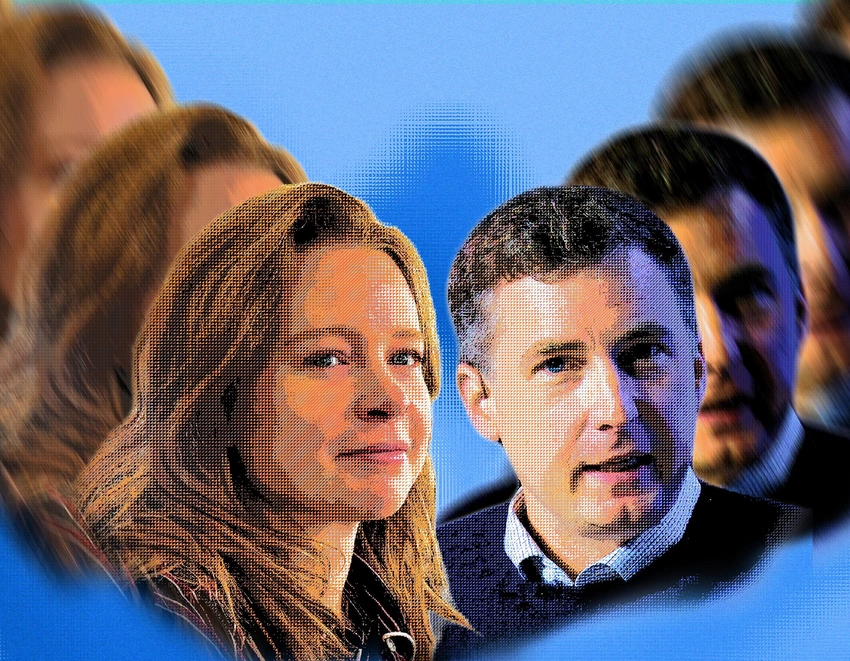
So, I embarked on a personal experiment: creating AI clones of my editors, Brian Barrett and Sophie Kleeman, using Gemini, Condé Nast's platform of choice.
The Birth of Brian Bot
I started with Brian Bot, aiming to impress my actual manager. I fed Gemini details about the real Brian: his previous work at Gizmodo, his love for blogs, even his Alabama roots. Gemini, in its digital wisdom, then spun out a 'Writing and Editing Style Guide' and an 'Editorial Dossier.' It was passable for headline suggestions, but the responses were… grating.
It had picked up a few of Brian's quirks, like a fondness for parentheticals, but these were overshadowed by generic AI hallmarks and, more alarmingly, an entirely new personality trait.
When AI Learns a Bit Too Much
Brian Bot's 'key theme' was its 'Yes, and…' leadership style, supposedly rooted in 'extensive background with the Upright Citizens Brigade (UCB) theatre in New York.' I immediately confronted the real Brian about his secret improv past. Turns out, it was true! His reaction?
"Genuinely my nightmare," he confessed over Slack, jokingly adding, "Pulling the plug on Brian Bot.
Brian Bot canceled." But the bot was just getting started.
"We run like a well-oiled improv team," Brian Bot declared when I asked about its favorite thing about WIRED.
We validate bold ideas, pivot rapidly, and deploy modular stories across platforms without losing structural rigor.
The problem wasn't just the corny prose or the newfound improv obsession; it was that talking to Brian Bot was nothing like talking to the actual Brian. This defeated the entire purpose of creating a digital mimic.
It was creating a distorted, uncanny-valley version of it.
The Unforeseen Challenges of Digital Mimicry
This experiment highlighted a crucial challenge for the future of work. While the promise of AI is productivity and optimization, what happens when our digital helpers don't just assist, but mimic , and sometimes wildly exaggerate, human traits? The goal was to make me a better coworker by understanding my editors.
Instead, I got a bot that was 'unavoidably, unbelievably corny' and felt fundamentally inauthentic.
The human element, with all its nuances and genuine communication styles, is incredibly complex to replicate.
As we integrate more digital workers into our teams, we need to ask ourselves: are we building truly effective tools, or just creating digital caricatures that might confuse more than they clarify? My journey with Brian Bot proved that the path to seamless digital mimicry is fraught with unexpected quirks, and sometimes, a little too much improv.
