US Sanctions ICC Officials, Sparking Global Outcry & Diplomatic Tensions
US Sanctions ICC Officials, Sparking Global Outcry & Diplomatic Tensions
The Trump administration slaps sanctions on International Criminal Court officials, including its President, over investigations into Israeli leaders. A "flagrant attack" on international justice? #ICC #USSANCTIONS #Glob
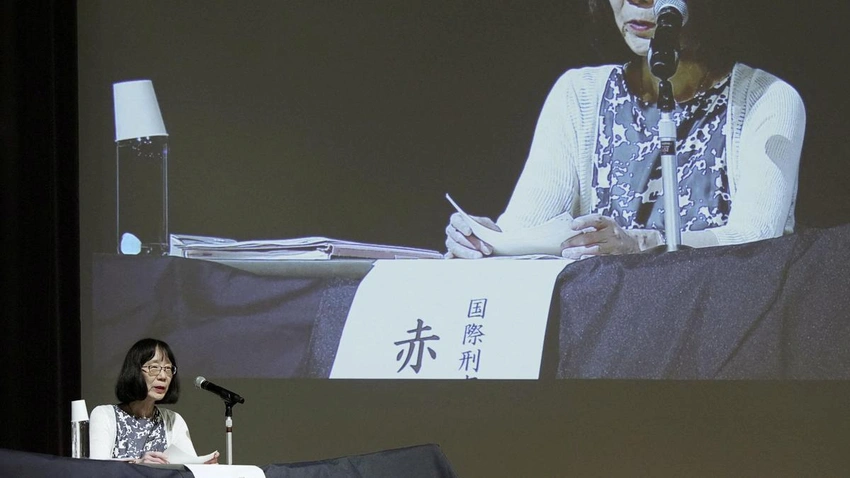
The Donald Trump administration has once again stirred the pot of international relations, announcing sanctions on two top officials of the International Criminal Court (ICC). This move, made on Tuesday, August 18, 2026, targets ICC President Tomoko Akane of Japan and senior trial lawyer Abdoulaye Seye of Senegal, further distancing the U.S. from global organizations.
U.S. Secretary of State Marco Rubio stated that these individuals were sanctioned for "directly engag[ing] in efforts by the ICC to investigate, arrest, detain, or prosecute officials whose government has not consented to ICC jurisdiction." While Rubio did not explicitly name those targeted by the ICC, these sanctions follow Executive Order 14203, issued on February 6, 2025. This order specifically cited the ICC’s ongoing investigations and arrest warrants concerning Israel’s Prime Minister Benjamin Netanyahu and former Defence Minister Yoav Gallant. Japan had reportedly attempted to dissuade the U.S. from taking this action against its national, Tomoko Akane, but the White House proceeded nonetheless.
The ICC has vehemently condemned the sanctions, calling them a “flagrant attack against the independence of an impartial judicial institution.” This sentiment underscores a growing rift between the U.S. and the international body responsible for prosecuting individuals accused of genocide, war crimes, and crimes against humanity.
So, what exactly is the ICC? It’s an independent intergovernmental organization headquartered in The Hague, Netherlands. Established under the Rome Statute, adopted at a United Nations conference in Rome on July 1, 1998, it officially came into force on July 1, 2002. The Statute has 137 signatories, including both the U.S. and Israel, but only 125 full members. Despite being signatories, neither the U.S. nor Israel has ratified the document, meaning they are not formal members of the court. Other major nations like India, China, and Russia are also not part of the ICC. The court’s primary role is to investigate and prosecute individuals from its member states for the gravest international crimes.
This latest development highlights the ongoing tension between national sovereignty claims and the pursuit of international justice, raising critical questions about the future of global legal frameworks and the role of major powers within them.
