What Happens When Queer Writers Stop Asking for a Genre?
What Happens When Queer Writers Stop Asking for a Genre?
What Happens When Queer Writers Stop Asking for a Genre?
Why queer writers are breaking the rules of romance, horror, memoir and everything in between!
 There’s a specific kind of delight that comes with opening a queer novel and realising, a few pages in, that you have absolutely no idea where it belongs on the shelf. Is this a romance? A ghost story? A memoir? Is there supposed to be a plot somewhere lurking just out of reach? As I read, I’ve begun to believe there’s a purpose to this bafflement. Many of the most fascinating recent queer writings seem driven by a restless impatience towards the genres they’re expected to fit into.
This is more than just a publishing issue, in my opinion. Genre often implies a certain kind of structure: a romance has a guaranteed ending; a family novel assumes an understood relationship between the narrative and the figures it describes; a memoir relies on an implicit contract with the reader about what constitutes truth. The fact that queer writers have spent a long time being contained by these assumptions shouldn't come as a surprise when they start cracking the walls.
The strange pleasure of not knowing what you're reading
One of the more compelling shifts in queer literature is toward fragmented forms. Maggie Nelson's Bluets, for instance, constructs its heartbreaking narrative in numbered fragments, rather than building the usual beginning-middle-and-end architecture for emotional distress. The arrangement allows memory to move associationally, looping back to an image because it has accumulated a new meaning on a subsequent page. This structural characteristic is becoming increasingly recognisable in the contemporary queer fiction that is tending to treat chronology and narrative continuity as tools to be used rather than rules to be obeyed.
There is something that seems to suit the experience of being queer to writing such as this. In many instances, queer lives often involve retrospection: a memory from childhood might assume new relevance after coming out, and friendships that once felt completely unextraordinary might suddenly be legible in a different way several years later. The teenage you may turn out to be someone you did not yet possess the terminology to comprehend. A heterosexual and chronological trajectory can create an illusion of identity that is far neater than identity actually is.
Romance has some explaining to do
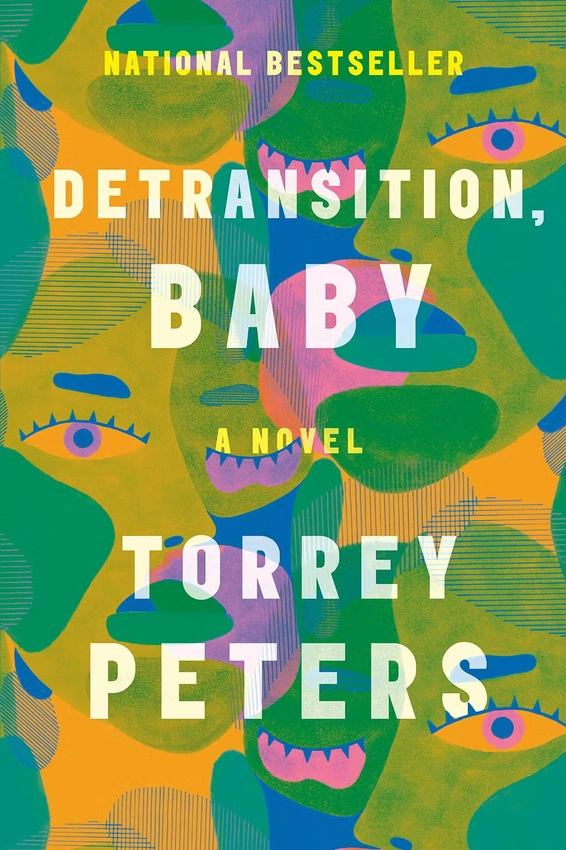
For decades, the dominant mechanisms of mass-market romance functioned on an assumption about who might wish to sexually or emotionally desire whom; a presumption about the shape a couple might take; and a definition of satisfaction. It is unsurprising that enormous numbers of queer people have entered the genre in recent years, but some queer writers have gone further than simply substituting same-sex partners for heterosexual ones and maintaining the status quo.
The question is not what the shape of romance looks like with or without the institution of marriage, or how desire is supposed to play out in a predictable arc, or whether the relationship itself is the point. Rather, it becomes about the nature of the peculiar period of coming-into-being that surrounds the pair: queer writers can now utilise the rom-com structure while simultaneously destabilising its stale promises. The failure is not a weakness of the genre but often the story’s origin.
Horror was already queer before we admit it
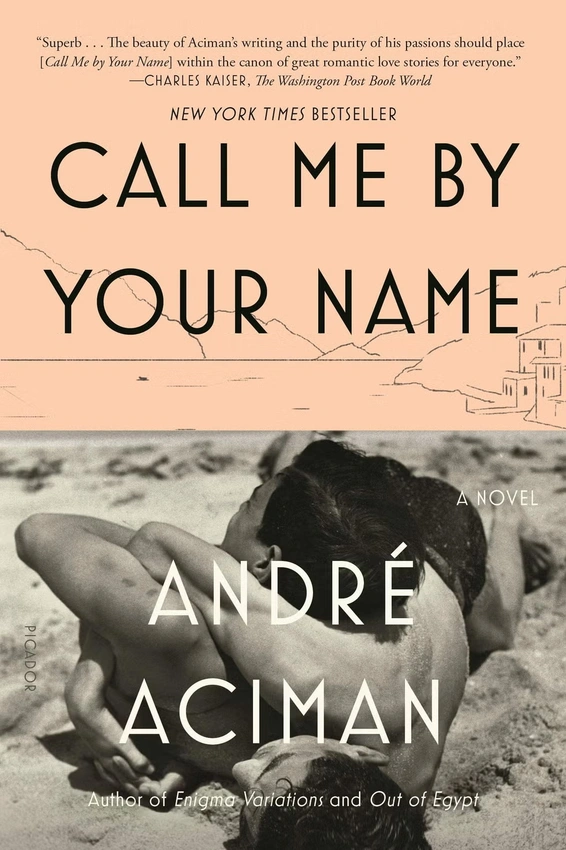
Horror is and always has been an ideologically odd genre, in its own way intrinsically queer. For one, it’s long given a home to outsiders; figures whose bodies will not comply with the rules governing social order; people rendered terrifying precisely because they cannot fit within the neat structures of the society around them. These are conventions that offer a vast wealth of potential for queer writers to exploit. The transformation of the body might become an analogue for gender; the haunted house, a metaphor for a family home that never quite feels safe for the protagonist; the monster, not the person outside the window, but the being that is told, all its life, that something is fundamentally wrong with it.
The difference is the position of the reader. Where the queer protagonist may traditionally have been the one that the monster was meant to frighten, it's now the case that readers can be invited to question whether or not the monster has been misunderstood. 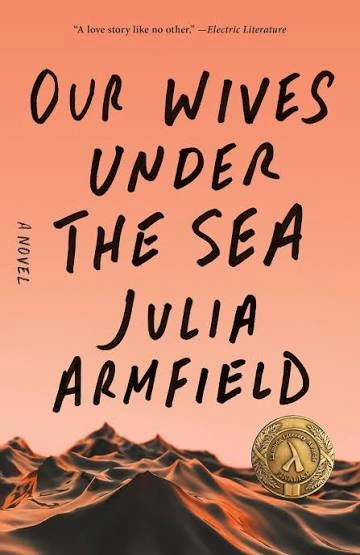
The genres begin bleeding into each other
Where things get really interesting is when writers stop thinking of genres as walled-off rooms and queer literature begins producing books so resistant to classification as to appear almost deliberately so. A narrative can seamlessly transition between memoir and fantastical elements without offering the reader an easy entry or exit point; a historical novel may employ speculative techniques to conjure up experiences and ways of life foreclosed to its characters; science fiction can provide a framework through which to explore bodies and gender, without ever reducing the book to an educational text. This is where the structure itself can become its queerness. Queer writing does not require the reader to be in receipt of an explicit ‘Queer’ sign; it is just as likely to reveal itself in the unwillingness of the narrative to adhere to a more or less linear track.
What if the form is the politics?
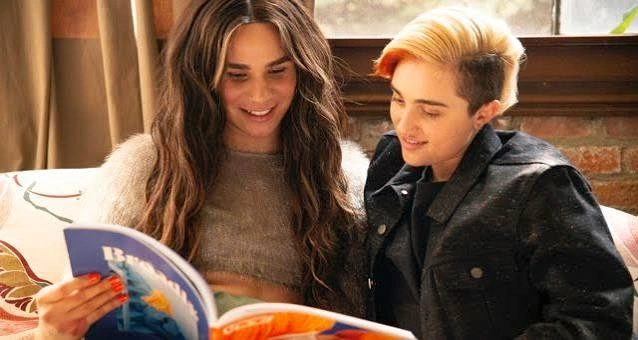
It was once commonplace to believe that political writing necessarily had to articulate an explicit political argument. Queer writing often has more fun with the project, but is still just as potent when playing at the art of making the reader ‘experience’ uncertainty rather than be directly told about it; when leaving a desire unfulfilled where previously closure was the goal; and when forcing the reader into the uncomfortable position of questioning the idea of the self even as it continually morphs before their eyes. A ‘queer genre’ is not just the label used in marketing; it is also what these books can ultimately be, so that future discussions are just as likely to revolve around the deployment of the fractured timeline as about the sexual orientation or gender identity of the protagonists.
The current conversation around queer writing is extremely encouraging for me. For so long, discussions rightly focused on whether queer characters would appear in literature and the extent to which queer life could be written into novels at all. All of those things still matter, of course. But something else is starting to emerge, something harder to summarise in a reading list. Queer writers have begun to ask: what could literature look like if these old models were never particularly relevant? However, an entire subversion of an old model is also not possible without already having a studied grasp on what was considered The Model. It is this ability to play with form, break it apart, make it risqué and quite literally queer it for audiences that makes reading queer authors for me truly adventurous.
And, perhaps, what would be the most subversive thing any writer might do than to make a reader realise, halfway through the book, that the story they expected to be told is itself behaving very badly!

Login to comment.
No thots yet. Be the first to share your thoughts!