Bombay High Court orders audit of construction sites to curb Mumbai’s air pollution

Bombay High Court orders audit of construction sites to curb Mumbai’s air pollution
An independent five-member panel will inspect construction sites and verify dust-mitigation compliance, with findings due by December 15 as Mumbai fights toxic air.
A bench comprising Chief Justice Shree Chandrashekhar and Justice Gautam Ankhad ordered an independent five-member panel to audit construction sites and verify compliance with existing dust-mitigation norms. The panel will include one official each from the Brihanmumbai Municipal Corporation and the Maharashtra Pollution Control Board, along with two civil society representatives and a public health official. They will be granted access with logistical support and security, and are expected to submit their findings within a week, after which the matter will be revisited on December 15. The directive comes as the court emphasized that while Mumbai needs a long-term plan to improve air quality, immediate steps can yield quick results if enforced stringently.
The court also asked BMC and MPCB to file an action-taken report on measures implemented last year to tackle air pollution. The amicus curiae noted that dust from construction activities remains one of the biggest contributors to Mumbai's deteriorating AQI. The 2023-24 guidelines mandated installation of air-quality sensors at sites, water spraying, and covering vehicles transporting construction material, but compliance has been uneven. Of nearly 1,000 sites in the city, only around 400 have sensors, and 117 of those are non-functional; moreover, these sensors are not yet linked to a central monitoring system.
The judge urged that dust pollution be tackled without delay, indicating that steps should be taken within one to two weeks. Khambata warned against knee-jerk reactions but stressed that enforcement of standing norms must be robust and transparent. The outcome of the probe should inform a tighter, more accountable framework for site management, with the panel's findings potentially guiding further policy tweaks and resource allocation.
This caretaker approach signals the judiciary's active role in air quality management as Mumbai grapples with pollution across many districts. While long-term strategies are essential, the immediate audit aims to close gaps in compliance and build public trust that authorities are taking concrete actions. If successful, the panel's next report on December 15 could set a course for faster deployment of sensors, better water use on sites, and stricter vehicle coverings across the city's construction belt.
Residents and environmental groups have long pressed for stronger oversight, arguing that without consistent enforcement, rules on site dust control remain paper promises. The court's order combines judicial oversight with a participatory oversight model, hoping to translate guidelines into measurable improvements in Mumbai's air quality in the near term.
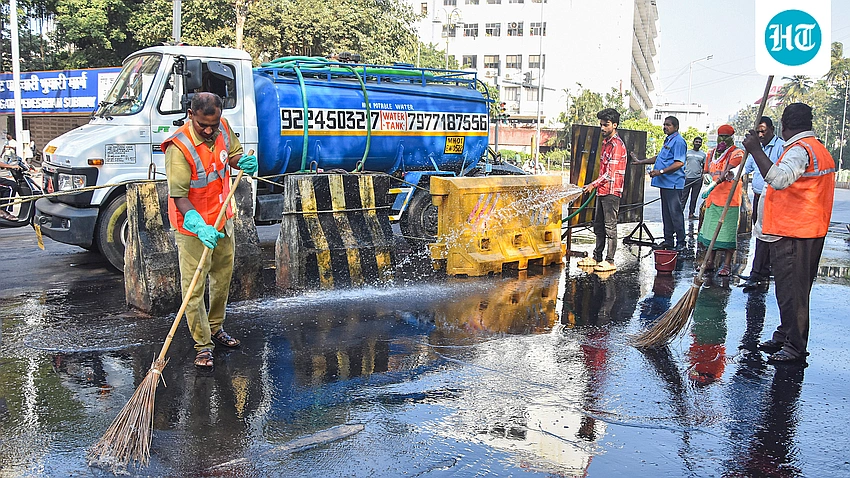
Cover image source: Mumbai air pollution: Bombay High Court orders strict monitoring of construction activities, forms five-member committee 🔗
