Can Zuckerberg's new smart eyewear make phones obsolete?

Can Zuckerberg's new smart eyewear make phones obsolete?
At Meta Connect 2025, Zuckerberg unveiled AI-powered smart glasses from Ray-Ban and Oakley, priced $379–$799, with a neural wristband for gesture controls to reduce phone use.
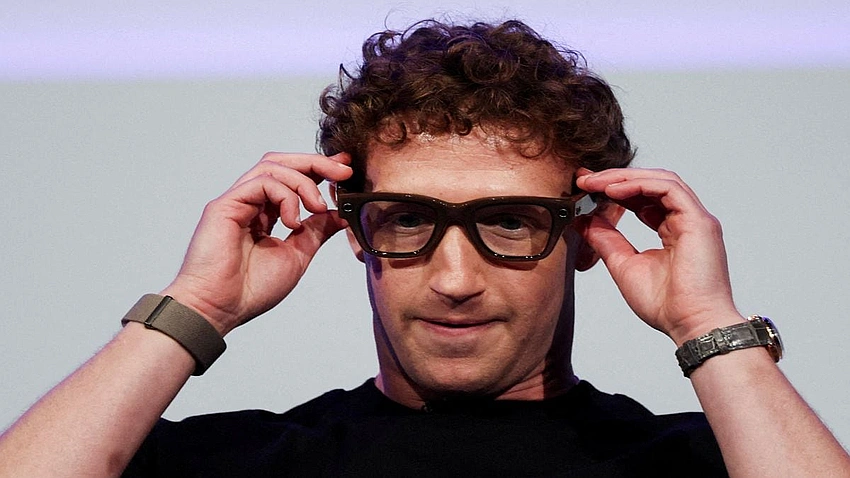
Meta's chief executive Mark Zuckerberg unveiled a new family of smart glasses at Meta Connect 2025, the annual developers conference. The devices are described as powered by Meta's artificial intelligence technology and are produced in partnership with sunglasses brands Ray-Ban and Oakley.
They are priced between $379 and $799 (Rs 33,398 to Rs 70,406). In addition to the glasses, Zuckerberg introduced a neural wristband that pairs with Meta Ray-Ban Display glasses to enable tasks like sending messages through small hand gestures.
The aim, according to the presentation, is to offer features that reduce the need to stay glued to a smartphone. Zuckerberg has framed the move as part of a future where smart glasses are central. He warned that those who do not wear smart glasses could face a significant cognitive disadvantage when compared with people who do wear them.
Zuckerberg’s newly announced smart eyewear (Meta’s “Ray-Ban Display”, etc.) is exciting, but whether it can really replace smartphones is a complex issue. There are a lot of pros, and also important technical and social hurdles.
What the new smart glasses can do
From the recent announcements:
- The Ray-Ban Display glasses have a built-in display in one lens. You can view messages, do video calls, see navigation, get real-time translation / captions etc.
- They are paired with the “Neural Band” wristband which lets you use subtle hand gestures to control them (swipes, taps, etc.).
- Battery life: about 6 hours of mixed use, with external charging/charging case adding more (≈ 30 extra hours with the case)
- Display specs: modest field of view (≈ 20°), resolution around 600×600 pixels, brightness from 30 to ~5000 nits.
- Price is high: $799 for the Ray-Ban Display version.
What the limitations are
These capabilities are promising, but there are still big challenges before smart eyewear can fully replace smartphones:
Battery Constraints
The glasses have limited battery life (≈ 6 hours for many functions). Heavy usage of display + camera + wireless puts strain on power. Until battery tech improves a lot, they can’t sustain what we typically expect from a phone (many hours of screen-on use, gaming, streaming, etc.).
Display Field of View & Visual Comfort
A 20° field-of-view display is quite small. It works for notifications, simple overlays, direction prompts, but for immersive media, large videos, gaming, detailed multitasking — phones / tablets are still much better. Eye fatigue, ergonomics, weight of device, etc., are still problems.
Input Methods
Using gestures, voice, wristbands helps, but touchscreens are very efficient, especially for typing, editing, browsing, etc. The input modes available in smart glasses are still developing. For many tasks, the precision & speed of a phone screen + fingers is hard to match.
Processing Power
Smart glasses often still depend on companion devices (phones, cloud) for heavy processing, storage, connectivity. They might lag behind in performance compared to a phone or laptop. Also heat & hardware constraints limit what can be packed into small frames.
Privacy, Social Acceptability
Cameras embedded in glasses raise privacy concerns, people around might be worried about being recorded without consent. There are also regulatory and social norms to consider. Also concerns about wearing something potentially heavy or uncomfortable for long durations.
Cost
The price is steep. Features are early generation. Wide adoption needs lower cost, robustness, lots of apps & ecosystem support.
Ecosystem Integration
For most people, the smartphone is central to many tasks: apps, payments, banking, video streaming, social media, etc. To replace phones, glasses must be able to do all that as seamlessly. That requires strong software, apps optimized for glasses, good network connectivity, etc.
So, can it make phones obsolete?
Not yet, but it might move us in that direction. Here’s how I see it:
Smart glasses like Meta’s are more likely to become complements first, devices you use for quick access, notifications, hands-free interactions, etc. They’ll reduce phone-usage in certain contexts (walking, driving, when you don’t want to pull out your phone).
Over time, with improvements (battery, display size & clarity, input methods, processing power, cost), glasses might take over more functions. For example: navigation, messaging, basic media consumption, translation, voice assistant tasks.
But for heavier tasks, full multitasking; high‐quality video; intensive gaming; photography; a big screen for content; etc. phones (or tablets/laptops) will likely persist for many people for a long time.
Realistically, even if phones become less central, it might take many years for smart glasses (or other wearable AR/AI devices) to approach the utility, convenience, and flexibility of smartphones for the majority of users. Social, cultural, regulatory, hardware, and cost barriers all need to be addressed.
