India's 7.8% GDP: Economist & Ex-FinSec Clash!

India's 7.8% GDP: Economist & Ex-FinSec Clash!
India's 7.8% GDP growth sparks a fierce debate! Economist Gourav Vallabh and ex-Finance Secretary Subhash Garg square off over data, methodology, and the true picture of economic expansion. Get the full story!
India's economy is under the microscope as its reported 7.8% GDP growth for Q1 FY27 has ignited a heated debate among economic experts and government officials. At the heart of the controversy are differing interpretations of the data, methodology, and the very credibility of the revised economic figures.
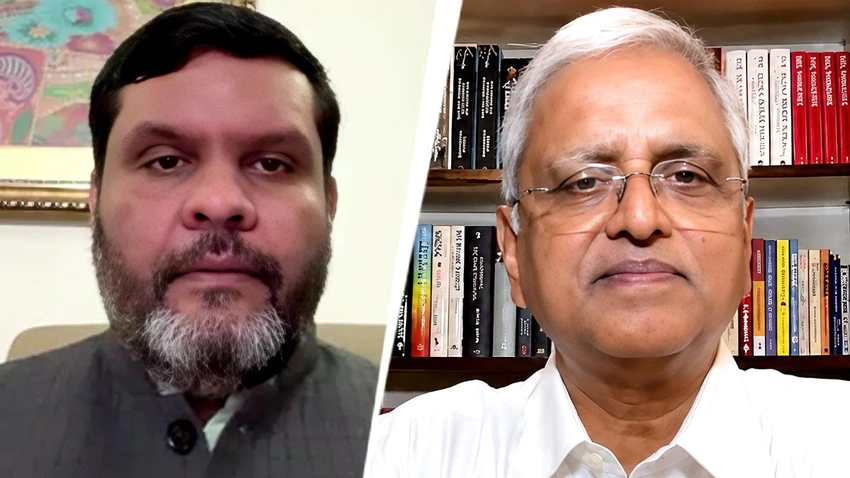
The discussion centers around a sharp face-off between economist Gourav Vallabh and former Finance Secretary Subhash Chandra Garg. Vallabh, supporting the robust 7.8% growth figure, points to strong consumption, investment, exports, and other high-frequency indicators as evidence of a thriving economy.
He also argues against comparing the old and new GDP series, implying such comparisons can be misleading and do not accurately reflect current economic performance.
On the other side, Subhash Chandra Garg has raised significant questions about the underlying data and methodology.
He highlighted a substantial ₹6 lakh crore gap between earlier and revised GDP estimates, calling for a more thorough explanation. Garg has also challenged the comparison between an ₹86 lakh crore and an ₹80 lakh crore revision, questioning how these revised production values were arrived at.
His concerns extend to the GDP methodology, base-year changes, and the role of deflation in measuring real growth, suggesting that these factors could be skewing the official numbers.
Adding a political dimension to the economic discourse, Union Minister Piyush Goyal has strongly defended the 7.8% GDP growth. He launched a sharp attack on critics, including what appears to be a direct swipe at Subhash Chandra Garg, labeling them "naysayers" who are attempting to "misguide" the public.
Goyal dismissed criticisms about job creation, asserting that industries like textiles and infrastructure are currently struggling to find enough workers, thereby implying robust employment opportunities. His statements underscore the government's firm stance on the positive economic outlook and its dismissal of critical analyses of the GDP figures.
This ongoing debate highlights the complexities of economic data interpretation and the challenges of communicating growth figures to the public.
As experts continue to scrutinize the numbers, the discussion provides crucial insights into the different approaches to understanding India's economic trajectory.

Login to comment.
No thots yet. Be the first to share your thoughts!