Mamata Banerjee to Appear in Court as West Bengal SIR Case Reaches Supreme Court

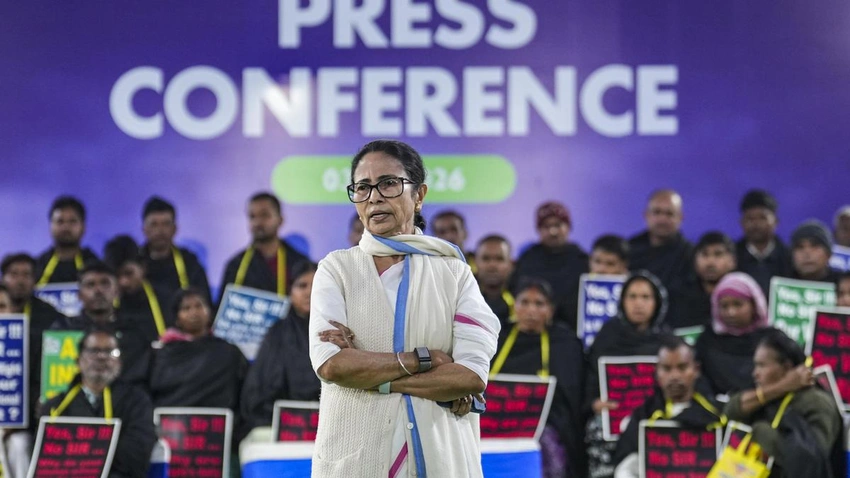
Mamata Banerjee to Appear in Court as West Bengal SIR Case Reaches Supreme Court
Mamata Banerjee is set to appear before a Supreme Court bench on Feb 4 to challenge the SIR process and mass elector deletions in West Bengal.
West Bengal Chief Minister Mamata Banerjee is likely to appear in person on Wednesday before a Supreme Court Bench headed by Chief Justice of India Surya Kant in a case challenging the legality of the Special Intensive Revision (SIR) exercise conducted in the State. A batch of petitions challenging the constitutionality of the SIR process and the mass exclusion of electors from the voters’ list of the State is listed for hearing on Wednesday (February 4, 2026). Banerjee, currently in the national capital, has vociferously opposed the SIR and has filed her own petition against the exercise conducted by the Election Commission of India. A gate pass for entry into the Supreme Court has been issued for the day, and she is expected to be present in the courtroom with her lawyers.
The petitions argue that the SIR process undermines due process and democratic participation by excluding large numbers of voters from the rolls. The hearing comes after the Election Commission directed the public display of the list of electors deleted due to “logical discrepancies,” a move Banerjee had previously pressed to ensure transparency for those affected.
News surrounding the SIR in West Bengal has highlighted patterns in deleted electors that critics describe as unusual, including a high rate of deletions among younger voters, apparent gender biases, and disproportionate impact on certain communities. The draft electoral roll for the first phase of the SIR was released on December 16, 2025, with reports indicating over 58 lakh electors were deleted. Supporters of Banerjee say the process has caused widespread anxiety among citizens who rely on accurate rolls to participate in elections.
Mamata Banerjee has openly accused the poll body of disrespect and questioned methods used during negotiations with the Chief Election Commissioner in Delhi, arguing that voters’ rights must be protected and that any revision exercise must be fair and transparent. The court’s decision on the petitions could have far-reaching implications for how electoral rolls are prepared and contested in states across the country.
