Decentralized Social: Is This The Gen Z Reboot We've All Been Waiting For?

Decentralized Social: Is This The Gen Z Reboot We've All Been Waiting For?
Gen Z is demanding a new kind of social media experience. Bluesky's leaders are making their case for a protocol-driven, open web at Disrupt 2026. Could this be the social media reset everyone is looking for?
The social media landscape is at a critical juncture, and for Gen Z, the old models are clearly showing their age. We're witnessing what many are calling the 'Great Social Media Reset,' a transformative period where the very foundations of online connection are being re-evaluated.
And leading the charge with a compelling vision is Bluesky, suggesting that the next era of social media won't be defined by a single platform, but by an open, adaptable protocol.
Think about it: the current giants are walled gardens, often opaque in their operations, and increasingly criticized for how they handle user data and content. This centralized control has led to an erosion of trust, especially among younger generations who value authenticity, privacy, and genuine community.
It's no wonder that after years of navigating platforms like 'X' (formerly Twitter), there's a hunger for something fundamentally different, something that puts power back in the users' hands.
This is where Bluesky's bet on a protocol-based approach becomes incredibly relevant. Instead of a single company owning all the infrastructure, a protocol allows for a diverse ecosystem of applications and experiences to flourish on a shared, open standard.
It's like the internet itself, a protocol that enables countless websites and services, rather than just one dominant site.
This model promises greater resilience, innovation, and, crucially, user control.
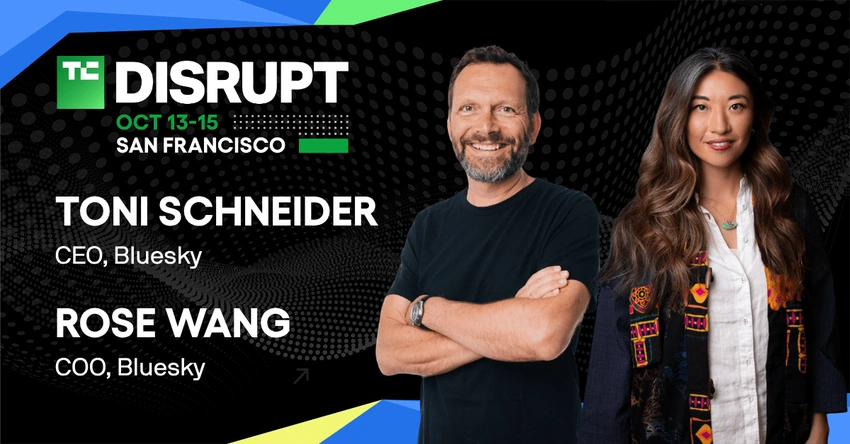
Steering this ambitious vision are Bluesky's CEO Toni Schneider and COO Rose Wang.
They'll be laying out their powerful case at TechCrunch Disrupt 2026 in San Francisco, from October 13-15 at Moscone West. Their discussion promises to dive deep into whether social media can truly “start over” and how a protocol like Bluesky's fits into that much-needed reboot.
Schneider, who stepped into the CEO role after a successful interim period, is focusing on scaling and execution, a necessary shift highlighted by former founding CEO Jay Graber, now the Chief Innovation Officer.
For Gen Z, this shift means more than just a new app; it's about reclaiming the internet's original promise of decentralization and freedom. Imagine a world where you're not tied to a single platform's rules or algorithms, where you can choose your interface, migrate your data, and truly own your online identity.
This could foster entirely new products, innovative business models, and more resilient, authentic communities that aren't subject to the whims of a single corporate entity.
The challenge, of course, is immense. Bluesky and other emerging decentralized platforms face the uphill battle of attracting and retaining communities, all while trying to claw market share from deeply entrenched incumbents. But the potential reward, an open web that genuinely reflects “the full richness of how people connect, communicate, and build livelihoods”, is too significant to ignore.
The conversation at Disrupt 2026 won't just be about Bluesky; it'll be about the future of social media, and whether Gen Z will finally get the digital space they truly deserve.
