Why IoT Gateways Are Essential for Modern Hotel Automation Systems

Why IoT Gateways Are Essential for Modern Hotel Automation Systems
Learn how a hotel IoT gateway enables smart automation through device integration, open APIs, and stable connectivity. Ideal for scalable and flexible hotel systems.
Introduction: The Backbone of Smart Hotel Systems
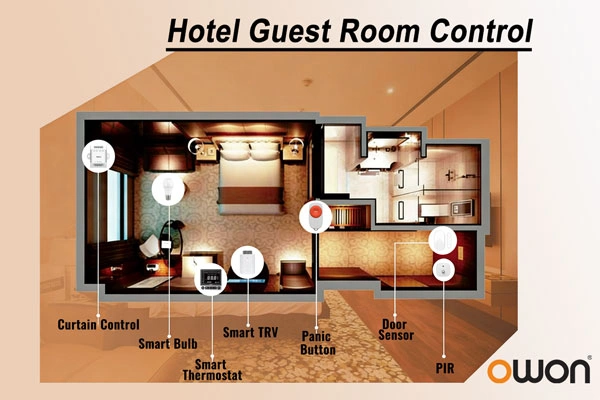
As hotels continue to adopt smart technologies, the number of connected devices within each room is rapidly increasing—from lighting controls and thermostats to occupancy sensors and curtain systems.
Managing all these devices efficiently requires more than just connectivity. It requires a central system that can unify communication, enable integration, and ensure reliable operation.
This is where a hotel IoT gateway becomes essential. Acting as the backbone of a smart hotel system, the gateway connects devices, bridges communication with servers, and enables scalable automation across the entire property.
What Is a Hotel IoT Gateway?
A hotel IoT gateway is a central device that connects, manages, and transmits data between smart devices and a hotel’s management platform.
Key Functions
- Device Aggregation: Connects multiple smart devices through a unified network
- Data Transmission: Sends device data to servers or management systems
- System Integration: Enables communication with third-party platforms via APIs
Unlike traditional control systems, an IoT gateway allows hotels to build flexible and scalable automation systems without complex infrastructure.
How a Hotel IoT Gateway Works
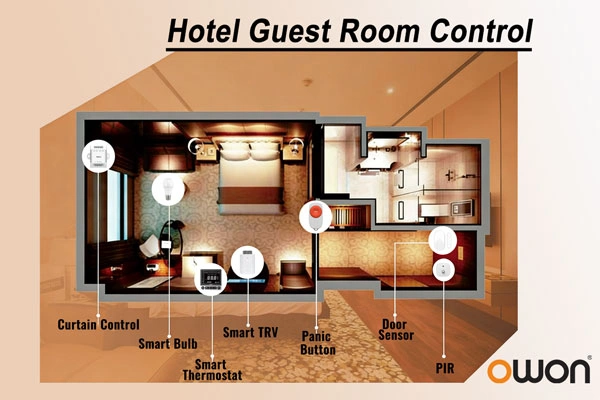
A typical smart hotel architecture consists of three layers:
Device Layer (Zigbee Network)
At the edge of the system are smart devices such as:
- Lighting wall switches
- Relay modules
- Fan coil thermostats
- Occupancy and environmental sensors
These devices communicate via Zigbee, a low-power and reliable wireless protocol widely used in IoT environments.
Gateway Layer
The IoT gateway acts as the central hub:
- Collects data from all connected devices
- Manages the Zigbee network
- Translates device communication into standard data formats
👉 Explore compatible smart devices 🔗 used in hotel automation
Server Integration Layer
The gateway connects to hotel management systems through:
- Open APIs for third-party integration
- Cloud or local servers
- Hotel platforms such as PMS or building systems
This architecture ensures that all devices can be controlled and monitored through a centralized interface.
Why Open API Integration Matters
In modern hotel projects, integration is often more important than individual device performance.
Challenges Without Integration
- Isolated systems that cannot communicate
- Limited flexibility in system expansion
- High integration costs for custom projects
Benefits of API-Based Integration
- Seamless connection with hotel management platforms
- Flexibility for system integrators to build custom solutions
- Easy expansion with new devices and functionalities
For smart hotel solution providers, an API-enabled IoT gateway is critical to delivering scalable and future-proof systems.
Network Reliability: The Importance of Stable Connectivity
Hotel environments require consistent and reliable system performance. Any interruption can directly affect guest experience and operations.
Multi-Network Support
A robust IoT gateway supports multiple connectivity options:
- Ethernet – Preferred for stability and consistent performance
- Wi-Fi – Flexible deployment in smaller setups
- 4G – Backup connectivity for redundancy
Among these, Ethernet is widely used in hotel projects due to its reliability and ability to handle large-scale deployments.
Zigbee 3.0: Ensuring Device Compatibility
Device compatibility is a key factor in any smart hotel deployment.
With Zigbee 3.0 support, IoT gateways can:
- Connect with a wide range of smart devices
- Ensure interoperability across different manufacturers
- Enable flexible system expansion
This is particularly important for projects that require integration with third-party devices.
Use Case: Enabling Smart Hotel Automation with an IoT Gateway
Project Background
A smart hotel solution provider was working on a project that required replacing a traditional wired system with a more flexible and scalable solution.
Key Requirements
- Centralized management of all room devices
- Integration with existing hotel systems
- Support for third-party devices
- Faster deployment without complex wiring
- Customization for specific project needs
Solution
The project implemented a Zigbee-based IoT gateway with:
- API-based integration with the hotel platform
- A full range of smart hotel devices
- Ethernet connectivity for stable communication
- Custom hardware development for specific scenarios
Results
- Faster deployment with minimal installation complexity
- Seamless integration with existing systems
- Flexible expansion with third-party devices
- Reliable system performance through stable network connections
This demonstrates how a well-designed IoT gateway enables efficient and scalable hotel automation.
Key Features to Look for in a Hotel IoT Gateway
When selecting an IoT gateway for hotel projects, consider the following:
- Zigbee 3.0 compatibility
- Open API integration capabilities
- Multi-network connectivity (Ethernet, Wi-Fi, 4G)
- Support for third-party devices
- Availability of a complete device ecosystem
These features ensure that the system can meet both current and future requirements.
Conclusion: The Gateway as the Core of Smart Hotel Automation
A hotel IoT gateway is not just a communication device—it is the core component that enables integration, scalability, and reliable operation.
By combining open API capabilities, stable connectivity, and broad device compatibility, IoT gateways allow hotel operators and system integrators to build flexible and future-ready smart hotel systems.
