The Undeniable Genius of The Devil Wears Prada

The Undeniable Genius of The Devil Wears Prada
The Undeniable Genius of The Devil Wears Prada
Beyond glamour, this analysis treats The Devil Wears Prada as a study of power, identity, and transformation in fashion—through the cerulean sweater and Runway's control dynamics.
When I first rewatched The Devil Wears Prada (2006) as part of my literary analysis journey, I expected a slick, fashionable romp. What I discovered was far richer: a layered fable about power, identity, ambition and transformation.
Fashion as Farce and Metaphor
On the surface, the film is about the glamorous world of fashion magazines. The protagonist, Andy Sachs, enters the world of the high‐stakes magazine Runway and finds it superficially fun, yet quickly learns it demands far more than she anticipated. Beneath the stilettos and designer gowns lies an incisive commentary on power hierarchies and self‐transformation.
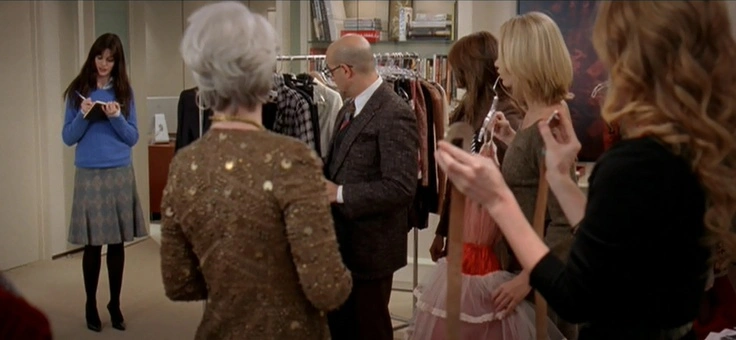
For example, the famous “cerulean sweater” scene (where Miranda Priestly explains how fashion trickles down from couture to the chain store jumper) illustrates that what might appear frivolous is deeply embedded in an economic and cultural system. It’s not just about clothes; it’s about value, control, and who decides.
Characters as Symbolic Figures
Andy Sachs
At first, Andy is the outsider: she dares to wear “that blue sweater” to her job, she’s unprepared for the demands, and she holds aloof from fashion’s significance. In short, she represents the literary “every-person” thrown into a system that demands assimilation.
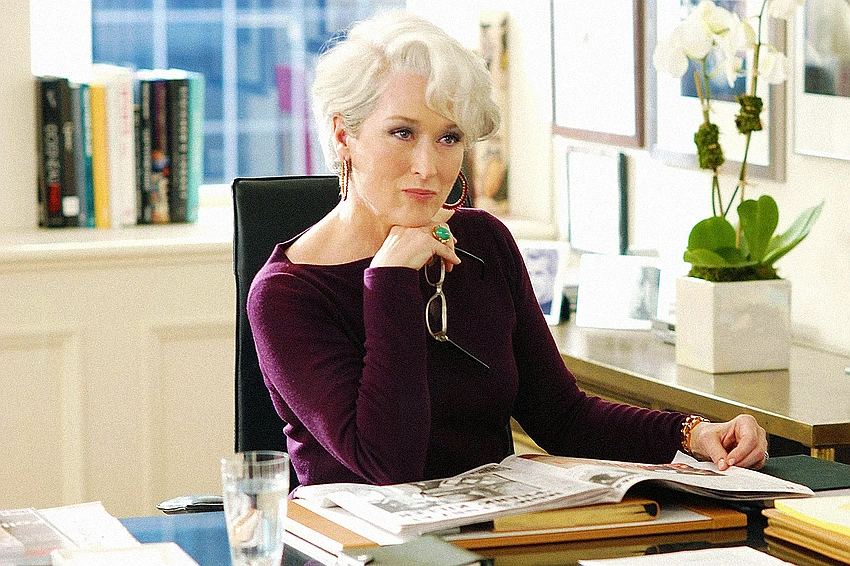
Miranda Priestly
Miranda is the embodiment of power, of an institutional machine that magnifies ambition, conformity and sacrifice. The film “trades in” issues of female power and class leaps via Miranda’s character. When Miranda dispenses orders, she is exercising control over identity, time, and personal life.
The Supporting Cast
Emily Charlton (Miranda’s assistant) and Nigel (creative director) embody the internalised culture of the magazine – the devoted insiders, the ones who have allowed fashion to shape them, rather than the other way around. Their presence emphasises that the battle is not just outsider vs insider; it is internal transformation, sometimes at a cost.
Ambition, Compromise, Identity
What captivates me is the arc: Andy transforms professionally and personally, but the question is: at what cost? The film uses fashion-world hyperbole (impossible demands, constant availability, aesthetic obsession) as a mirror to real-world adult trade-offs: ambition vs values, success vs self.
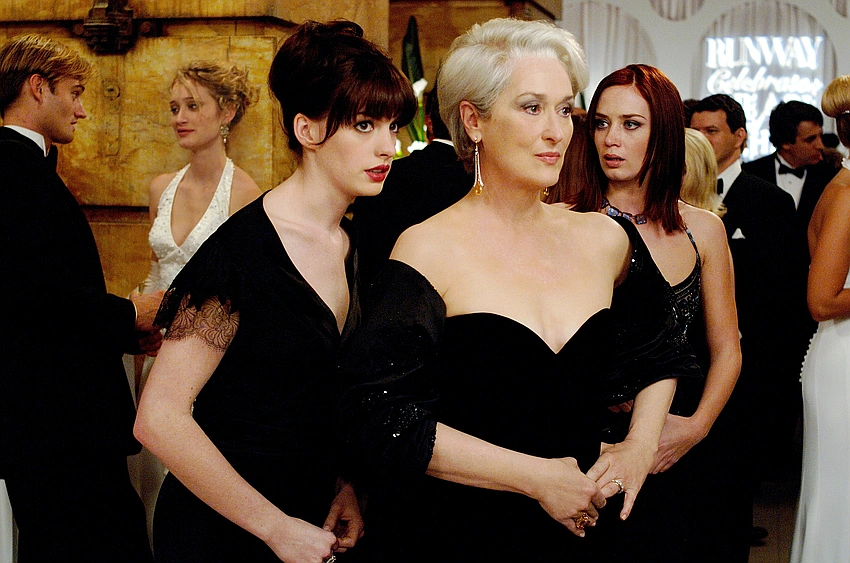
The film explores the “limitations of female power” and how class division is both confronted and accommodated. At the same time, it underpins themes of identity and conformity: Andy’s struggle with self-image, for example.
The brilliance is that the film doesn’t offer a simple moral. Andy does succeed in that she grows, but she also realises that the world she entered changed her. The final decision of walking away from the magazine feels like a reclaiming of self, not a simplistic defeat of the “boss”.
Fashion as Language
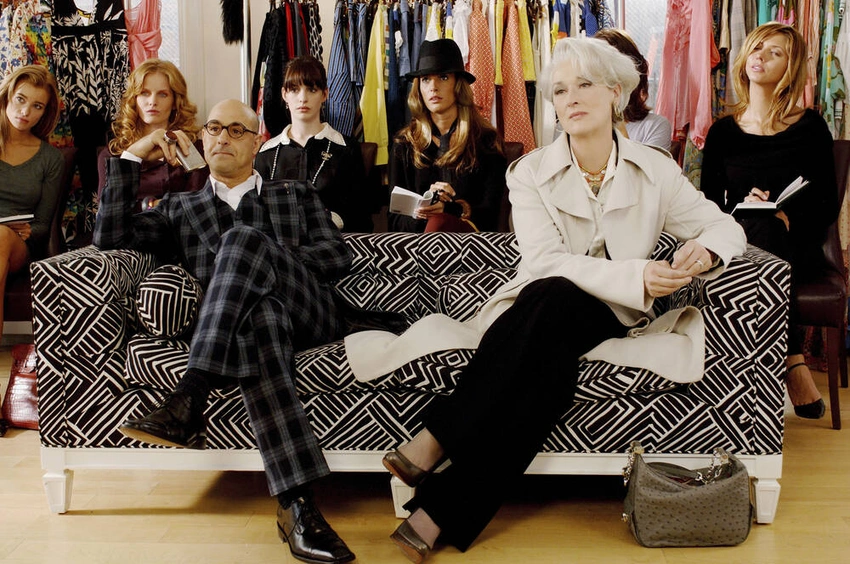
As a literature student, I love how the film uses clothes, style and appearance not as mere decoration but as semiotic systems. The wardrobe choices, the magazine covers, the scenes of the runway and backstage become narrative devices.
The cerulean speech again emphasises how fashion is part of a global economic web, influencing billions. In that respect ,the film is subtly post-modern: it uses “the clothes” to discuss identity, labour, and even capitalism.
Why It Resonates (and Why It’s Still Readable)
There is plenty of scholarship on why the film works so well. It engages with adult issues (career, sacrifice, identity) in a way that is accessible yet layered. One psychological perspective points out that it helps explore “adulthood, including career, love and growth.” Another commentary argues the film remains an enjoyable ride while still offering lessons about standing up for yourself.
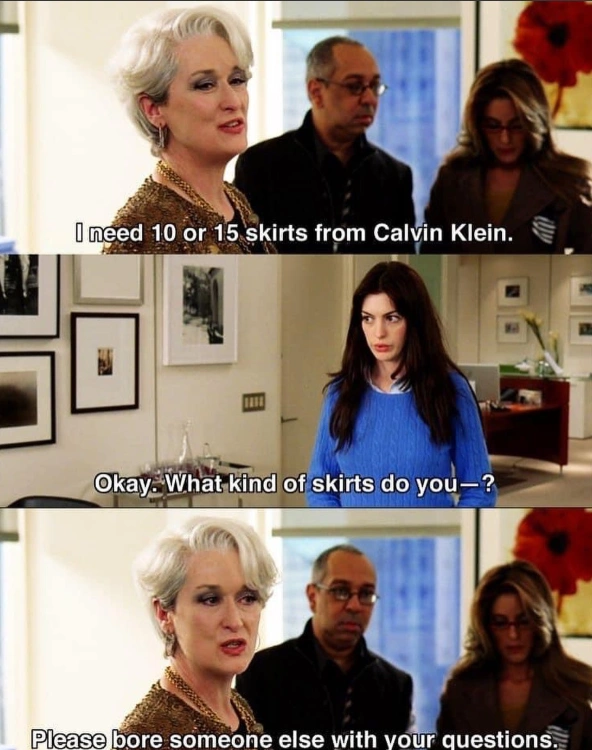
What makes it “genius”, in my opinion, is the balance: it doesn’t sacrifice entertainment for message nor message for frivolity. You can walk away with a renewed appreciation for the conflict between self-realisation and being part of something bigger.
Also, the film’s portrayal of the high‐pressure workplace remains surprisingly fresh. The metaphor of the fashion magazine stands in for any system which demands adaptation, obedience, and sometimes self-erasure. And yet the protagonist’s journey suggests that adaptation need not mean losing oneself.
Caveats and Critiques
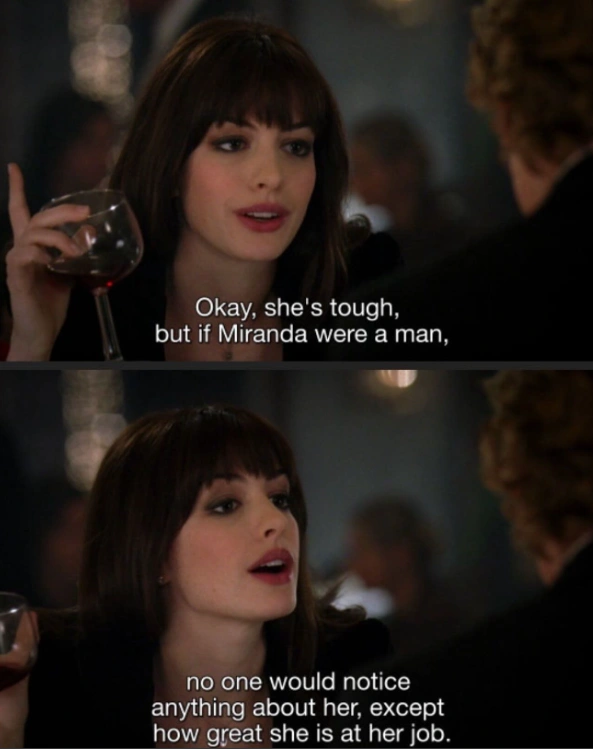
No film is perfect. The film arguably presents conventional beauty standards without truly challenging them. Another is that the “cold female boss” trope may reinforce rather than dissect gender stereotypes, though the film critiques that through Andy's defence of Miranda in front of Christian Thompson. Nevertheless, these imperfections don’t undermine the film’s core strength. Indeed, the fact that it invites critique shows its complexity.
Final Thoughts
The genius of The Devil Wears Prada lies not in dazzling costume-ball scenes or surface glamour (though it has plenty) but in how it uses that world to probe deeper questions of identity, power and compromise. As a literature student, I appreciate its subtlety: the way the narrative uses transformation to ask what we are willing to give up to “make it”, and what we are unwilling to surrender to stay true to ourselves.
If you haven’t revisited it recently, I’d encourage you to watch it again, and this time, pay attention to the clothes, the makeshift offices, the dialogue about trivialities that turn out to be anything but trivial. It may wear Prada, but it speaks the language of literature.
#DevilWearsPrada, #FashionAnalysis, #CeruleanSweater, #PowerDynamics, #FilmCritique #MovieReview
