Taj Mahal Dispute: High Court Steps In Amid "Frivolous" Temple Claims!

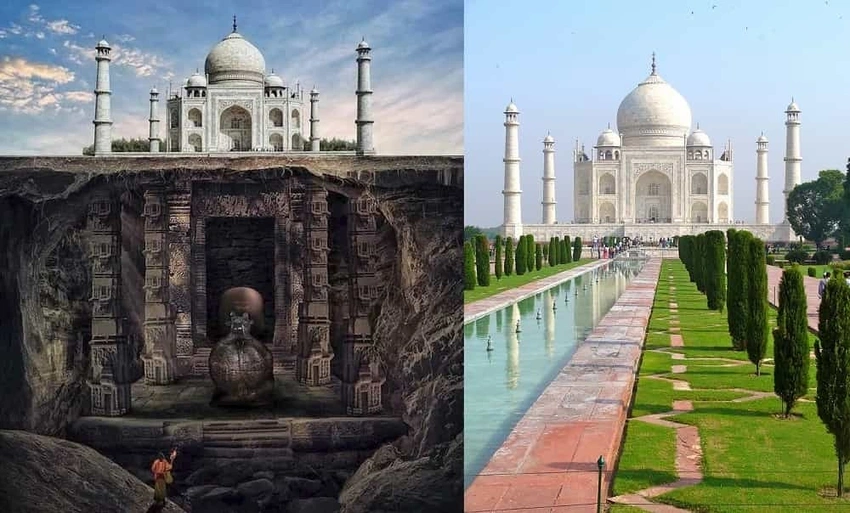
Taj Mahal Dispute: High Court Steps In Amid "Frivolous" Temple Claims!
A contentious legal battle over the Taj Mahal's origins reaches the Allahabad High Court! Learn why historians reject "Tejo Mahalaya" claims and the overwhelming evidence supporting its construction by Shah Jahan. #TajMa
The centuries-old grandeur of the Taj Mahal is once again at the center of a legal storm, as the Allahabad High Court has sought responses from the Centre and the Archaeological Survey of India (ASI) regarding a contentious petition. This development follows a refusal by an Agra trial court to appoint an Advocate Commissioner to survey the iconic monument, a request made by petitioners seeking to declare the Taj Mahal a Hindu temple.
The underlying claim, which posits that the Taj Mahal was "originally" a Hindu temple known as "Tejo Mahalaya," is largely associated with the late 20th-century writings of Purushottam Nagesh Oak. However, professional historians and archaeologists have consistently and repeatedly dismissed these assertions. Their rejection stems from the fact that Oak's claims rely on speculative linguistic arguments and unsupported historical assertions, lacking credible evidence.
In stark contrast, the construction of the Taj Mahal by Mughal emperor Shah Jahan is well-documented and supported by a wealth of contemporary evidence. This includes detailed contemporary chronicles, administrative records from the period, accounts by European travelers, comprehensive architectural histories, and archaeological findings. Crucially, no archaeological study to date has ever produced any evidence whatsoever of a medieval Hindu temple existing beneath the Taj Mahal structure.
The petitioners' arguments often resurface allegations concerning certain locked rooms within the Taj Mahal, suggesting they conceal Hindu idols. However, the ASI has previously clarified in affidavits that these rooms are locked due to structural vulnerabilities, not to hide anything. This is not the first time such claims have surfaced; a Bharatiya Janata Party leader unsuccessfully filed a Public Interest Litigation (PIL) in 2022, and activists attempted to offer 'gangajal' inside the complex in 2024.
This ongoing legal battle mirrors aspects of other recent disputes, such as those concerning the Gyanvapi mosque and Mathura's Shahi Idgah, where requests for "objective surveys" have often served as platforms to promote revisionist political narratives. Courts are equipped to dismiss pleadings that lack a sustainable cause of action and are not intended to function as commissions of historical inquiry. They should not be compelled to treat every speculative historical hypothesis as sufficient grounds for a supervised investigation, particularly when overwhelming historical and archaeological evidence already exists.
The legal position suggests that such matters are often "frivolous and vexatious," consuming judicial time on claims that have been widely debunked by expert consensus. This scenario highlights how ideas originating from pseudohistory can persist, especially when bolstered by certain historical, political, economic, and social conditions.
