Apparently India has Baddies: The Tyla Concert Discourse

Apparently India has Baddies: The Tyla Concert Discourse
Apparently India has Baddies: The Tyla Concert Discourse
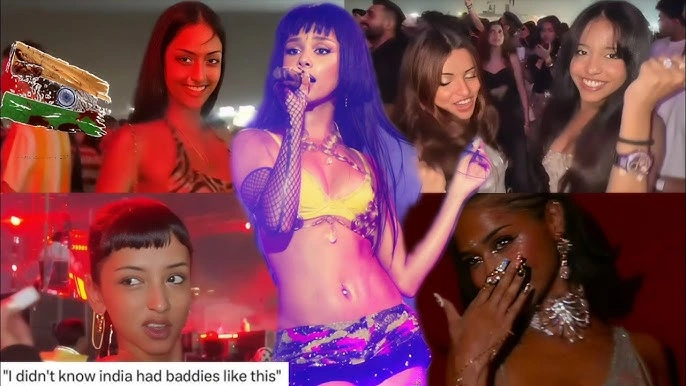
During Tyla's Mumbai set at the Indian Sneaker Festival, a viral reel of Indian women dancing to Chanel sparked debates about visibility, aesthetics, and the playful 'India has baddies' moment.
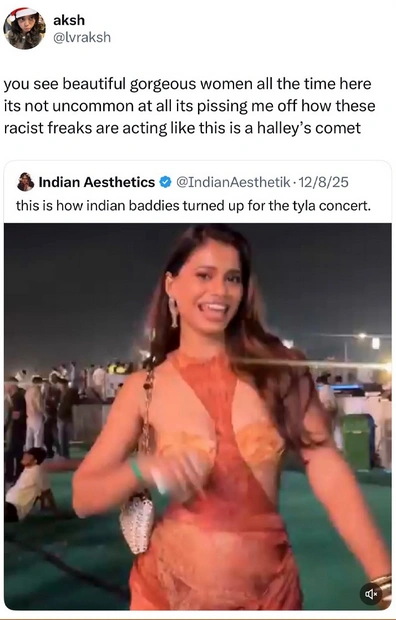
When a pop star drops into a city, the performance is only half the story. The other half is what the audience brings with bodies, clothes, gestures, gossip, and the glowing, combustible thing we call social media. Tyla’s recent Mumbai set became one of those rare moments where an artist, her fans and the internet together produced a cultural aftershock: a short reel of Indian women stylish, confident, dancing to her new song Chanel went viral, and the phrase “India has baddies” began circulating as if discovery had just been made. That declaration, playful on its face, quickly pulled several taut threads: aesthetics,racialised surprise, and the politics of visibility.
The moment: a concert and a reel
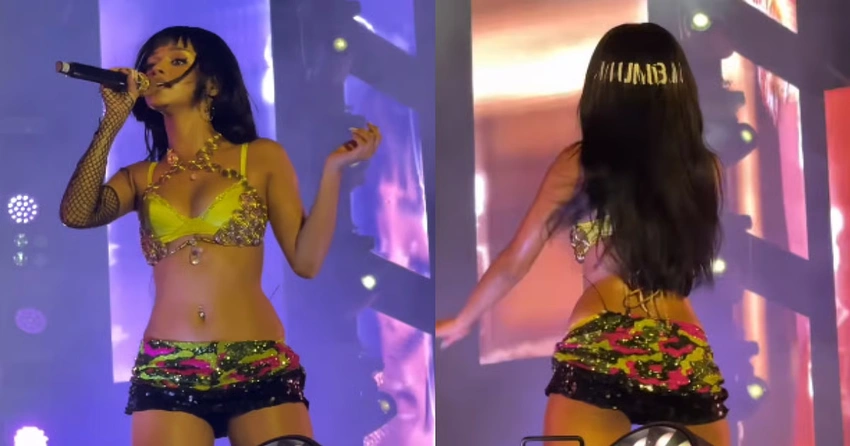
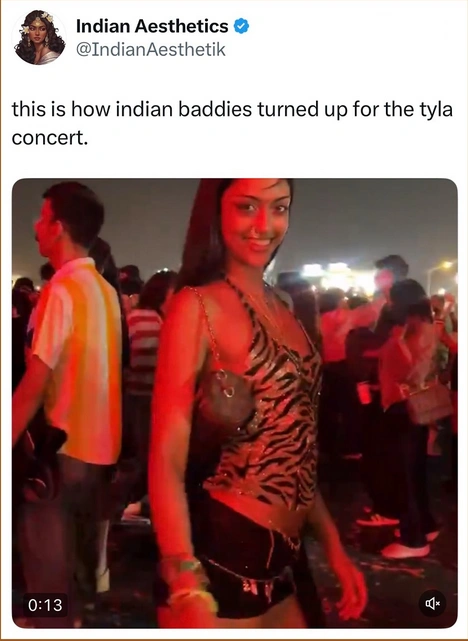
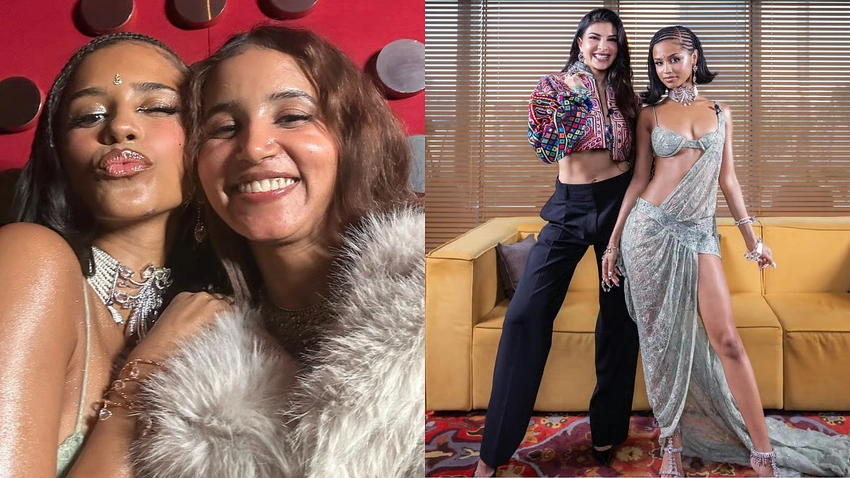
Tyla performed in Mumbai during the Indian Sneaker Festival on 7 December 2025, wearing a saree-inspired stage look that itself became a talking point. A clip short, glossy, choreographed by chance; showed a group of Indian creators serving looks: slick make-up, confident struts, cameras on them. It was the kind of content that travels fast because it affirms something people online want to believe: beauty is universal, and here was proof. Tyla reposted the content, amplifying it beyond local circuits and making the moment global.
Why “baddies” landed like a cultural grenade
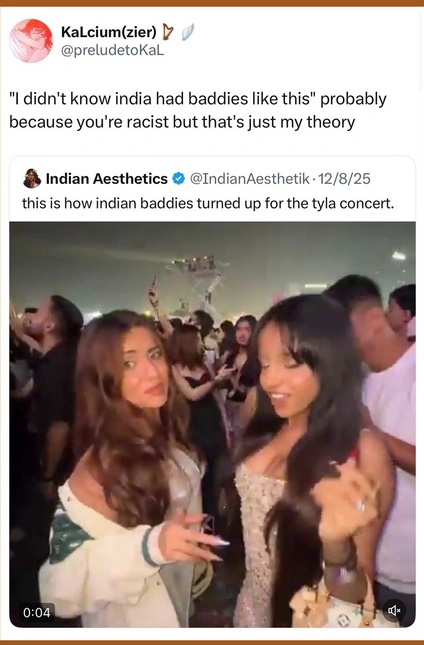
The term “baddie” carries more than shorthand for attractiveness; it indexes a set of aesthetics (dewy skin, glossed lips, precisely curated outfits) that has been widely circulated by global beauty industries and social platforms. When people online exclaimed “I didn’t know India had baddies,” they were not simply complimenting looks; they were confessing surprise that brown women could occupy an aesthetic category already familiar to Western social-media viewers. That surprise, framed as delight, exposed a deeper ignorance: a long history of marginalising brown beauty and treating its recognition as a novelty. Vogue India and other outlets noted how the viral clip prompted conversations about representation rather than merely vanity.
The uglier corollary: fetish, praise and racism
The warm, celebratory takes were accompanied by uglier responses. Across X (formerly Twitter), Instagram comments and YouTube shorts, some reactions veered into fetishising or plainly racist territories the kind of backhanded “surprise” that reads like: “Oh, they’re attractive who knew?” Critics called out this behaviour quickly, arguing that applause for a handful of reels cannot substitute for sustained respect or structural inclusion. Indian outlets reported the backlash and the debate that followed, making the case that virality can reproduce old tropes even while it appears to upend them.
What the spectacle reveals about modern fandom
Concerts have always been social dramas, and in the era of smartphones they double as performance laboratories. Fans perform for each other as much as for the musician; influencers translate presence into content; global audiences read those fragments as cultural data. Tyla’s Mumbai show was therefore not merely a performance but a node in circulation: a stylist (Nancy Tyagi) designing a look, a singer adopting a sartorial motif, and audiences reflecting back a new image of Indian visibility. That loop is transformative precisely because it is messy — it produces new possibilities while also reopening old wounds about who gets seen and how.
Aesthetic recognition is not the same as structural change
There is a risk in mistaking moments for movements. The fact that a reel made strangers notice Indian women’s style does not mean that industries, fashion editors, casting directors, awards juries, have fundamentally altered the criteria by which they nominate, hire or invest. Viral visibility can be an entrée into broader influence, but it can also be a spectacle that leaves power unchanged. The celebratory language that accompanied the “baddies” meme sometimes read like a comfortable closure: racism cured by pretty people. That facile reading does violence to the deeper work of representation, which demands durable shifts in access, labour conditions and institutional gatekeeping.
What to look for next
If this moment matters, it will be because it sparked follow-through. Will Indian stylists and creators who made that evening look and the backstage labour that made it possible get credited and contracted more often? Will global platforms stop treating visibility as the same as equity? Will audiences interrogate the surprised exclamations and ask instead: why were we surprised? Cultural moments can seed questions; they rarely supply answers. The healthy response is scepticism combined with care: celebrate the joy of being seen, and insist that being seen becomes a pathway to sustained recognition.
A small celebration, a larger demand
Tyla’s Mumbai night was a bright, human thing of music, style, shared delight. The “India has baddies” discourse shows how quickly admiration and ignorance can be braided together on the internet. As a pop-culture fan and someone who studies how public feeling circulates, I find moments like these both energising and instructive: energising because they unsettle narrow notions of beauty; instructive because they remind us that visibility without accountability is only half a victory. Let’s enjoy the reels, but also turn our attention to the deeper structural questions they inadvertently expose.
#TylaLive #MumbaiConcert #IndiaHasBaddies #IndianSneakerFestival #ViralReel
