Charles Hinman: The Visionary Who Shattered Art’s Flat Canvas

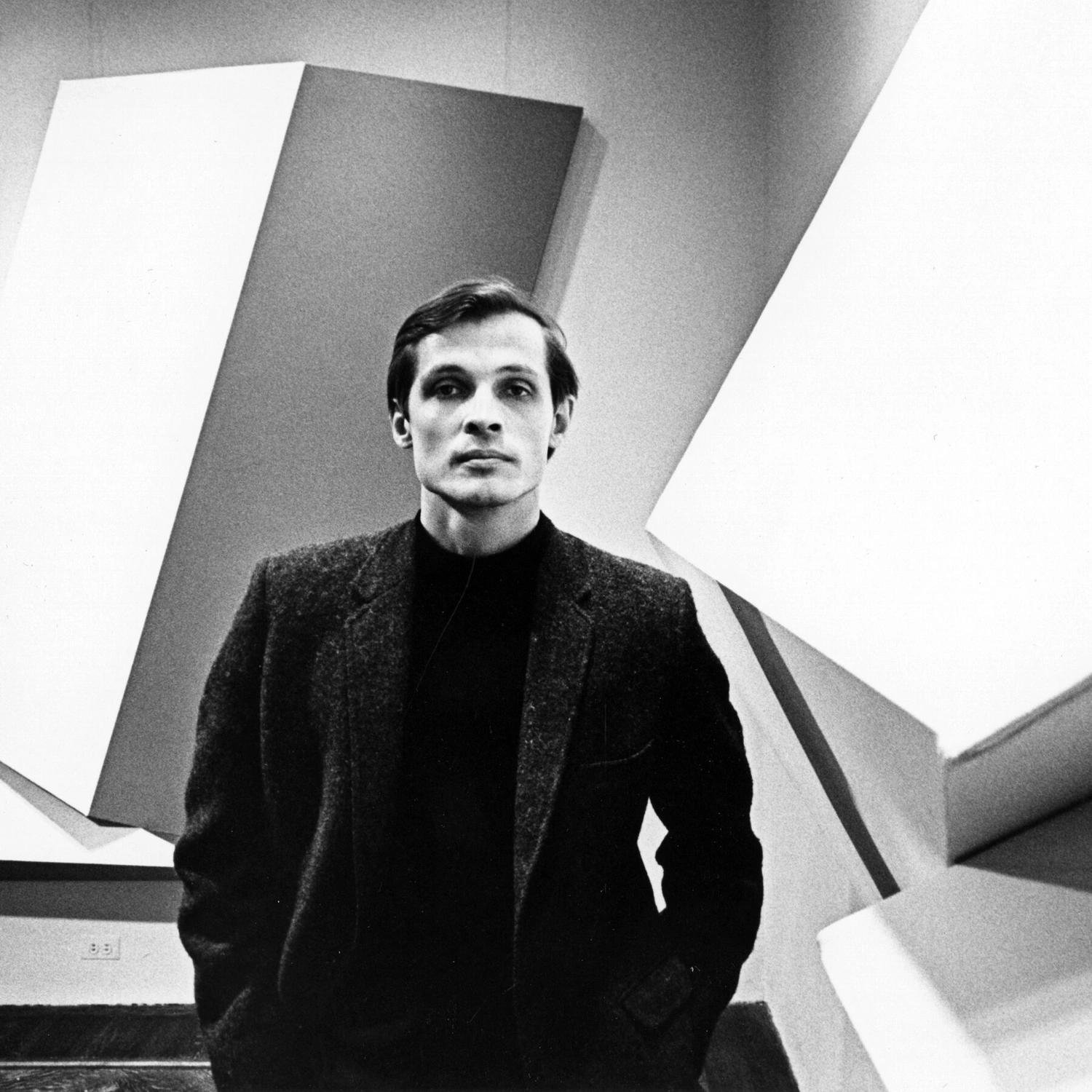
Charles Hinman: The Visionary Who Shattered Art’s Flat Canvas
Remembering Charles Hinman, the New York artist who radically redefined painting in the early 1960s, turning canvases into three-dimensional, protruding forms. A true pioneer!
It's a rare artist who can truly bend the rules of a medium, making us rethink its fundamental nature. Charles Hinman was one of those exceptional figures. As a New York artist, he didn't just paint pictures; he built them, pushing canvases off the wall and into our space, fundamentally blurring the lines between painting and sculpture.
His passing at 93 marks the end of an era, but his legacy of innovation will undoubtedly continue to inspire. What Hinman achieved, particularly starting in the early 1960s, was nothing short of revolutionary. Imagine the art world then: while abstract expressionism had broken free from figuration, the canvas itself largely remained a flat, rectangular plane.
Hinman looked at that plane and said, “What if it wasn't?”
He challenged the very definition of a painting. His “shaped, protruding canvases” weren't just clever tricks; they were profound statements about form, space, and perception. He understood that the edge of the canvas wasn't a boundary but a starting point for exploration.
His works command attention, not just for their vibrant colors and dynamic compositions, but for their physical presence. They jut out, recede, and twist, inviting viewers to engage with them from multiple angles, truly experiencing them in three dimensions.
It was about integrating the artwork with its environment, making it an architectural element as much as a pictorial one. He used geometry and structure to create dynamic visual experiences that were both rigorous and playful. You didn't just look at a Hinman; you looked into it, and it often seemed to look back, its forms shifting with your movement.
His influence can be seen in countless artists who followed, daring to break free from the traditional rectangular format.
He helped pave the way for art that embraced its objecthood, influencing movements from Minimalism to contemporary installation art.
He showed us that a painting could have a back, a side, a top, and a bottom that were as integral to its meaning as its front.
So, as we reflect on the incredible life and career of Charles Hinman, let’s remember him not just as a painter or a sculptor, but as an “art shifter”—a visionary who saw beyond conventional categories and brought new dimensions, quite literally, to the canvas. His work remains a powerful testament to the endless possibilities when an artist dares to ask, “What if?”
His art continues to speak volumes, reminding us that true innovation often lies in challenging the very foundations of what we think we know. What a career, what a mind, what a legacy.
