The American Queer Art Scene You Were Never Supposed to Find
The American Queer Art Scene You Were Never Supposed to Find
The American Queer Art Scene You Were Never Supposed to Find
A portrait of Carmen DeCristo’s queer Southern journey, exploring how photography, zines, and free art education create spaces of belonging, representation, and possibility for trans and queer communities.
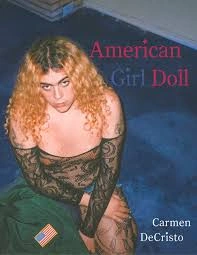
American Girl Doll is artist Carmen DeCristo’s hand-assembled zine about queer life across the American South and Midwest. The title borrows from a children’s toy line that DeCristo never owned because, as she has explained, it was too expensive. She made herself into the American girl instead. The object that once represented a very particular version of American girlhood becomes the title of a project about a trans woman travelling through places where people like her are often treated as though they do not belong.
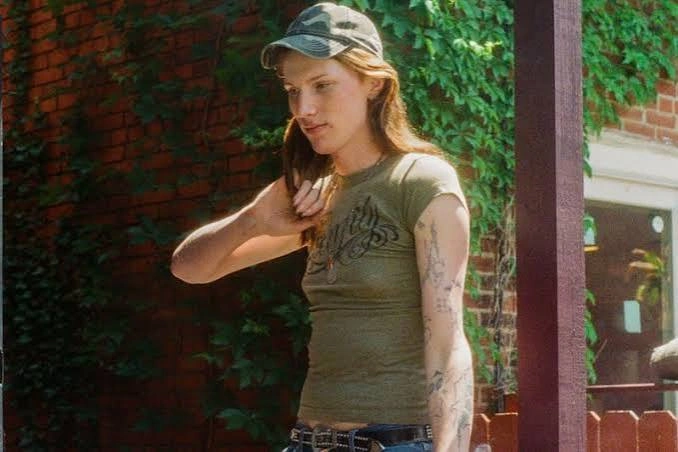
That tension runs through the whole project. DeCristo grew up in Silk Hope, North Carolina, where her graduating class had 36 people. As an adult, she moved to New York and became part of its trans and nightlife communities. Then she started driving back towards the kinds of places she had once left behind, photographing queer people as they built scenes of their own. The photographs include raves in a rundown Louisville chapel and parties held in smoke shops. The further she travelled, the more the project began to look like a record of a country that exists alongside the one appearing in political headlines.
The zine you can hold in your hands
The first volume of American Girl Doll sold out within two hours of DeCristo announcing it online. She printed and assembled it herself, then began travelling with subsequent editions and selling them for enough money to cover her petrol. She has sold copies in at least 15 states, often at in-person events, and has kept the work on a sliding scale so that people can actually afford to own it.
We are living through a period in which queer images are everywhere and yet increasingly difficult to encounter without a screen between you and the person who made them. DeCristo's project insists on being an object. You turn its pages yourself. You can leave it on a table. Someone else can pick it up. There is something almost old-fashioned about that, except that the politics of it feel very current.
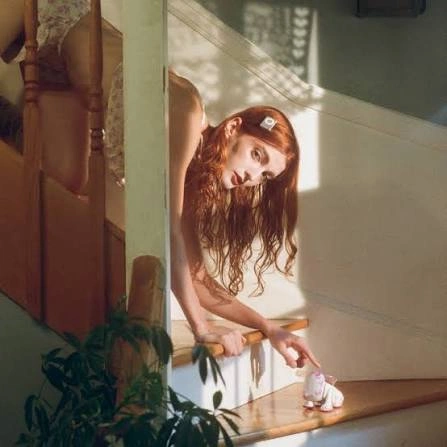
What happens when queer kids get an art class?
DeCristo's involvement with QT Art Camp began from a similar impulse. Growing up in small-town North Carolina, she had never imagined taking an art class alongside other queer young people or learning from an openly trans artist. Years later, she became one of those artists.
QT Art Camp was created by artists Jesse Pallotta and Angel Glasby as a free programme for queer and trans young people aged 13 to 19. The first programme included an analogue photography class taught by DeCristo, with later sessions covering portrait drawing, vogue dancing and abstract painting. The project took months of planning, fundraising and outreach before its first class began.
The word “free” can sound like a minor detail in descriptions of arts education. It is anything but. Film photography is expensive, and so can art schools. Even having the time and safety to experiment can be a privilege. For one student, the attraction was simply getting to try photography without having to pay for a course. For another, being taught by a trans professional mattered just as much. The classroom became a place where artistic possibility and the possibility of seeing someone like yourself doing the teaching arrived together.
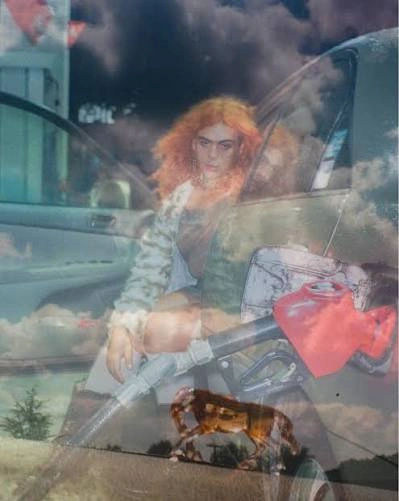
What a photograph does
There is a line running from the photography class to American Girl Doll that I find difficult to ignore. DeCristo teaches young people how to use film, but she also teaches them that taking a photograph means deciding how somebody else will be seen. Light, framing and staging all change the story. The photographer is never merely recording what happens in front of the camera; they are choosing what the viewer gets to know.
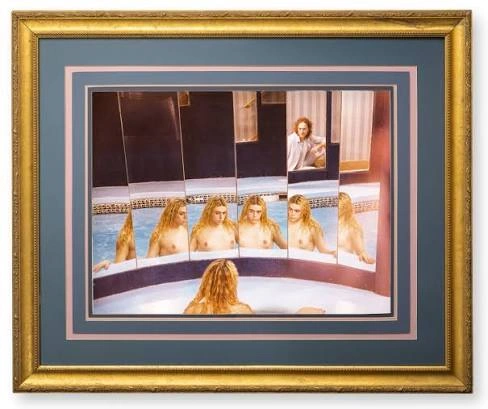
That is exactly what makes her zine so interesting. DeCristo combines candid photographs with staged images, allowing documentary and fantasy to sit side by side. She has described herself as a documentarian with a fine-art sensibility, and the books are built around that tension. A snapshot can show you what was there. A staged photograph can show you what the photographer wants the world to look like.
For queer artists, that distinction carries particular weight, as much of queer representation has historically depended on somebody else deciding what queer life looks like. DeCristo photographs people creating their own scenes and then gives those images back to the community as something they can hold.
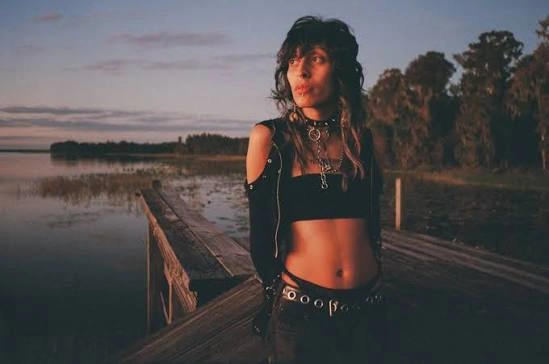
Maybe this is what a queer future looks like
The most interesting thing about both projects is that neither begins with the question of how to make queer people more acceptable. They begin somewhere else.
What if a teenager in a small town could walk into an art class and find a trans person at the front of the room? What if a trans photographer could drive through the American South and find queer people dancing inside an old chapel? What if those photographs could be printed, passed between people and kept in someone's home?
These are small acts of cultural production, but they accumulate. DeCristo's students get to imagine themselves as artists. The people in American Girl Doll get to appear as subjects of their own lives. And we are invited to partake in her kaleidoscopic universe one shot at a time.

Login to comment.
No thots yet. Be the first to share your thoughts!