Top Military Drone Applications in 2026: From ISR to Tactical Edge Intelligence

Top Military Drone Applications in 2026: From ISR to Tactical Edge Intelligence
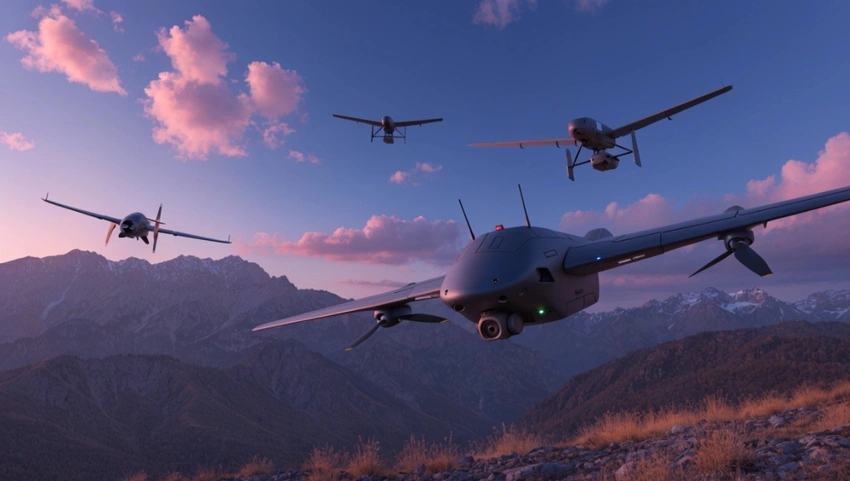
The applications of UAVs in military operations have evolved dramatically, transforming modern warfare. In 2026, unmanned aerial vehicles (UAVs), commonly known as drones, are no longer just tools for surveillance, they're integral to decision-making on the battlefield. From persistent intelligence gathering to real-time tactical edge intelligence, these systems enhance situational awareness while minimizing risks to human personnel.
As global defense budgets prioritize autonomous technologies, military drone uses 🔗 are expanding rapidly. Key drivers include AI integration, swarm capabilities, and low-latency video processing. Here's a quick overview of the main challenges and opportunities shaping these applications:
- Rising demand for real-time data in contested environments
- Need for low-SWaP (size, weight, and power) solutions for tactical platforms
- Integration of edge AI for onboard processing
- Balancing cost-effectiveness with advanced capabilities like beyond visual line of sight (BVLOS) operations
Let's explore the top applications of UAVs in military contexts for 2026.
Intelligence, Surveillance, and Reconnaissance (ISR)
ISR remains the cornerstone of applications of UAVs in military strategies. High-altitude long-endurance (HALE) and medium-altitude long-endurance (MALE) drones, like upgraded MQ-9 Reapers, provide persistent overhead coverage. These platforms deliver high-resolution imagery and signals intelligence over vast areas.
In 2026, AI-enhanced sensors enable automatic target recognition, reducing operator workload. Tactical ISR drones support ground units with real-time feeds, helping identify threats without exposing troops.
This capability proves vital in asymmetric conflicts, where early detection saves lives.
Tactical Edge Intelligence and Real-Time Decision-Making
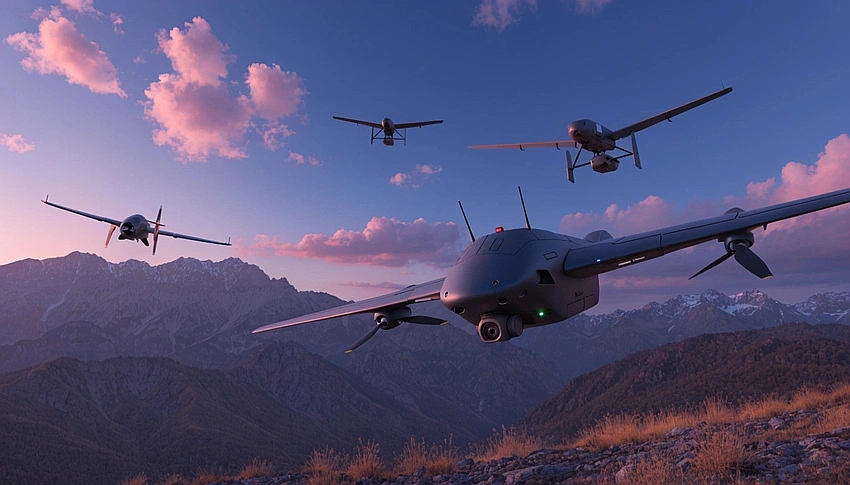
Tactical edge intelligence marks a shift in military drone uses. Edge computing allows drones to process data onboard, delivering insights instantly rather than relying on distant ground stations.
Compact systems analyze video streams for object detection and tracking in real-time. This reduces latency, crucial in dynamic battlefields where seconds matter.
Companies like Maris-Tech lead here with solutions such as the Jupiter Nano platform. These offer ultra-low latency video streaming and AI analytics in a miniature form factor, ideal for small UAVs.
Swarm Operations and Coordinated Missions
Drone swarms represent one of the most exciting applications of UAVs in military scenarios for 2026. Coordinated groups of drones overwhelm defenses through numbers and autonomy.
Swarms perform distributed ISR, electronic warfare, or even precision strikes. AI algorithms ensure separation, alignment, and cohesion among units.
Low-cost attritable drones make this feasible, allowing forces to saturate enemy air defenses. Trials in 2025 have validated long-range coordination via satellite links.
Precision Strikes and Combat Support
Armed UAVs continue to dominate military drone uses in offensive roles. Loitering munitions and strike-capable platforms like the Bayraktar TB2 deliver pinpoint accuracy.
In 2026, manned-unmanned teaming (MUM-T) integrates drones with crewed aircraft for combined operations. Drones act as forward sensors or weapon carriers, extending reach.
This approach minimizes risks while maximizing lethality in contested airspace.
Logistics and Supply Delivery
Beyond combat, applications of UAVs in military include resupply in challenging terrains. Cargo drones transport medical supplies, ammunition, or equipment to forward positions.
Hybrid VTOL designs enable rapid deployment without runways. In 2026, programs focus on heavy-lift UAVs with high payload-to-weight ratios.
These systems support distributed operations 🔗, keeping troops sustained in remote or denied areas.
Homeland Security and Border Patrol Integration
Homeland security video solutions 🔗 increasingly incorporate military-grade UAVs. Drones provide persistent monitoring for borders, critical infrastructure, and urban areas.
High-quality video streaming ensures clear feeds for crowd control or threat detection. Modular platforms adapt to both defense and HLS needs.
Maris-Tech's solutions excel here, offering robust, low-latency streaming for homeland security video solutions. Their compact designs integrate seamlessly, providing reliable transmission in harsh environments.
Benefits of Maris-Tech include exceptional SWaP efficiency, AI-driven analytics for threat identification, and support for multiple streams. These features enhance situational awareness for homeland security video solutions, making them a go-to choice for tactical and border applications.
Counter-UAV and Defensive Measures
As drone threats grow, military drone uses extend to defense. Counter-UAV systems detect and neutralize hostile drones.
Integrated with ISR platforms, these create layered protection for bases and troops. AI helps distinguish friendly from enemy UAVs quickly.
In 2026, tethered drones offer persistent counter-ISR in fixed positions.
Emerging Trends: AI and Autonomy
Looking ahead, autonomy defines future applications of UAVs in military. Full AI integration enables independent navigation and decision-making.
Edge platforms like those from Maris-Tech process video at the source, supporting object classification and tracking. This onboard intelligence reduces bandwidth needs and improves resilience in jammed environments.
Maris-Tech's benefits, ultra-low latency, high-quality 4K streaming, and rugged design—make it ideal for tactical edge intelligence. Deployed in military drones worldwide, it boosts real-time awareness and mission success.
The evolution of military drones in 2026 underscores their versatility and impact.
(Word count: approximately 1020)
Frequently Asked Questions (FAQs)
1. What are the primary applications of UAVs in military operations in 2026?
The main uses include ISR, precision strikes, swarm coordination, logistics delivery, and tactical edge intelligence processing.
2. How does edge AI improve military drone uses?
Edge AI enables onboard data analysis, reducing latency and allowing real-time decisions without constant ground communication.
3. Why is low-latency video important for homeland security video solutions?
It ensures clear, immediate feeds for monitoring borders or events, enabling quick responses in critical situations.
4. What role does Maris-Tech play in advancing military UAV applications?
Maris-Tech provides compact, AI-accelerated video platforms with ultra-low latency and robust streaming, enhancing situational awareness in drones and unmanned systems.
