Shirtless Youth Congress Protest at Delhi AI Summit Sparks Clash

Shirtless Youth Congress Protest at Delhi AI Summit Sparks Clash
Youth Congress workers enter the AI Impact Summit shirtless, triggering a sharp political spat as BJP accuses the opposition of an anti-India protest amid AI policy debates.
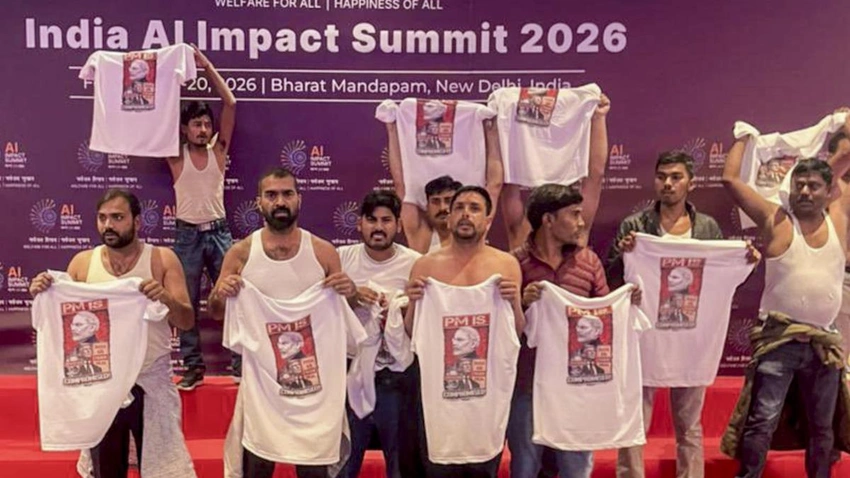
New Delhi witnessed a politically charged scene on day five of the AI Impact Summit as Youth Congress workers walked into the venue shirtless, with several holding or removing T-shirts bearing slogans aimed at the prime minister. Video clips circulating on social media showed protesters moving through security into the conference hall, some still clutching their shirts as they joined the crowd. The episode turned the summit into a contested arena, with both sides attempting to frame the AI policy discussion within a broader political narrative while keeping the focus on technology and diplomacy.
BJP leaders seized on the moment to mount a harsh political counterattack. A senior BJP figure branded the protest a 'naked protest' and claimed Rahul Gandhi had invited or encouraged the demonstration, alleging that it was organized by a party associate, Narsimha Yadav. The party circulated an old photo of Gandhi and asserted that the protest was part of a broader plan to discredit India, calling Congress an anti-India party. The rhetoric underscored the high-pitched political contest surrounding the event and the broader debate over India’s stance on AI and defense ties.
The exchange drew further color from coverage of the summit elsewhere. A report noted that Congress MP Shashi Tharoor had praised the summit's organization and its global stature, even as youth leaders gathered outside the venue and were detained following the protest. Tharoor’s remarks highlighted a tension within the party: while some admire the event's scale and intent, others used it as a stage for partisan messaging, leading to clashes with security and questions about discipline.
Observers say such incidents at high-profile tech gatherings are increasingly common as policy debates intersect with partisan politics. The shirtless protest served as a stark reminder that technology diplomacy can become a platform for signaling, signaling, and counter-signaling about India’s approach to AI, international partnerships, and domestic political currents. As authorities managed detentions and the conversation shifted to policy considerations, the episode raised questions about how political groups will engage with future AI forums and how to keep the focus on constructive dialogue rather than public confrontations.
In the days ahead, organizers may seek to restore focus on the AI agenda—education, investment, and ethics—while lawmakers weigh calls for clarity on policy and defense partnerships. The incident, though controversial, is likely to influence how political parties frame AI discussions and engage with global partners in a rapidly evolving tech landscape.
