Co–Star Is Using AI to Sell You the Oldest Illusion in the World
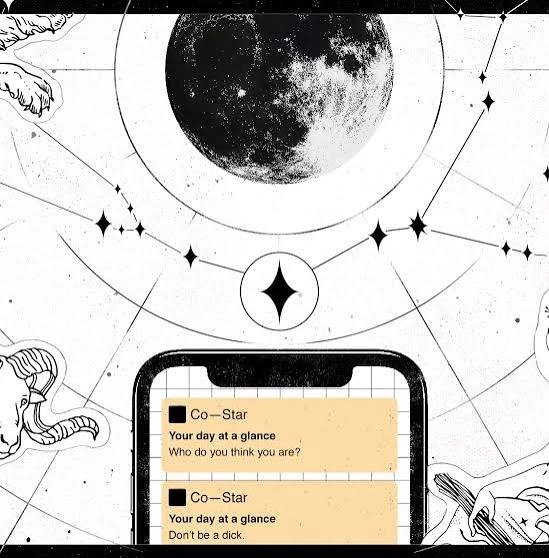
Co–Star Is Using AI to Sell You the Oldest Illusion in the World
Co–Star Is Using AI to Sell You the Oldest Illusion in the World
It may look like a horoscope app, but its obsession with data and AI exposes why humans have always been so desperate to find themselves in the patterns around them.
The Stars As Data
I am an Aquarius Sun, Aries Moon, and a Gemini Rising.
Whether any of this rings true is something to leave to friends and family to decide. Co–Star, the darling astrology app of the terminally online, achieved widespread popularity during the Covid-19 lockdowns, claiming by the summer of 2023 over 30 million registered users. Its pleasures are not hard to grasp. The app surfaces a wide array of astrological data, offering a panoply of potential interpretations of, influences on and explanations for the daily torment of modern living.
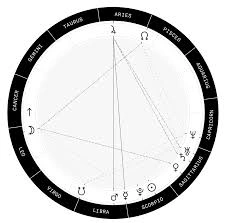
These data, Co–Star takes pains to trumpet, draw from information collected by NASA's Jet Propulsion Laboratory at Caltech, alongside the work of human astrologers and poets. Numerical and textual data enter the black box of artificial intelligence and emerge as horoscopes. A reading of how Co–Star mediates astronomical phenomena through technologies of artificial intelligence into the language of its predictions therefore requires a provisional scaffolding of astrological media technologies: the technical observation of celestial bodies; the ordering of such observations into ephemerides; the drawing of formal horoscope charts; and the interpretation of those charts through language.
The focus here is on that final layer. Co–Star invokes data to justify astrology as a science rather than a purely occult practice. This rhetorical move hearkens back to astrology's pre-Enlightenment stature, suggesting that the rationalist wall barring astrology from social epistemological legitimacy may be beginning to crack. AI is especially useful in manufacturing this legitimacy because both astrology and AI rely on a shared conceptual legerdemain: pattern recognition as a cypher for legitimate intelligence.
From Astronomical Data to Horoscope
Media and the occult are long-standing bedfellows. New media technologies often reproduce social desires for supra-human communication, whether over long distances or with the dead. Practices considered scientific in one historical period can pass into the realm of the occult in another, surviving and developing along a parallel track, disreputable to some but meaningful to others.
Astrology and astronomy offer a useful case study because they share a common substrate: celestial data. The measurements of the movements and placements of celestial bodies are among our species' earliest data. Assyrian and Babylonian scholars in the second millennium BCE provide early records of both astronomical measurement and astrological prediction. NASA data are, in many ways, simply footnotes to this longer media history.
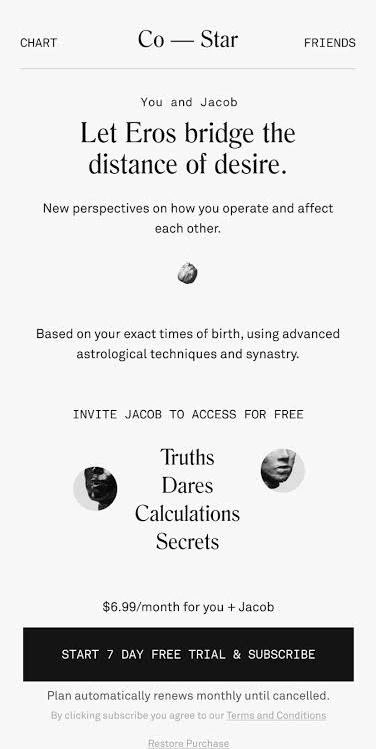
The popular horoscope has a more recent history. In 1930, the British Sunday Express contracted astrologer R.H. Naylor to produce a star chart for the newly born Princess Margaret, launching a newspaper tradition that Co–Star now inherits. The app greets users with enigmatic epigrams and short Do/Don't lists. Its daily reports move between internet-informed argot and self-consciously poetical spiritualism.
Patterns become more telling over multiple days' readings. Much stays structurally the same while particular sentences change. Co–Star does not take many pains to hide its templates. Yet the templates may themselves be part of the draw. The app emphasises the stars' impacts over time, teaching users about astrological transits that unfold over days, weeks and years. The template style can become akin to watching clouds drift and shift across the sky.
After all, people do not change that quickly. Why should their horoscopes?
The Computerised Astrologer
Co–Star is far from the first astrology app, or even the first piece of astrology software. Computers can automate observational data, parse information into ephemerides and draw horoscope charts. Much of an astrologer's work is easily automated. The 1970s saw dedicated astrological microcomputers designed to spare astrologers tedious calculations, while Joan Quigley famously used the Digicomp DR-70 during her work for the Reagan White House. Specific astrological software arrived in the 1990s, producing computer-generated reports in fine-grained detail.
Nothing here necessarily requires AI.
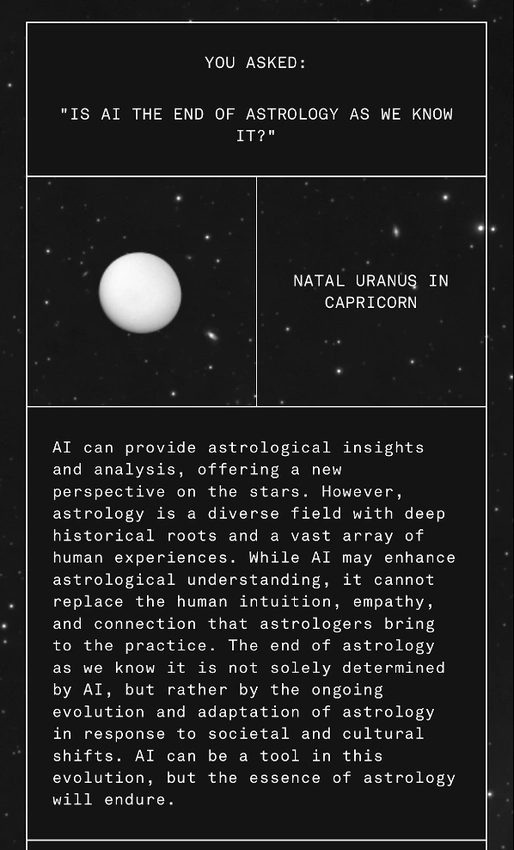
A more recent feature, however, appears to leverage AI more explicitly: a question-and-answer feature called the Void. Users submit questions in natural language for astrological consultation. Responses offer affirmative or negative answers, followed by time-delimited astrological phenomena that justify psychological aspects. Transits become informatic, evidentiary proof of the readings' validity.
Co–Star launched the Void in 2023 with an imposing, vaguely Soviet “computer” that printed answers on receipt paper. Founder Banu Guler compared it to Zoltar fortune-telling machines: even though the fortune may be garbage, it remains special garbage. Co–Star has mastered the need to give users something that seems helpful, even when it might be grounded in nothing at all.
Co–Star Does Not Need AI
Ironically, Co–Star's use of AI undercuts its claims on data-driven astrology. Large language models work by construing statistical relationships between words. Given a natural language input, an LLM attempts to return the most likely series of words that satisfy a response. Any “intelligence” in an LLM can be a statistical illusion, a pareidolia: the human tendency towards pattern recognition, even where no such patterns exist.
Co–Star, like AI, tries to have it both ways. On one hand sits data-driven, computational and mathematized astrology. On the other sits poetical, oblique and generically suggestive astrology, a language game that maintains its power by meaning everything to everyone, and thus nothing at all. AI therefore makes visible the conceptual legerdemain beneath both systems.
Co–Star does not need AI; Co–Star is AI: the human fantasy that in patterns there is always meaning.
The Void suggests a future in which everyone may have their own Joan Quigley, just as everyone now has a dutiful secretary named Siri in their pocket. But AI also inverts the chain of causality. No longer do the stars provide the data with which to structure human folly—as above, so below. Now the messy mix of human language, likelihoods of words and things that seem human but are not will guide the stars.
Is this really a change? We will have to ask the Void and see...

Login to comment.
No thots yet. Be the first to share your thoughts!