White House Ballroom Costs Soar: Secret Service Funds Redirected for 'Security'

White House Ballroom Costs Soar: Secret Service Funds Redirected for 'Security'
Controversy erupts as $352 million from Secret Service funds is diverted for 'White House security measures,' reportedly for a lavish new ballroom. Taxpayer money is now expected to cover half of the soaring $600M cost.
The Trump administration has quietly redirected a significant sum of $352 million originally earmarked for the Secret Service, reallocating these funds to what are described as “White House security measures.” This move has sparked considerable debate, especially given reports suggesting a large portion of this money is intended to finance the construction of an expansive new ballroom at the White House.
Government documents released on Friday by the Office of Management and Budget confirmed the $352 million shift from the Secret Service’s budget. This amount represents more than a tenth of the agency’s total budget and was initially allocated under the “Big, Beautiful Bill” signed last July. The bill aimed to strengthen the Secret Service through investments in personnel, training facilities, programming, and technology, following recent assassination attempts on President Trump.
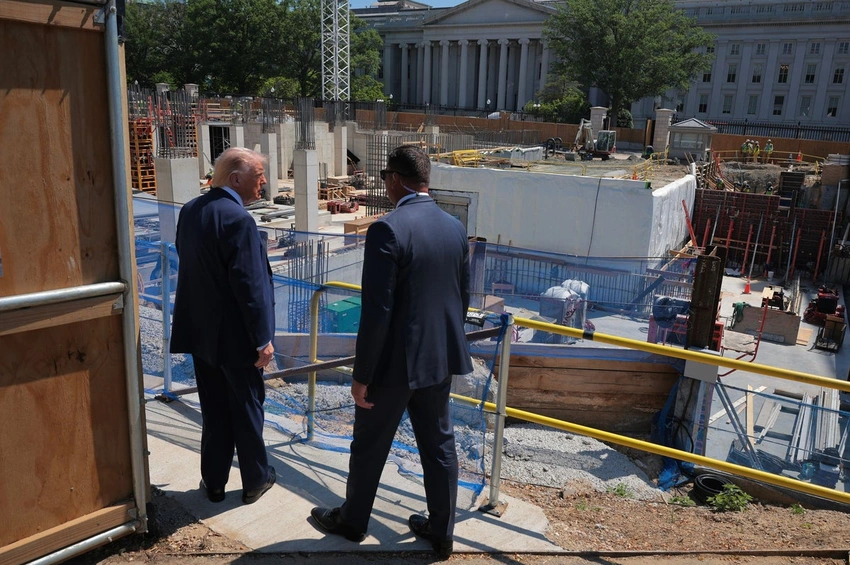
While the White House officially states these funds are for security, a source familiar with the matter revealed to The Washington Post that they would support the construction of a 90,000-square-foot ballroom within the East Wing. This project's cost has dramatically escalated since its initial proposal by President Trump, who first estimated it at $200 million and promised it would be entirely funded by private donations. That figure later doubled to $400 million. Now, internal projections indicate the cost could reach an astonishing $600 million, with roughly half of that amount expected to be covered by taxpayer dollars.
White House spokesperson Davis Ingle defended the reallocation, stating, “The East Wing Modernization Project is inextricably tied to the security of the President, the White House grounds and the certain security infrastructure assets.” However, critics are questioning the transparency of the funding and the necessity of such a lavish project, particularly when Secret Service resources were intended for critical security enhancements.
