Google's Space Data Center Dream Takes Off! 🚀 But Starship Needs 1,800 Launches...

Google's Space Data Center Dream Takes Off! 🚀 But Starship Needs 1,800 Launches...
Google launches its first advanced chip into orbit with SpaceX, pioneering space-based data centers! Discover Project Suncatcher's ambitious vision and the colossal challenge for Starship. #SpaceTech #AI
Google just took a giant leap into the cosmos, sending its first advanced AI chip, a Tensor Processing Unit (TPU), into orbit aboard a SpaceX rocket from California. It's the beginning of Project Suncatcher, Google's ambitious plan to establish large-scale data centers in space.
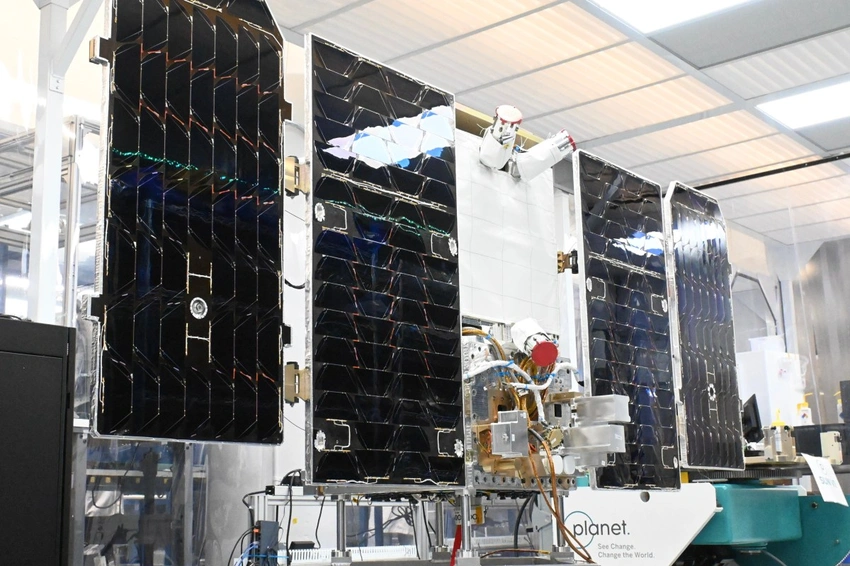
The prototype satellite, built by Planet Labs, aims to prove that Google's powerful chip can withstand the harsh conditions of space, handling continuous power, cooling, and running complex AI models. As Travis Beals, the Google executive leading Project Suncatcher, put it, "there's no test that's completely as good as the real thing."
This initial satellite will operate its TPU in 15-minute bursts to manage power and thermal systems.
Next year, Google and Planet Labs plan a more advanced demo with two purpose-built satellites designed for heavier workloads and capable of collaborating via laser communication. Google envisions an orbital data center as a network of 81 satellites, working in close formation to process information in parallel.
This "long-term moonshot" focuses on building infrastructure for the AI workloads of the future, looking ahead to what computing needs will be in five years, not just today.
However, achieving this orbital data center dream hinges heavily on cost-effective access to space, and Google is banking on SpaceX. Google recently published a peer-reviewed white paper on orbital data centers, detailing their analysis of how launch costs need to evolve.
The company, also a major investor in SpaceX, believes that for launch prices to reach around $200 per kilogram by 2035, SpaceX's Starship would need to transport an astonishing 370,000 tons of payload into orbit. This translates to about 1,800 Starship launches over the next decade, or 180 launches annually, assuming each mission carries 200 metric tons.
This is a monumental challenge for a vehicle that has yet to fly more than a few times a year, despite Elon Musk's ambitious predictions for its flight rate.
Despite the immense logistical hurdles, there's good news on the technical front: Google's updated research suggests its specialized chips are likely to survive the intense radiation in space. This project truly highlights Google's commitment to pushing the boundaries of technology and space exploration, envisioning a future where our data isn't just on Earth, but among the stars.
