Why Sewing is a Modern Survival Skill

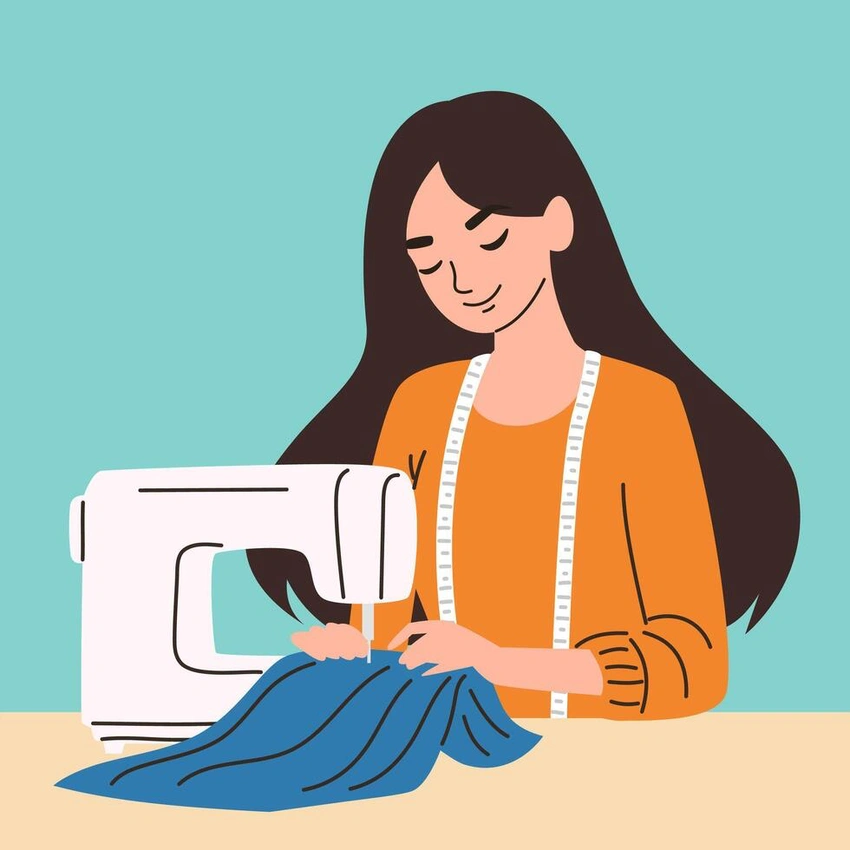
Why Sewing is a Modern Survival Skill
In a disposable world, wielding a needle is a radical act of magic. Discover how the slow rhythm of repair restores our clothes, our memories, and our connection to the earth.
The air in our Zurich workshop always smells the same way on Tuesday evenings. It is a scent of damp wool, ironing steam, and the faint metallic tang of old scissors. Outside, the grey Swiss twilight settles over the Limmat river, but inside, under the warm glow of task lamps, we are engaged in an act of resistance. I watch a young student, a banker by day, frown as she threads a needle. She is holding a sweater that belonged to her grandmother. It is moth-eaten and weary, a garment that the fast-paced logic of modern consumption would dictate throwing away. But she is learning that to mend is to remember.
Sewing is often categorized as a domestic chore or a quaint hobby, yet in my work with our local non-profit, I have come to view it as a survival skill. I do not mean survival in the apocalyptic sense, though a sturdy hem is practical in any weather. I mean the survival of our stories. In a world obsessed with the new, the instant, and the disposable, the act of repair is a way to anchor ourselves in time.
I am currently reading The House of the Spirits, and I find myself thinking about how Clara the Clairvoyant knitted destiny into her creations. We tend to view our clothes as inanimate shells, yet anyone who has ever worn a lucky jacket or a dress from a first date knows this is untrue. Garments absorb our days. They hold the scent of a lover, the strain of a long hike up the Uetliberg, and the spilled wine of a celebration.
In the workshop, we teach the technical skills of darning and patching, but the real lesson is patience. This is the essence of the 'slow' wardrobe. It is a philosophy that demands we treat our possessions with the same courtesy we extend to living things. When we mend, we are mimicking the circular economy of nature itself. Walk through a Swiss forest and you will see that nothing is wasted; the fallen log feeds the moss, which feeds the soil, which feeds the pine. Fast fashion attempts to bypass this cycle, creating a linear path from factory to landfill. By repairing, we bend that line back into a circle.
There is a specific kind of magic in visible mending. We encourage our students not to hide their repairs but to highlight them with contrasting thread. A patch of golden embroidery on a blue denim knee is a badge of honor. It says that this object has a history. It transforms the garment into a palimpsest, a manuscript written over and over again. This approach challenges the sterile, uniform beauty standards sold to us by mass retailers. True beauty, like a good story, requires texture and conflict.
My banker student finally succeeds in closing the hole in her grandmother’s sweater. She runs her thumb over the rough, imperfect stitching and smiles. It is a small victory, perhaps, but significant. She has refused to let a memory fade into the landfill. She has taken the time to care.
We need this slowness. We need to reclaim the tactility of our existence. In an age where so much of our life is stored in the cloud, sewing grounds us in the physical world. It reminds us that we have the power to fix what is broken, whether it is a tear in a coat or our relationship with the planet. So, before you click to buy something new, look at what hangs in your closet. Find the loose button or the frayed cuff. Pick up a needle. There is magic in your hands, and the story is yours to continue.
