The Mountain: Gorillaz' Record of Grief and Beyond

The Mountain: Gorillaz' Record of Grief and Beyond
The Mountain: Gorillaz' Record of Grief and Beyond
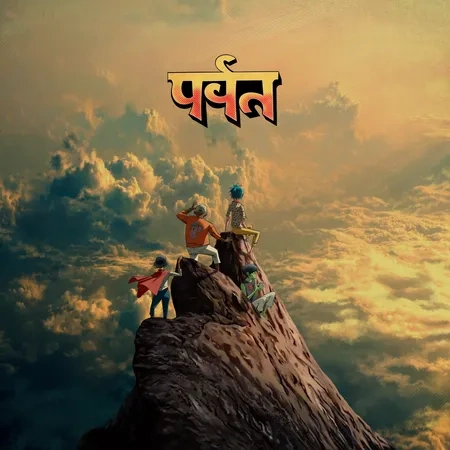
Gorillaz's ninth studio album, The Mountain, blends London and Indian influences into a pan-global soundscape, pairing bright energy with intimate themes of life and loss after three decades.
There’s a curious paradox at the heart of The Mountain, the latest Gorillaz album released in early 2026. At once jubilant and sombre, worldly and intimate, it feels like a record born not just out of creative impulse, but out of the very conditions of life and loss that music, at its best, tries to articulate. Released as the band’s ninth studio album, The Mountain emerges nearly three decades into Gorillaz’ career and against the odds marks both a stylistic renewal and a thematic deepening.
A Canvas of Global Sounds
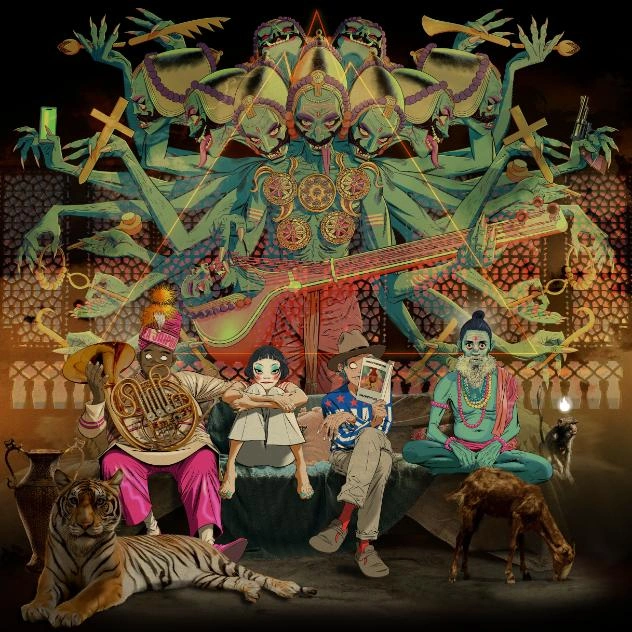
From its opening bars, The Mountain signals a departure from the packaging of past Gorillaz albums. Damon Albarn and Jamie Hewlett, whose collaborative vision has always steered the band beyond easy categorisation, have leaned into a pan-global soundscape. The album was recorded across multiple geographic locales including London, Devon and several cities in India, embedding a physical sense of journey into its musical DNA. Traditional Indian instruments such as sitar, flute and tabla thread throughout the record, weaving with electronic textures, hip-hop rhythms, and synth-pop flourishes.
This cross-cultural palette doesn’t feel like mere exoticism. Rather, the incorporation of Indian classical elements and instruments such as bansuri and sitar operate like a different mode of storytelling, one that speaks not only in rhythms and scales, but in embodied histories of sound. On tracks like the title song itself, these instruments seem to suggest a reaching beyond the self towards something communal and ancestral.
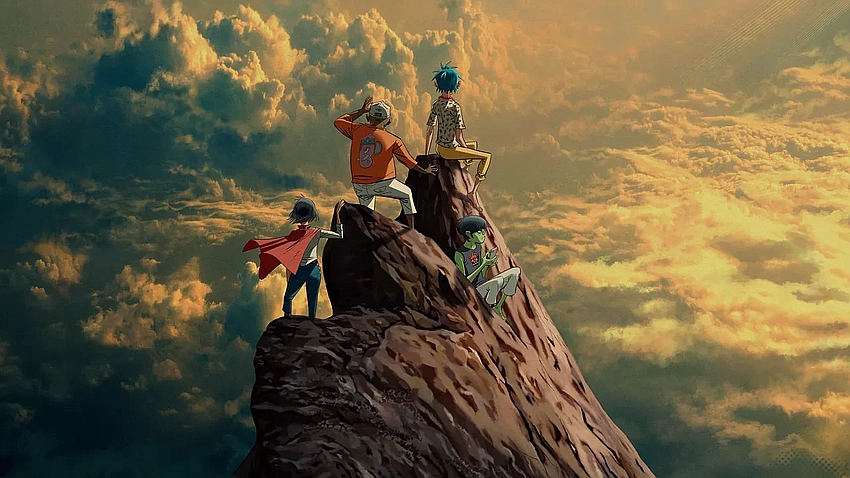
Yet this is not simply an album where global sounds hang side by side; it’s an album in dialogue with them. Each musical voice carries its own lineage and weight. The interplay between genres from post-disco boogie to electropop, and from Arabic acid house to bhangra-infused hip-hop never feels coincidental. Rather, the diversity serves The Mountain’s larger narrative ambition, situating the band’s music as a site of cultural confluence.
Ghosts in the Machine
One of the album’s most striking compositional choices is its use of posthumous contributions. Voices belonging to artists who passed away long before these sessions including Dennis Hopper, Bobby Womack, Mark E. Smith and Proof appear throughout the record, not as spectral curiosities but as agents within the songs themselves. These contributions are drawn from archival recordings and integrated into the compositions with an almost ritualistic care.
In doing so, the album doesn’t simply acknowledge mortality, it reframes it as a form of coexistence. Where many works treat death as a theme to be lamented, The Mountain seems to suggest that the deceased remain participants in the creative and emotional life of the living. This idea flickers through pieces like “The Manifesto” and “Delirium,” where past and present intertwine to conjure something richer than either could achieve alone.
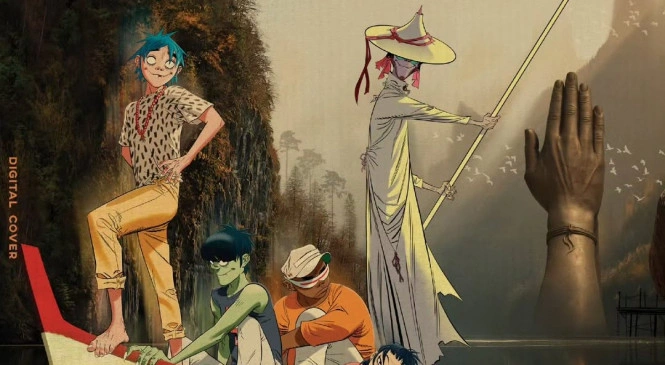
This expansive array of voices living and otherwise could risk becoming overwhelming or unfocused. Yet, there’s a cohesive thread in how these appearances are orchestrated: they don’t just add colour, they complicate the emotional terrain the album traverses. The presence of these voices is both comforting and haunting, a reminder that loss and memory are not opposites but part of the same continuum.
Lyrical Landscapes: Death, Renewal, and Rebirth
The thematic arcs of The Mountain are among its most compelling achievements. Built during a period marked by Albarn and Hewlett experiencing the passing of their fathers, the album channels grief with a rare candour. Yet there is no unrelenting melancholy here. Instead, the sense of mourning becomes entangled with ideas of renewal, transformation and collective memory.
Lyrics and sound alike pivot between reflection and rejoicing. The record doesn’t mourn life’s passing so much as dwell in the silence left behind and then fill that silence with music that honours what was loved. On tracks such as “The Sweet Prince,” this take on transition becomes palpable: melancholic without being paralysing, elegiac without rhetorical excess. It is an approach that feels both personal and universally human.
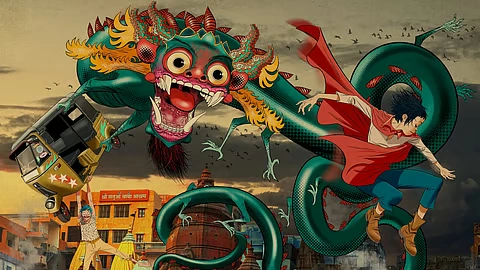
This push and pull between loss and affirmation is further underscored by the album’s tonal shifts. Where some pieces flirt with joy evoking rhythmic grooves and buoyant melodies others craft a sense of spiritual gravitas. This tension between texture and theme grants the album an emotional complexity that mirrors the contradictions of life itself: sorrow and joy are not binaries but companions.
A Late-Career Peak
The Mountain stands as a reminder that innovation need not be youthful to be vibrant. In the later chapters of their career, Gorillaz have chosen not introspection at the expense of energy, nor spectacle at the expense of substance. The album’s breadth from layered soundscapes to philosophical inquiry invites listeners to stay present with it rather than skim for hooks or highlights.
In an era where albums often function as background playlists or mere promotional vehicles for singles, The Mountain demands attention as an integrated work. Its expansive instrumental excursions, multilingual vocals, and global collaborations resist the streamlined logic of algorithmic consumption. Instead, it recalls older models of the album as an artwork to be encountered whole.
#GorillazTheMountain #NewGorillaz #IndoGlobalSound #SitarVibes #AlbumReview
