Why Does India Always Look Dusty in Pictures?

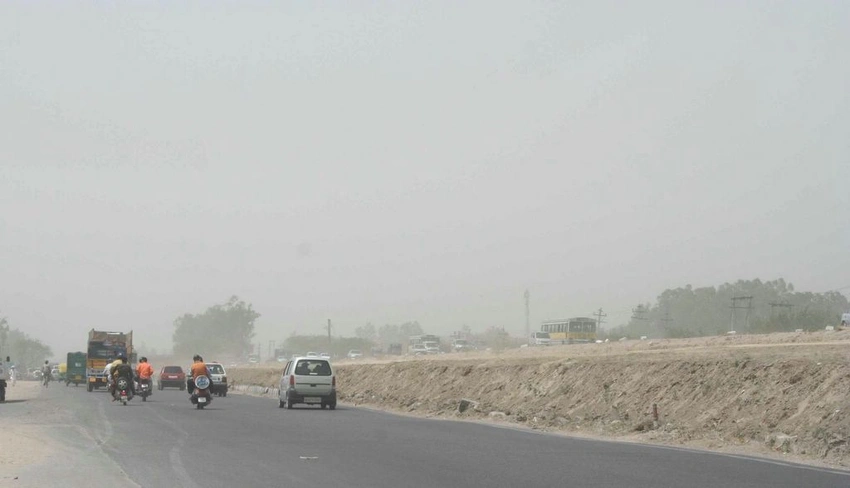
Why Does India Always Look Dusty in Pictures?
Why Does India Always Look Dusty in Pictures?
An explainer on why Indian cities often look dusty in HD footage: industrial emissions, vehicle exhaust, crop burning, and road dust that push PM2.5/PM10 past safe levels—and what this means for health.
When we watch high-definition videos of India, even in bright daylight, there is often a visible haze, a dustiness that seems to colour the air itself. It’s a presence that strikes many foreign viewers as peculiar, especially compared with sharply lit, almost clinical clarity in videos from East Asia or Europe.
What People Mean by “Dusty”
When we say India looks dusty in pictures, we are drawing on a set of associations: the dust suggests disorder, the haze suggests neglect. But the dust itself has very particular material causes.
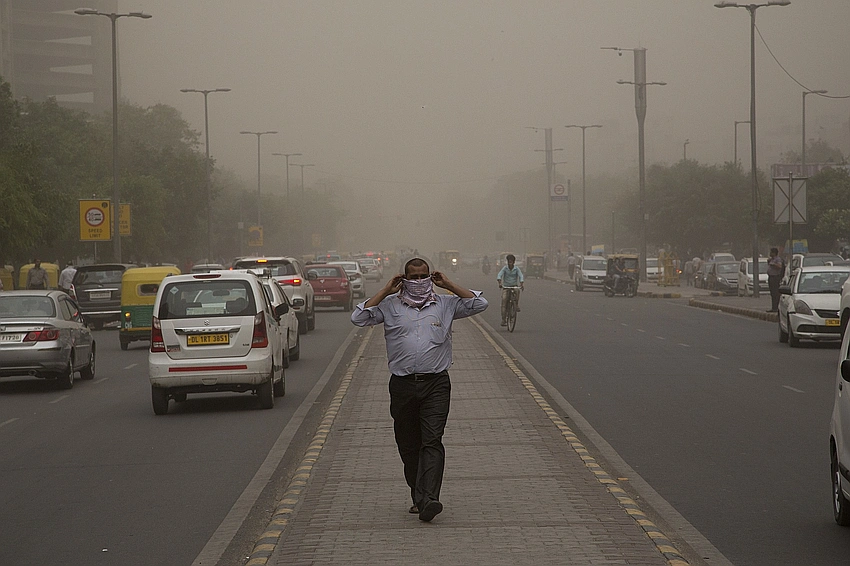
In Indian cities, air pollution is a complex mix of sources ranging from industrial emissions, vehicle exhaust, crop burning in agricultural belts, to re-suspended road dust. Unlike Western countries, where air quality is often considerably better managed, these sources combine to produce high levels of particulate matter — tiny particles of soil, soot, smoke and debris suspended in the air. India’s air frequently exceeds safe levels of PM2.5 and PM10 due to this mix.
This particulates-laden air is not merely a health statistic; it is visible in photography and video. Under bright sunlight, these particles scatter light, creating visual effects that can make the scenery seem muted, brownish, or dusty.
The Misremembered “Asian Brown Cloud”
Many explanations begin with the notion of the “Asian Brown Cloud”, a vast atmospheric layer said to hover over South Asia. Formally articulated in environmental research, this phenomenon involves a recurrent layer of pollution covering parts of India and its neighbours.
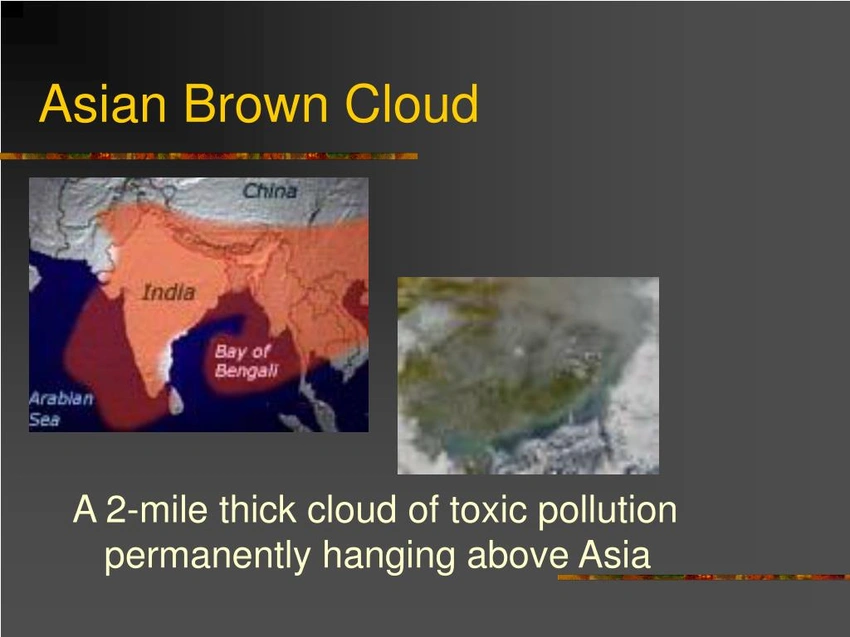
But this is often misunderstood in popular retellings. The Asian Brown Cloud does not explain India’s everyday visual atmosphere in the way many people think. It is more episodic, seasonal and regional than the imaginations of social media suggest. It’s not that India is permanently under a giant yellow cloud while countries like China are not. This popular idea oversimplifies both the science and the visual experience.
Bare Soil and Urban Surfaces: The Material Root of Dust
Dust is not a foreign entity that descends from the heavens. It arises from exposed soil and surfaces. In much of urban India, large expanses of earth remain uncovered: construction plots lie open, roads shoulder unpaved edges, footpaths meet open drains, and stormwater drains and pathways are patchy.
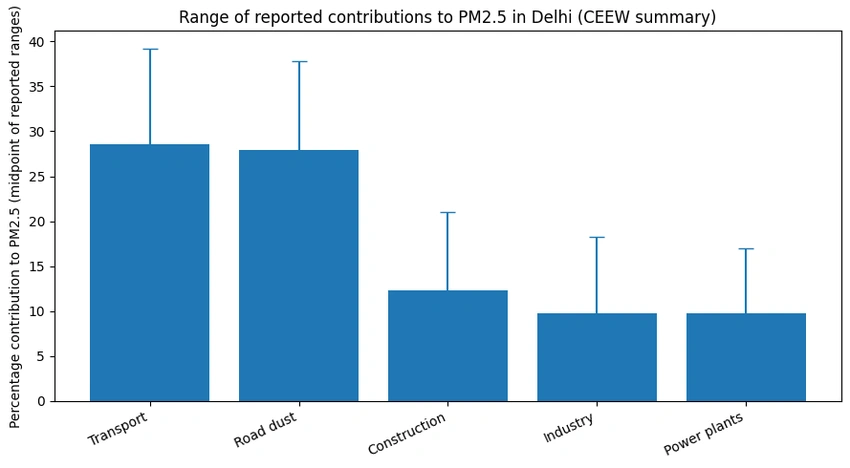
Once soil is exposed, it becomes suspended dust with relative ease. Vehicles, wind, and human movement disturb the surface, lifting particles into the air. These particles can remain aloft for hours or days, especially in dry seasons. In cities like Delhi, road dust alone has been identified as one of the largest contributors to airborne particulate levels.
In contrast, countries commonly invoked in comparison such as Japan, South Korea, much of Western Europe, have very different infrastructural regimes. Roads are uniformly paved, vacant land is rare or actively vegetated, and most construction sites are tightly covered to prevent particulate escape. This kind of surface coverage inhibits dust from ever becoming airborne.
Construction Dust and Urban Growth
Another crucial factor is construction activity. Rapid urbanisation in India means that building sites are everywhere. Dust from construction, whether soil moved, concrete cut, or earth excavated, injects significant particulate matter into the local environment.
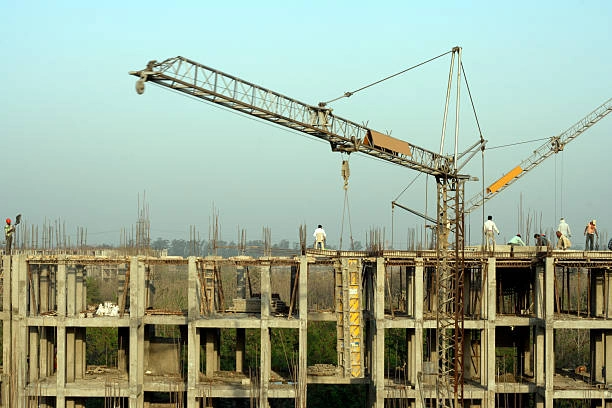
In many other countries, strict zoning codes require construction sites to be enclosed and dust-suppressed. Tarpaulins, netting, and water sprays are used to trap dust before it can escape. In India, while such regulations often exist on paper, implementation varies widely. Where sites remain open, they become continuous sources of airborne particles.
Everyday Practices and Dust Resuspension
Even routine municipal cleaning practices can make the problem more visible. Broom sweeping, for instance, displaces dust from the ground into the air rather than removing it. In many Western municipalities, vacuum sweepers and water sprays are used to suppress dust rather than lifting it. These techniques make a measurable difference over time in how streets and surfaces look on camera.
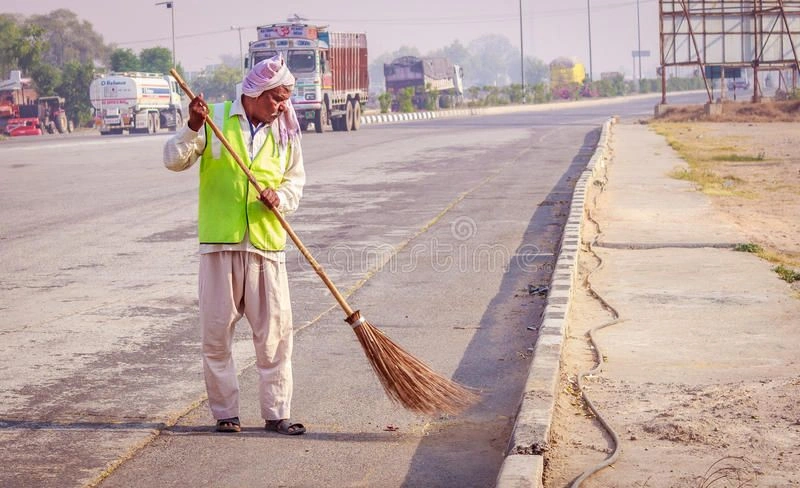
So when a foreign viewer watches a street-sweeping scene in India and sees particles dancing in the sunlight, what they are seeing is not cultural sloppiness, but a different technological and infrastructural choice in urban maintenance.
Dust as a Visual, Cultural and Political Signifier
It’s important to emphasise that these causes are not inherent limitations of India. They are outcomes of governance choices, economic pressures, labour regimes, and historical legacies of urban planning. Many Indian cities are experimenting with vegetation cover, road paving, water sprinkling, and enforcement of construction dust control precisely because the visual and health effects of dust matter.
What makes India look dusty on camera is not a mystical cloud, or a fundamental difference in civilisation. It is the everyday material interface between land, city and air, and the ways in which that interface has been managed.
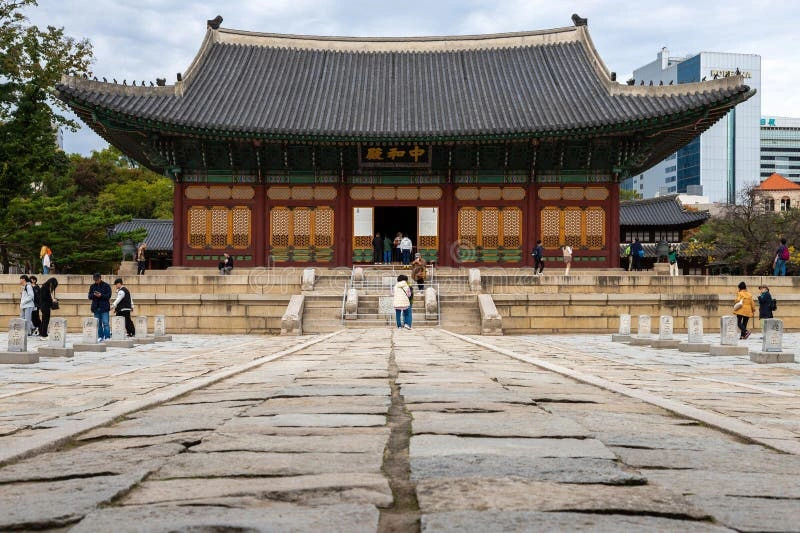
Photographs and videos do not simply show reality; they construct it through selective moments of exposure. When we ask why a place looks a certain way in a picture, we are also asking about the choices behind what was photographed, how it was photographed, and what conditions made that image legible.
If India seems dusty in images compared with other countries, it is because the material conditions of its ground surfaces and urban forms make dust a visible, persistent feature of its visual ecology. That visibility is a prompt to look more carefully at the political and infrastructural contexts that shape not just how India is, but how it appears.
#AirPollutionIndia #DustyIndia #PM25 #AirQuality #PublicHealth
