Chaos in Lok Sabha as Naravane memoir row leads to 8 suspensions

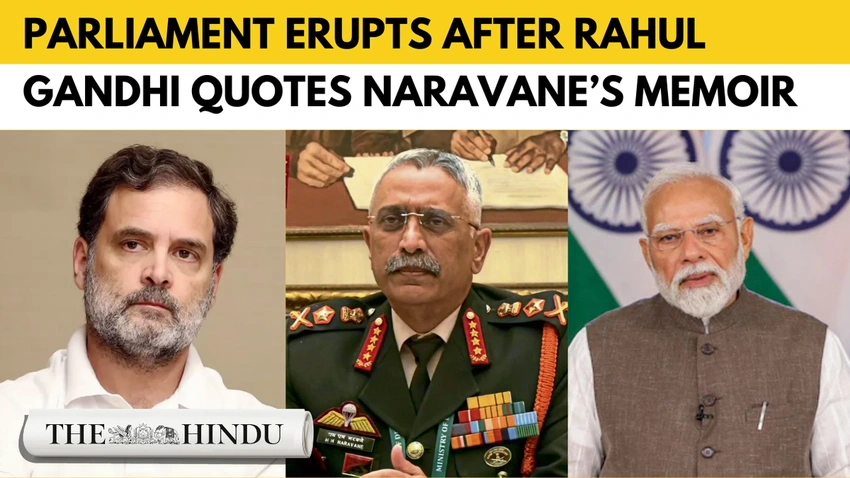
Chaos in Lok Sabha as Naravane memoir row leads to 8 suspensions
Parliament erupts as Rahul Gandhi cites an unpublished Naravane memoir, triggering suspensions of eight Congress MPs amid protests outside the Lok Sabha.
Eight Congress MPs were suspended in the Lok Sabha on Tuesday amid unruly behavior after two straight days of chaos in the House over the unpublished memoir of former Army chief MM Naravane, cited by Rahul Gandhi. The suspension list includes Manickam Tagore, Kiran Reddy, Prashant Padole, Hibi Eden, Amarinder Singh Raja Warring, Gurjeet Aujla, S Venkat Raman, and Dean Kuriakose. Congress members, led by Leader of Opposition Rahul Gandhi, gathered outside Parliament to protest the suspensions, insisting the moves were politically motivated and a blow to dissent within the party. The unfolding drama centers on an unpublished section of Naravane’s memoir that reportedly contains his reflections on the India-China clash in 2020, as highlighted by an article in Caravan magazine. The book’s publication had been deferred in January 2024 because it had not obtained clearance from the army, and Naravane had previously stated that the manuscript was still under review by the army. The Lok Sabha has seen a stand-off over the issue for two days, with Speaker Om Birla repeatedly citing rules 349 and 353 and insisting that no random material can be cited in the House. When Gandhi attempted to refer to the memoir during debate on a motion, the Speaker and senior ministers objected, limiting the discussion to procedural grounds. In parliamentary practice, the Speaker’s ruling carries weight, and lawmakers are expected to adhere to established procedures. The ruckus underscores the broader political friction surrounding the Modi government and the opposition’s tactics to pressure the government on national-security narratives and military leadership. The episode left the Lok Sabha temporarily paralysed as lawmakers shouted across the floor, trading accusations and defending their right to quote and question. While the opposition frames the issue as a matter of accountability and transparency about leadership decisions during the 2020 standoff, supporters of the government argue for discipline and adherence to parliamentary rules, warning against injecting unpublished material into formal proceedings. The conflict reveals the highly charged dynamic in Parliament when sensitive security topics intersect with party strategy and media narratives, with both sides signaling that the fight over Naravane’s memoir is far from over.
