US builds forces near Iran as Tehran warns and drills intensify

US builds forces near Iran as Tehran warns and drills intensify
Tensions rise in West Asia as Washington boosts military presence, Iran conducts joint drills with Russia, and talks in Geneva continue amid warnings of possible strikes.
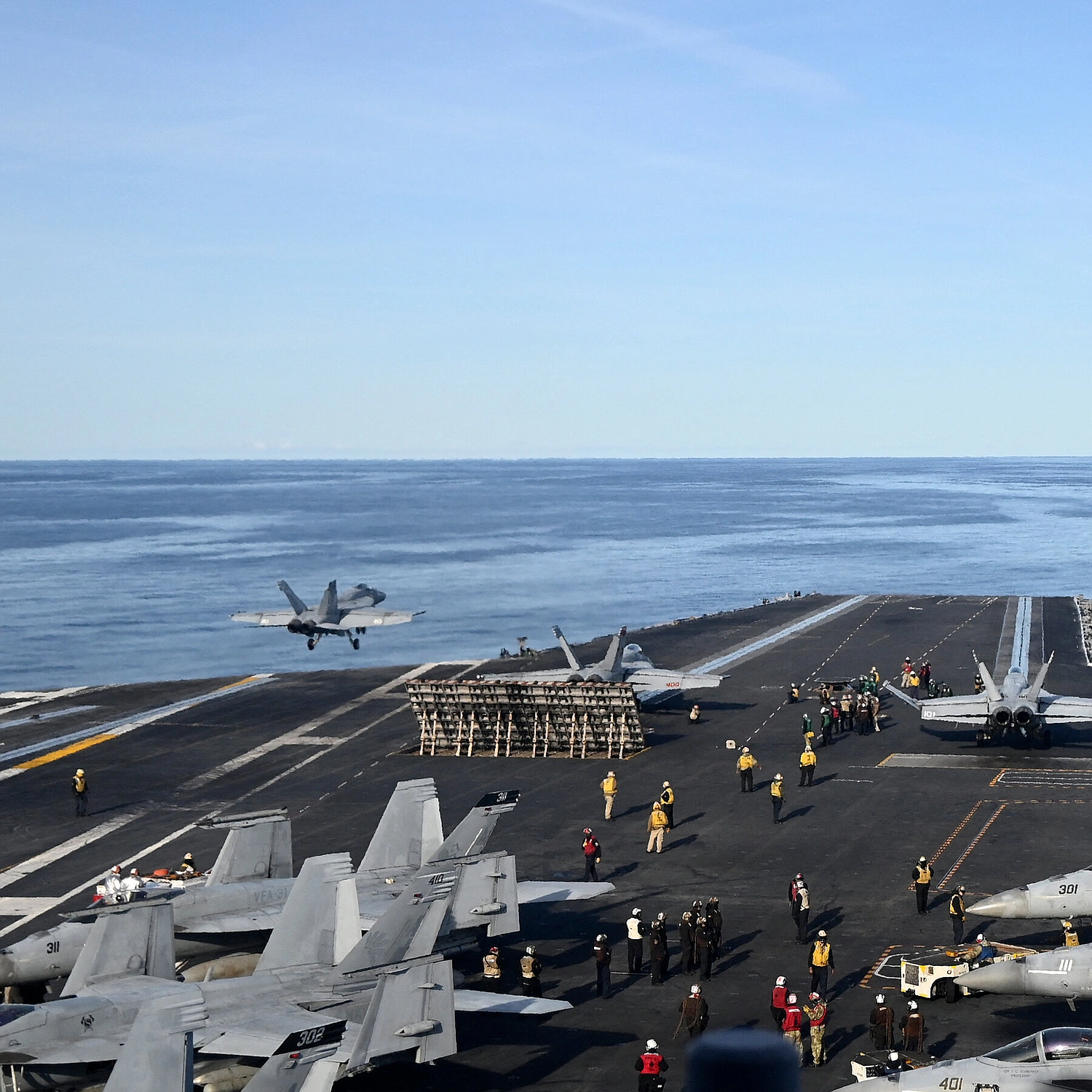
The United States has expanded its military posture in West Asia, deploying one aircraft carrier and a fleet of fighter jets, warships, guided destroyers, fuel tankers and missile defense systems to the region. A second aircraft carrier is expected to reach the Mediterranean next week, signaling a broader projection of power just as diplomacy moves slowly in Geneva.
Iran, in response, carried out naval drills alongside Russia near Bandar Abbas in the Persian Gulf, including a mock operation to rescue a hijacked vessel. This comes as Iran’s Revolutionary Guard Corps showcased readiness in what has been described as the second live-fire drill since tensions spiked last month.
Tehran’s leadership also signaled defiance: Supreme Leader Ayatollah Ali Khamenei posted a Quran verse urging Iranians to resist aggression, and officials warned that any attack could be met with a robust response. In parallel, Iran and the United States held a second round of talks on February 17, 2026 in Geneva under Oman’s mediation, with Iran’s foreign minister noting perceived progress and both sides outlining guiding principles for future discussions.
Washington has signaled that a decision on possible strikes remains unsettled but looming, with U.S. media reporting that President Trump could decide whether to strike Iran as soon as this weekend. White House officials stressed there are many reasons one could argue for action, while Tehran’s side emphasizes readiness to defend itself if attacked. The complicated mix of deterrence, diplomacy and military posturing underscores how close the rivals remain to a potential ignition point, even as negotiations continue in Geneva.
Amid the high-stakes signaling, regional observers and international mediators are watching closely for steps that could either curb the crisis or push it toward escalation, all while the Persian Gulf region remains on edge.
