Mercury Shrinking Faster Than Expected, Reveals New Study! 🚀

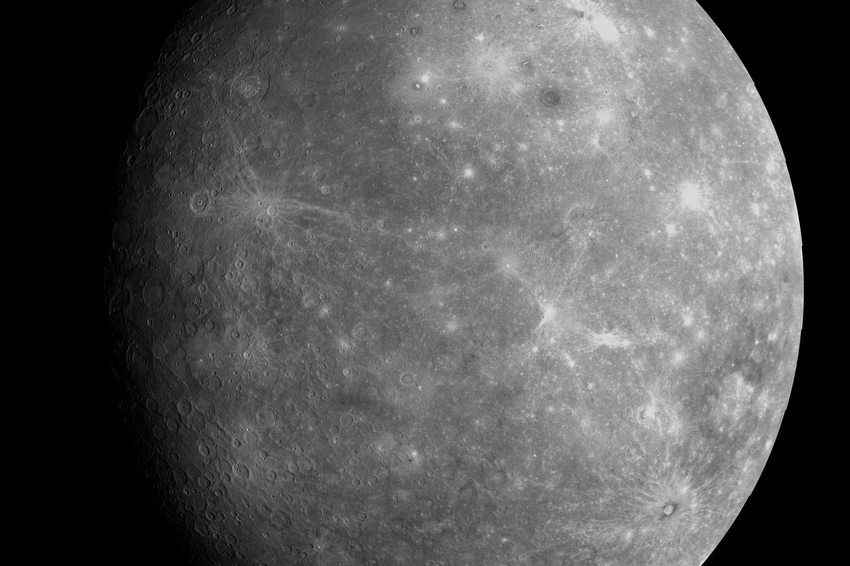
Mercury Shrinking Faster Than Expected, Reveals New Study! 🚀
Scientists are astounded! The solar system's smallest planet, Mercury, is shrinking significantly faster than previously thought, offering crucial insights into rocky world formation. #SpaceNews
New research has unveiled a startling truth about our solar system's smallest planet: Mercury is shrinking, and at a much faster rate than scientists had anticipated. This revelation, detailed in a new study in Geophysical Research Letters, is not just a cosmic curiosity but provides vital clues into how other rocky worlds like our Moon and Mars were formed, and what might be happening in distant solar systems.
Mercury, measuring a mere 3,023 miles across, has always been known for its diminutive size. In fact, even moons like Saturn's Titan and Jupiter's Ganymede are larger. For billions of years, since its chaotic birth from cosmic dust, gas, and asteroids, Mercury has been contracting as it cooled.
Earlier estimates suggested its diameter had shrunk by 2.5 to 10 miles.
However, the new findings suggest this contraction is far more pronounced.
The breakthrough comes thanks to invaluable data collected by the Mercury MESSENGER spacecraft.
Launched in August 2004, MESSENGER - an acronym for "MErcury Surface, Space ENvironment, GEochemistry, and Ranging" - embarked on an incredible mission. It reached Mercury in March 2011 and spent over four years meticulously studying the planet, completing 4,105 orbits before its planned impact on the surface in April 2015. During its tenure, MESSENGER was equipped with seven advanced scientific instruments.
Key among these was its Mercury Laser Altimeter, capable of measuring surface features with astonishing precision, down to one meter. A sophisticated dual imaging system, featuring both wide- and narrow-angle cameras, mapped the planet's surface in both black and white and color, providing an unprecedented view of Mercury's evolving landscape.
The detailed topographical data gathered by these instruments allowed researchers to precisely quantify the planet's ongoing contraction, leading to the revised understanding of its shrinking history.
This ongoing planetary transformation helps scientists piece together the dynamic past and future of celestial bodies in our universe.

Login to comment.
No thots yet. Be the first to share your thoughts!