Why The Cruel Prince Made Power More Attractive Than Romance

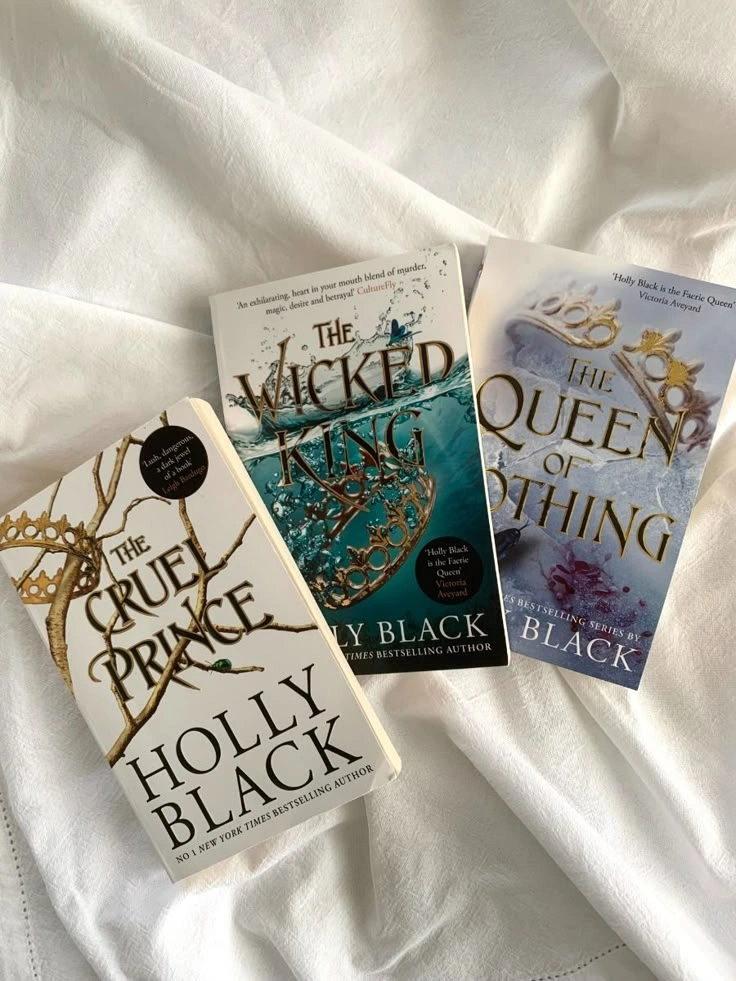
Why The Cruel Prince Made Power More Attractive Than Romance
Why The Cruel Prince Made Power More Attractive Than Romance
What made The Cruel Prince so compelling was that it refused to place romance at the center of desire in the way many fantasy novels do. Although the story contains tension, attraction, and one of the most memorable enemies-to-lovers dynamics in recent fantasy fiction, what truly drives the novel is something sharper: power.
From the beginning, the book makes it clear that survival in Elfhame is not built on softness. It is built on perception, strategy, status, and the ability to move carefully through a world where beauty often hides cruelty. In that world, romance exists: but power determines whether you are protected, ignored, manipulated, or destroyed.
That is why power feels more attractive than love throughout the novel. Love may create vulnerability, but power offers agency.
At the center of this is Jude Duarte, one of the most striking fantasy protagonists because her primary desire is not to be adored. She wants to belong in a world determined to remind her that she does not.
As a human raised among faeries, Jude exists in permanent contradiction. She lives inside a beautiful world that treats her as lesser, fragile, and temporary. She is surrounded by beings naturally more powerful than she is, both physically and socially. This immediately makes her ambition emotionally understandable.
She does not dream first of romance because romance would not solve her deepest problem. Her real need is control over her own position.
That makes her ambition feel urgent.
The most interesting forms of power in the novel are political, social, and psychological. Titles matter. Alliances matter. Secrets matter. Knowing when to speak and when to remain silent matters.
This creates a story where intelligence becomes more seductive than romance.
Every move Jude makes feels meaningful because she understands that being underestimated can become a weapon if used carefully. She studies weakness, hierarchy, and fear not because she enjoys cruelty, but because she knows survival in Elfhame requires more than bravery.
That strategic hunger becomes one of the novel’s strongest attractions.
Readers are not simply waiting to see who Jude will love: they are watching how she will position herself in a world designed to exclude her.
This shifts emotional focus. Success becomes thrilling in political terms.
The romance with Cardan Greenbriar becomes powerful precisely because it exists inside this larger struggle for power rather than replacing it. Cardan himself is not attractive only because he is dangerous or emotionally complex, but because he also represents unstable power within the court.
Their dynamic works because neither character fully controls the other.
In many romances, emotional tension comes from vulnerability. In The Cruel Prince, tension often comes from uncertainty over who currently holds power in a conversation, a secret, or a decision.
That makes even their interactions feel strategic.
Attraction exists, but it never fully separates from politics.
This is why many readers remember the emotional intensity of their relationship while still feeling that power remains the stronger force in the story. Every romantic development is shaped by larger political consequence.
A confession matters because it changes leverage.
Trust matters because betrayal remains possible.
Even tenderness, when it appears, feels sharpened by the surrounding danger.
This gives romance a different quality: it becomes compelling because it exists where control is unstable.
But still, Jude’s most satisfying moments are rarely romantic ones. They are moments where she outthinks someone who assumed she could not.
Moments where knowledge changes her position.
Moments where she creates space for herself in structures that denied her legitimacy.
That emotional satisfaction reveals something deeper about why the novel resonates.
Many readers connect strongly with Jude because her ambition is not softened to appear more acceptable. She is allowed to want influence, strategy, recognition, and survival without apology.
Female ambition in fiction is often complicated by expectations that power must remain secondary to emotional softness. The Cruel Prince resists that.
Jude does feel deeply, but feeling never replaces calculation.
And that balance makes her unusually memorable.
Ultimately, The Cruel Prince made power more attractive than romance because it understood something psychologically true: before love feels meaningful, many people first want agency.
They want not simply to be desired, but to matter within the world they occupy.
Jude embodies that desire powerfully.
She does not ask to be rescued into belonging. She builds belonging through intelligence, endurance, and risk.
And perhaps that is why the novel feels so addictive: because while romance is present, what readers are really watching is a girl learn how to hold power in a world determined to deny her any.
And that, in The Cruel Prince, becomes the most irresistible story of all.
