Putin Scoffs at EU 'Toilet' Sanctions Says Oil Leverage Will Bite and Warns of Response to Strikes N

Putin Scoffs at EU 'Toilet' Sanctions Says Oil Leverage Will Bite and Warns of Response to Strikes N
Putin Scoffs at EU 'Toilet' Sanctions Says Oil Leverage Will Bite and Warns of Response to Strikes N
Putin dismisses EU sanctions on consumer items as short-sighted, says Russia can withstand them, hints at possible U.S. talks, and underscores energy resilience amid robust oil exports.
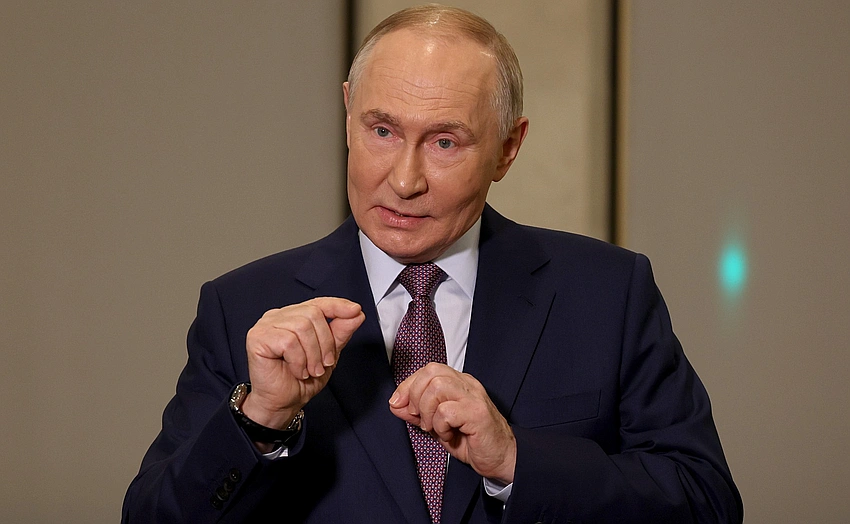
October 23, 2025, The Kremlin, Moscow, Russian President Vladimir Putin dismissed the European Union's latest sanctions, which curiously include consumer items such as toilet bowls, motorised toys, puzzles and tricycles as short-sighted and vowed Moscow can withstand the measures while implying Western consumers may later regret reduced access to Russian goods.
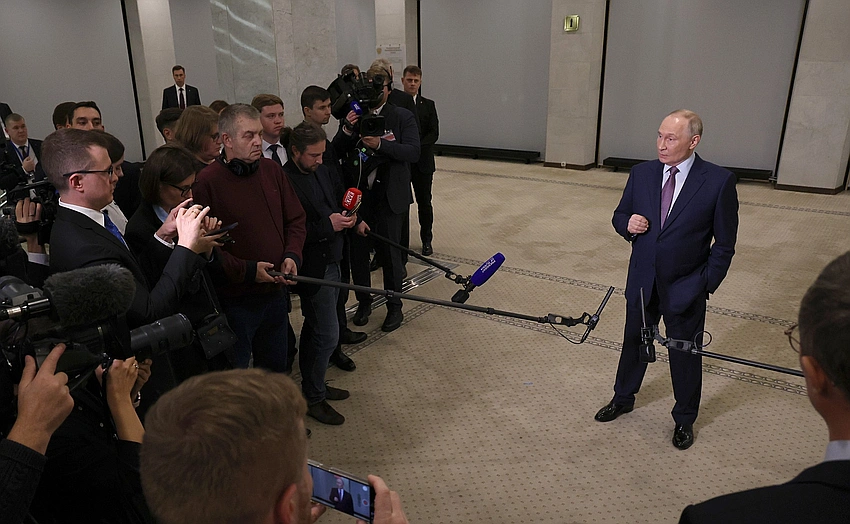
At a media Q&A at the Kremlin on October 23, 2025, he reiterated willingness to hold a prepared summit with the United States but said Washington had signalled postponement after initial planning steps; he named Foreign Minister Sergey Lavrov and, controversially in his account, U.S. Secretary of State Marco Rubio as principal preparers for talks. Putin framed sanctions as both political pressure and economic manoeuvres that will not fundamentally harm Russia's energy resilience, noting Russia's large oil exports and pointing to recent International Energy Agency language urging continued investment in hydrocarbons alongside renewables.
He also warned that any Western-supplied long-range strikes hitting Russian territory would invite a “very serious” response. This summary draws on the Kremlin transcript and contemporary reporting on oil production and weapons debates to contextualise the president's remarks. This article summarises his remarks, implications for energy markets, and international reactions reported by major news agencies and agencies and think tanks.
Kremlin transcript and briefing (Kremlin press), IEA World Energy Investment 2025, and contemporary reporting on oil production and long-range weapons policy.
Russian President Vladimir Putin used a Kremlin media session on October 23, 2025 to deride the latest Western punitive measures and to underscore both Russia’s leverage in global energy markets and the risks of further military escalation. The exchange, recorded in a Kremlin transcript, ranged from a mockery of the EU’s ban on everyday items to a diplomatic accounting of an aborted U.S. meeting and a blunt warning about long-range weapons.
Putin singled out an EU decision that he said barred imports including toilet bowls, motorised toys, puzzles and tricycles, and responded with a mixture of sarcasm and threat, telling reporters that Western buyers might “need” such goods later and that the loss of trade would “cost them dearly.” The Kremlin’s own press notes summarising the session confirm the list of consumer items and the timing of his remarks.
On diplomacy, Putin said that a U.S.-proposed meeting had been discussed at length and that both sides had agreed that careful preparation was required, naming Foreign Minister Sergey Lavrov as a principal Russian preparer and, in his account, U.S. Secretary of State Marco Rubio as a counterpart. He said Washington subsequently signalled postponement. Those procedural details come from the Kremlin Q&A transcript and reflect Putin’s insistence that any summit must produce concrete results.
Economic passages of his remarks addressed oil and global supplies. Putin argued that Russia’s position as a major oil and petroleum exporter makes abrupt market displacement difficult and that attempts to restrict Russian energy risk driving up prices — an analysis echoed in recent International Energy Agency reporting urging continued investment in hydrocarbons alongside renewables. The IEA’s World Energy Investment 2025 and other IEA briefings have noted that sustained investment is required to avoid supply gaps as demand grows.
Putin cited figures for production and trade to support his point and noting U.S. crude output at roughly 13.5 million barrels per day and Russia and Saudi Arabia as major exporters, a framing consistent with U.S. Energy Information Administration estimates and public reporting on 2025 production trends. Analysts warn, however, that markets are complex: while Russian exports are material to global balances, shortfalls are not always immediately or fully transmitted into higher consumer prices because of inventory, production elasticity and geopolitical substitution.
On security, Putin labelled recent media reports and policy signals about Western long-range missiles for Ukraine as an attempt at escalation and issued a stark declaratory warning: if such weapons strike Russian territory, Moscow’s response would be “very serious, if not stunning.” Reporting this week documents shifting U.S. statements, from reports that restrictions on Western long-range weapons had been eased, to U.S. denials and presidential caveats and Kyiv’s continued interest in deep-strike capabilities.
Reaction to Putin’s remarks was swift: Western capitals reiterated the need for coordinated sanctions while energy markets registered heightened sensitivity to rhetoric but only modest price movement on the day. Energy analysts told reporters that the longer-term impact depends on whether sanctions are coupled with transport or finance measures that meaningfully constrain exports. The Kremlin’s comments, and the surrounding press coverage, make clear that the standoff between sanctions, diplomacy and battlefield dynamics will continue to shape policy choices in coming weeks.
Looking ahead, markets, NATO capitals and Kyiv will watch variables closely: whether Western allies tighten export and finance measures in a way that reduces Russian export capacity, whether Washington and Moscow resume high-level talks with tangible roadmaps, and whether Kyiv obtains or deploys longer-range weapons that could widen the geographic footprint of the conflict. Each path carries risks of escalation or détente.
Full Video: Видеозаписи ∙ Видео и фото ∙ Президент России 🔗
