Historic Find! Rare US Declaration of Independence Copy Uncovered in UK Archives

Historic Find! Rare US Declaration of Independence Copy Uncovered in UK Archives
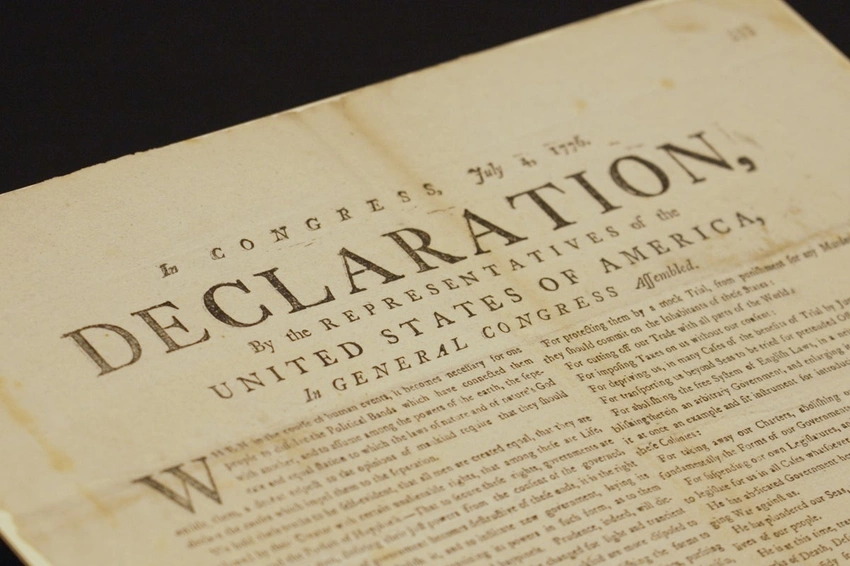
An incredible discovery by a volunteer at the UK's National Archives! A 'vanishingly rare' 1776 copy of the US Declaration of Independence, taken from an American privateer ship, is now the only one known outside the US.
A seemingly ordinary Thursday morning turned into a thrilling moment for Michael Scurr, a dedicated volunteer at the National Archives in Kew, west London. While cataloguing 18th-century Royal Navy correspondence, Scurr stumbled upon a document whose opening words immediately caught his eye: "In Congress, July 4, 1776. A declaration by the representatives of the United States of America…"
What Scurr had found was a "vanishingly rare" copy of an early printing of the US Declaration of Independence. This incredible discovery comes just weeks before the 250th anniversary of its signing. He quickly alerted his supervisor, sharing what he described as "a really thrilling moment."
This particular document is a copy of the so-called Exeter printing of the Declaration. It is one of only 11 copies known to have survived and holds the unique distinction of being the only one currently known outside the United States. According to Graham Moore, a records specialist at the National Archives, what makes this find especially remarkable is the "amazingly complete story" of how it ended up in the Royal Navy's possession. It sheds light on how news of the Declaration spread as the fledgling American nation sought to establish its independence.
The paper itself was printed in Exeter, New Hampshire, sometime between July 16 and 19, 1776. Its presence in the British archives is attributed to its capture from an American privateer ship. This artifact not only adds to the limited number of surviving copies but also provides a fascinating glimpse into the early days of American independence and the channels through which such pivotal news traveled across the Atlantic.
