The AI Anxiety Trap: Why Banning Tech Fails Students

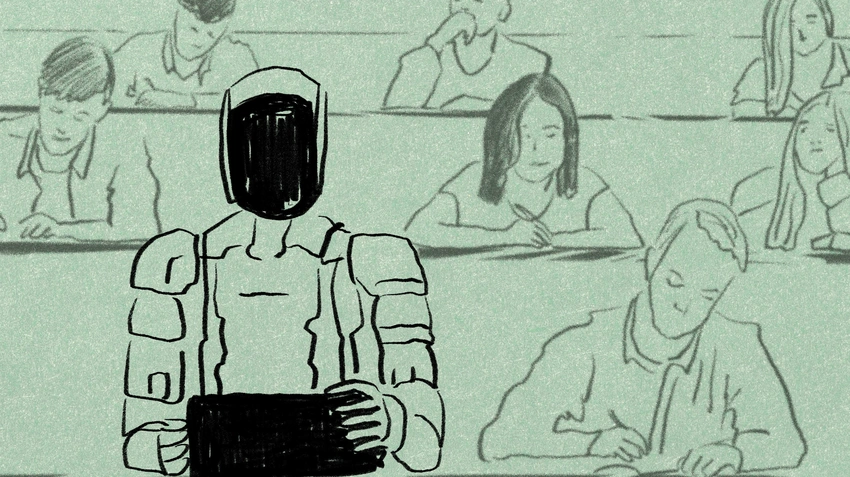
The AI Anxiety Trap: Why Banning Tech Fails Students
Students and educators are anxious about AI. Banning it on campus isn't the answer. Learn why embracing AI is crucial for preparing students for their future, not hindering it.
Don't Ban AI on Campus: Embrace the Future
Students returning to campus are feeling a palpable anxiety about AI and its profound implications for their lives after graduation. This worry isn't unfounded. New research from Stanford highlights that while a full-blown AI job apocalypse hasn't materialized, the technology has already led to a nearly 20 percent drop in employment for young workers in AI-exposed occupations like computer programming and customer service.
It's a seismic shift, and the unease is real.
The “Waiting-for-the-Test” Panic
As someone who has studied how fear affects learning, this widespread anxiety feels familiar and, importantly, curable.
Think about math anxiety. Years ago, my former graduate student Ian Lyons and I found something surprising when scanning the brains of math-anxious individuals taking a test.
It wasn't the test itself that triggered neural signals associated with threat and pain.
Instead, these signals were most acute when people were merely anticipating the test.
That's where we are with AI now. “We are all now living through AI’s waiting-for-the-math-test phase.” AI is actively reshaping classrooms, workplaces, and hiring needs, and experts predict even more turbulence. Teachers and students alike are grappling with how to effectively use AI versus exploiting it to cheat.
The Cost of Hiding From Progress
Unfortunately, too many educators and institutions are choosing to make AI simply disappear. The University of Chicago's social-science faculty, for example, have outright prohibited most technology and banned AI tools from their core classes. Similarly, the UC Berkeley School of Law has informed students they cannot use AI in conceptualizing, outlining, drafting, or revising legal work.
While law firms are increasingly embracing generative AI, many law schools remain squeamish. This avoidance strategy is short-sighted and detrimental.
Universities that hide from the technology will merely secure their irrelevance.
By banning these tools, we're not preparing students for the world they'll enter; we're actively handicapping them.
A Brighter Path Forward
Instead of fearing AI, we must integrate it thoughtfully. Our role as educators is not to shield students from disruption, but to equip them to navigate and leverage it. This means teaching critical thinking, ethical considerations, and effective AI deployment.
It means understanding where AI excels and where human ingenuity remains indispensable.
Let's move beyond the panic. The solution isn't prohibition; it's proactive engagement and intelligent integration.
Students need to learn to collaborate with AI, understand its limitations, and harness its power to innovate.
Only then can we truly prepare them to thrive in an AI-powered future.

Login to comment.
No thots yet. Be the first to share your thoughts!