Gaurav Gupta Spring Show 2026 Couture: The Divine Androgyne

Gaurav Gupta Spring Show 2026 Couture: The Divine Androgyne
Gaurav Gupta Spring Show 2026 Couture: The Divine Androgyne
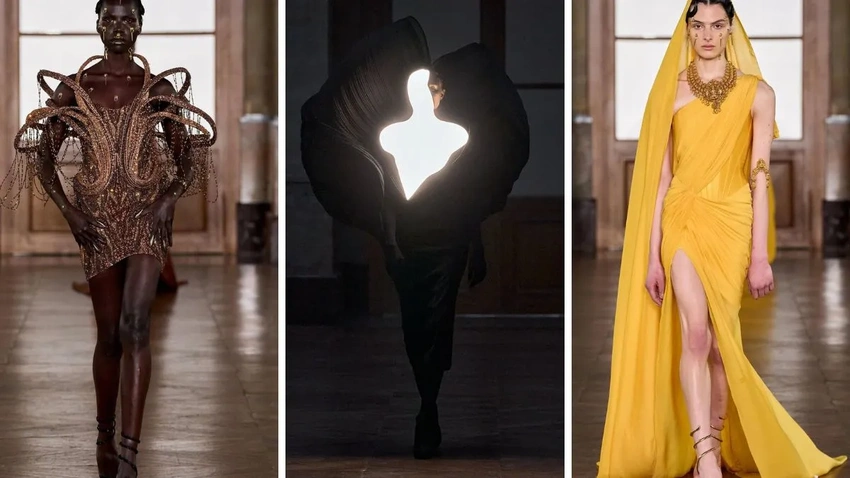
Gupta's Spring/Summer 2026 Couture, 'The Divine Androgyne', turns the Paris runway into a philosophical stage where garments meet sculpture, challenging binaries of identity and duality.
Paris Haute Couture Week is many things, and yet every season there arrives a collection that feels more like an existential overture than a fashion line. Gaurav Gupta’s Spring/Summer 2026 Couture collection, titled The Divine Androgyne, was unequivocally one such moment. Presented at Paris Couture Week, this was not merely another catwalk showcase but an intellectual performance that demanded reflection on identity, duality and the poetic body.
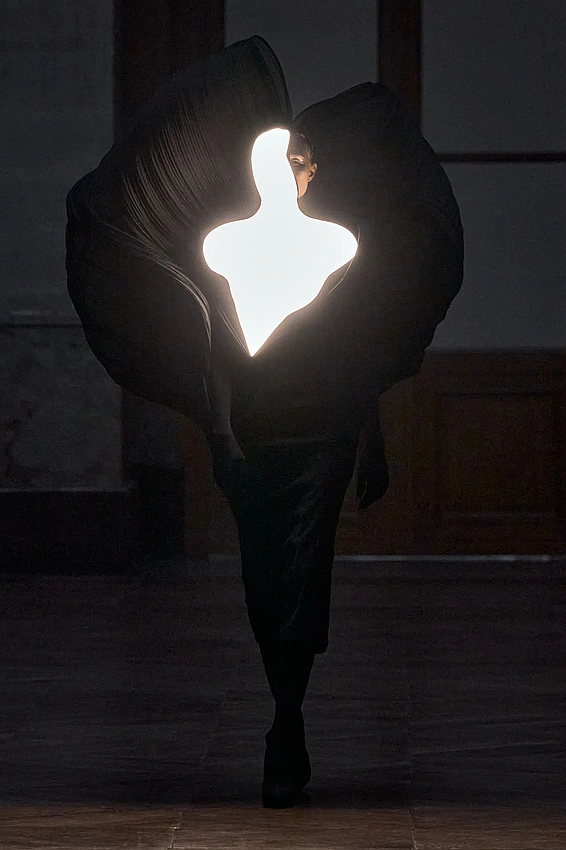
Gupta’s work has long occupied a liminal space between garment and sculpture; his pieces often read like bodily architecture, bending and folding into forms that resist simple description. The SS26 collection, however, charted a new cartography of meaning where philosophy and couture coalesce in tangible form.
The Body as Text and the Runway as Page
To watch Gupta’s show is to feel one’s own body reconsidered. At its heart, The Divine Androgyne interrogates the binaries ingrained in Western and Eastern thought alike. In Indian spiritual philosophy, which the collection draws upon, duality (masculine and feminine, body and spirit) isn’t opposition but continuity. This conceptual bedrock becomes manifest in silhouettes that entwine, mirror and resist simple categorisation.
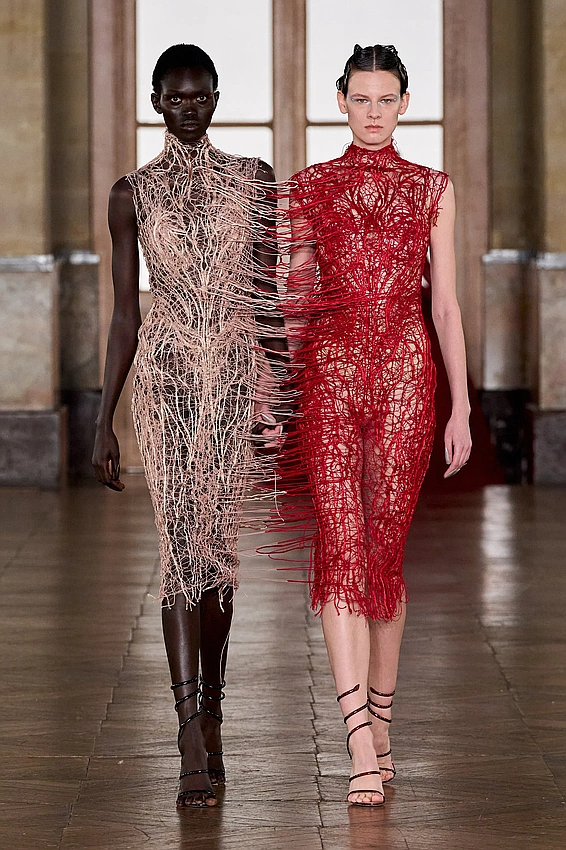
Consider the twin looks: two figures bound not merely by ribbons but by an idea of partnership that eschews hierarchy, a poetic embodiment of “two selves in one being”. The runway here becomes more than a stage; it becomes a dialogue between form and essence, where a corset is not control but inquiry. The body in Gupta’s couture is not object but subject — a site where meaning unfolds rather than sits ready-made. As Judith Butler might say about performativity, here the garment doesn’t simply clothe the body, it performs it. This is couture as epistemology rather than ornament. While Butler’s specific theories aren’t directly claimed by the show, the resonance with her ideas of embodiment is compelling.
Crafting Time and Memory Through Material
One of the most arresting elements of the SS26 collection was its treatment of time not as linear sequence but as cyclical presence. Embroidery composed of miniature clock components stitched into velvet surfaces read like a metaphorical entanglement of past, present and future. In a cultural moment obsessed with immediacy, Gupta asked us to slow our gaze and inhabit temporality as texture rather than timeline.
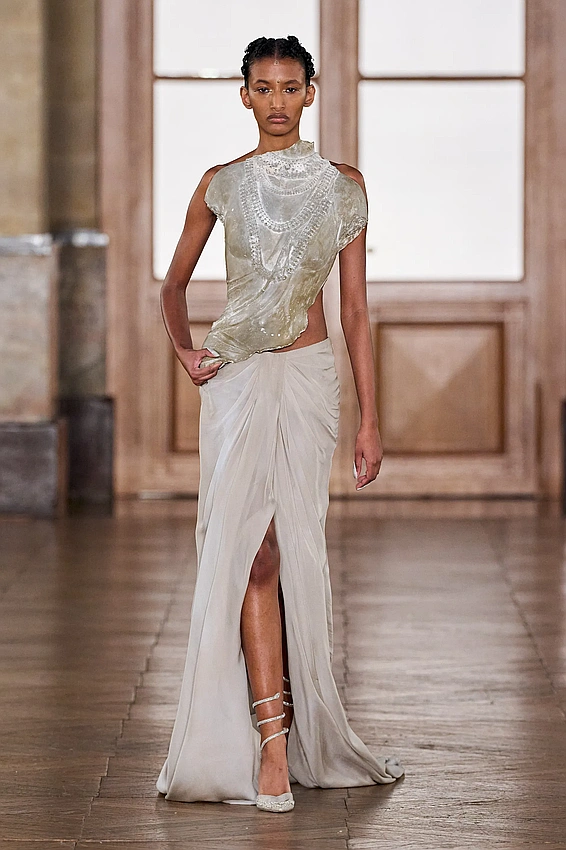
Here lies fashion’s rarely acknowledged power: its ability to materialise abstract thought. The cosmic dress, with planets and asteroids woven into its very fabric, felt less like a costume and more like a cosmogram of a visual language that charts human consciousness against a larger cosmos. Within these looks, the cosmos ceases to be mere background; it becomes active participant.
This is where the show moves from luxury spectacle into intellectual territory. Gupta’s couture questions how bodies inhabit space, time and myth.
Tradition in Dialogue With Futurism
An inevitable question for anyone steeped in cultural studies is how tradition and modernity interplay in global fashion. Gupta’s collection answered not by subordination of one to the other but by dialogue. Jasmine temple flowers embroidered into gowns recall Indian spiritual and ceremonial traditions; sari-inspired gold webbing evokes classical dress. Yet these motifs are not pastiche: they live in tension with sculptural engineering and futuristic resin surfaces, suggesting continuity rather than nostalgia.
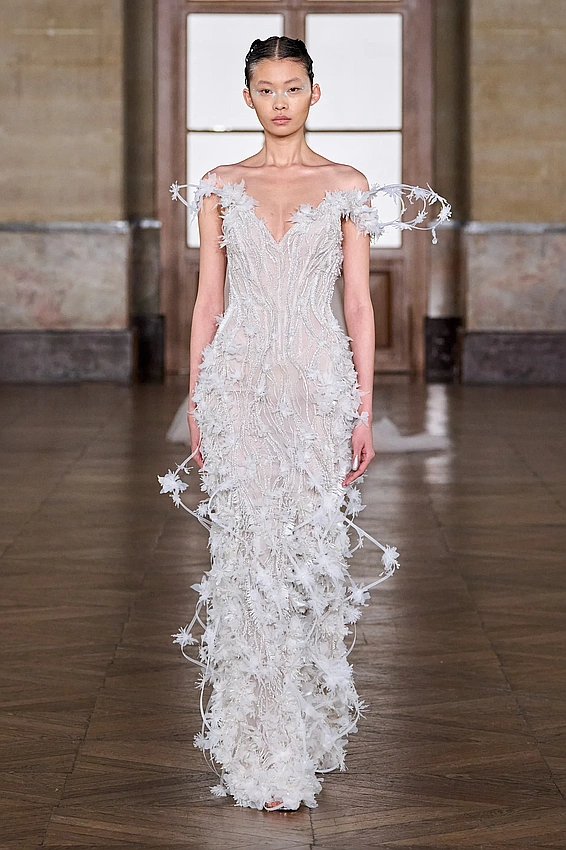
From a pop-culture vantage point, this is fascinating. In an era where Western houses often nod to “global inspiration” in superficial ways, Gupta, an Indian designer long invited to Paris Couture Week’s official calendar both belongs to and redefines this space. His work resists reduction to novelty; it insists on rootedness and universal resonance at once.
Resilience, Presence and the Politics of the Runway
Perhaps the most human moment of the show was the runway appearance of Navkirat Sodhi, Gupta’s life partner. After surviving serious injuries from a fire, her presence was an embodiment of resilience and healing. This wasn’t merely a heartwarming finale; it was a poignant philosophical coda to a collection already invested in non-duality, transformation and presence.
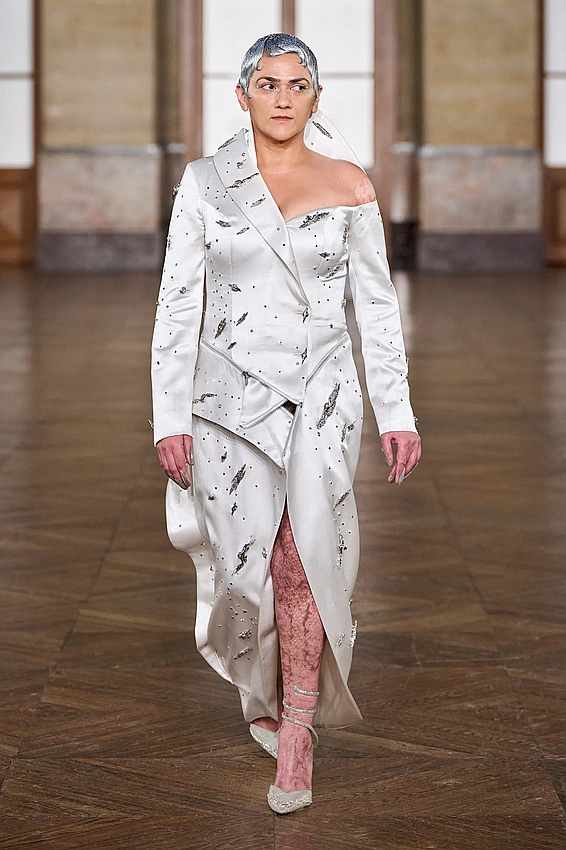
In a world attuned to spectacle but often blind to vulnerability, this choice felt daring. It became clear that couture at its best can articulate not only aesthetics but affect. It can render visible that which is often rendered invisible: the lived body, the wounded self, the narrative of recovery.
Couture as Cultural Conversation
What, then, did The Divine Androgyne achieve? Beyond sumptuous fabrics and breathtaking craft (some garments require hundreds of hours of hand embroidery), the show mapped a speculative terrain where identity, embodiment and spirituality converse. It reminded us that fashion remains a vital site of cultural thinking.
For pop-culture enthusiasts, the takeaway isn’t only the beauty of the garments, but their capacity to question and expand. And for anyone who lives between disciplines of anthropology, philosophy, performance studies, aesthetics, Gaurav Gupta’s SS26 was a rare moment where couture became thesis.
#ParisCouture #GauravGupta #DivineAndrogyne #CouturePhilosophy #RunwayArt
