The Comfort of Growing Up With Geronimo and Thea Stilton

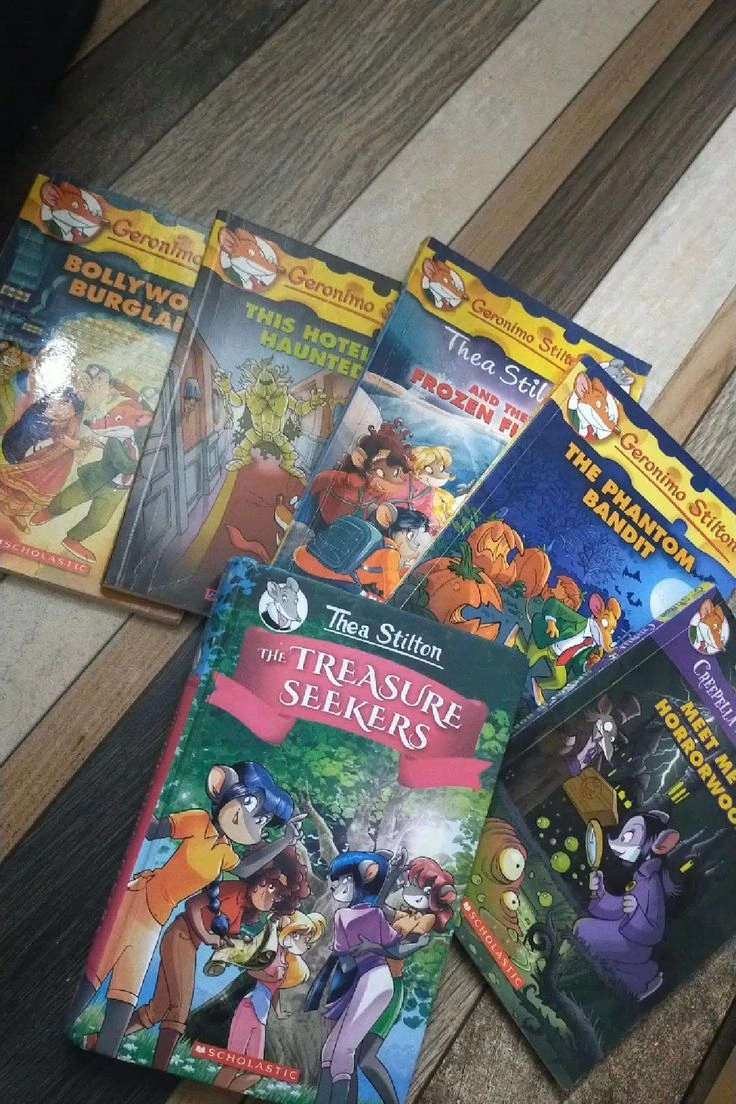
The Comfort of Growing Up With Geronimo and Thea Stilton
The Comfort of Growing Up With Geronimo and Thea Stilton
For many readers, childhood is not only remembered through real experiences but through the stories that quietly accompanied those years. Books often become part of routine: something you return to after school, before bed, during quiet afternoons, or in moments when you want to feel both entertained and safe.
Among those stories, the world of Geronimo and Thea Stilton holds a particular kind of comfort.
It is not only what the books contained, but how they felt.
The series built around Geronimo Stilton introduced readers to a character who was intelligent but anxious, brave but often reluctant, thoughtful but easily overwhelmed. He was not a traditional hero in the sense of confidence and certainty.
And that made him deeply relatable.
Children rarely feel consistently brave. They feel unsure, curious, cautious, excited, and hesitant all at once. Geronimo reflected that emotional reality. He did not enter adventures because he wanted danger: he entered them because life moved him into situations where courage became necessary.
This kind of storytelling mattered.
It showed that courage is not the absence of fear, but the willingness to continue despite it.
For young readers, this is a powerful lesson, even when it is not presented as one.
At the same time, the world around Geronimo was vibrant and imaginative. The books were not only written: they were visually designed. Different fonts, colors, playful formatting, exaggerated expressions, and small visual surprises turned reading into an experience rather than a task.
This made reading feel accessible.
It invited attention rather than demanding it.
Children who might have found traditional text-heavy books intimidating often found themselves drawn into this world more easily.
Reading became something enjoyable rather than something required.
The presence of Thea Stilton added another dimension to this comfort.
Thea represented a different kind of strength: confident, adventurous, emotionally steady, and often guiding situations forward with clarity. Alongside her, the Thea Sisters introduced friendship, teamwork, and shared problem-solving in a way that felt warm rather than overly structured.
These characters created balance.
Geronimo showed vulnerability.
Thea showed confidence.
Together, they suggested that both could exist without conflict.
This balance is important because children often learn about identity through contrast. Seeing different personalities working together teaches that there is no single “correct” way to be strong.
You can be quiet or expressive.
Careful or bold.
Thoughtful or spontaneous.
All of these versions can belong.
The comfort of knowing that inside those books, everything made sense in a way that life sometimes did not yet.
There is also nostalgia attached to the way these books introduced reading itself. For many children, they were among the first series that made reading feel enjoyable rather than difficult.
They created a positive association.
And that association often stays.
Because the first experiences of enjoyment shape how something is remembered.
Perhaps this is why growing up with Geronimo and Thea Stilton feels so comforting even in adulthood.
Not because the stories were complex, but because they were consistent.
Not because they were dramatic, but because they were gentle.
Not because they demanded attention, but because they invited it.
They existed at a time when imagination felt simple, when stories were enough, and when reading was not about achievement but about curiosity.
And in remembering them, people often remember not only the books, but the version of themselves who read them.
A version that felt smaller, quieter, more open to wonder.
A version that found adventure in pages and comfort in familiarity.
And perhaps that is the lasting impact of those stories.
They did not only tell adventures.
They became part of one.
