Mamata Challenges Bengal SIR in Supreme Court Over Voter Revisions

Mamata Challenges Bengal SIR in Supreme Court Over Voter Revisions
Mamata Banerjee challenges the Special Intensive Revision in Bengal before a CJI-led Supreme Court bench, alleging voter deletions and transparency gaps as micro-observers come into play.
West Bengal Chief Minister Mamata Banerjee appeared before a Constitution Bench led by the Chief Justice of India to challenge the Special Intensive Revision of electoral rolls in her state. She argued that the exercise has led to large-scale deletions of voters and that the Election Commission has failed to provide transparency about how and why names are added or removed. The Supreme Court, flagging concerns about unexplained discrepancies, issued notice to the Election Commission and said it would consider appointing micro-observers to monitor the process. The matter was listed for further hearing on February 9.
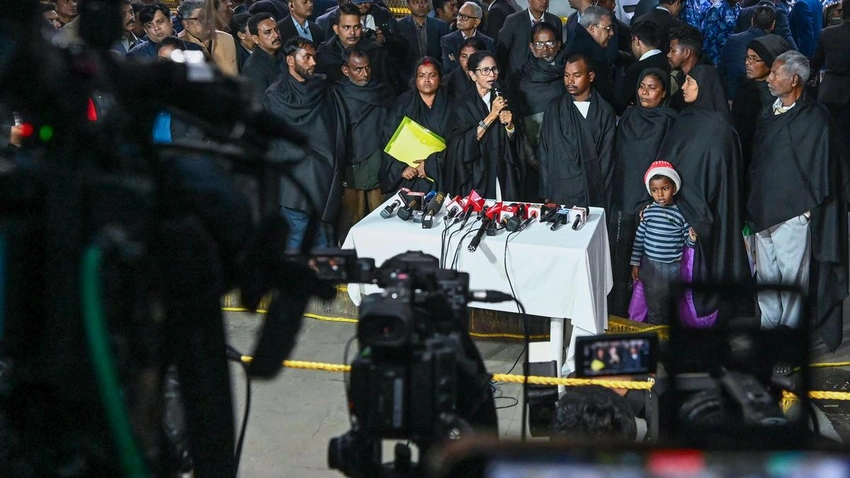
Banerjee, flanked by families described as victims of the SIR in Bengal, said those affected were not being given opportunities to present their side. After a day-long meeting with EC officials in Delhi, she voiced her objections to the timing and selective application of the revision, arguing that it risks disenfranchising voters ahead of elections. She stressed that the rights of ordinary citizens must be safeguarded and that due process cannot be sacrificed at the altar of administrative expediency.
Calling for accountability, Banerjee signaled willingness to back an impeachment move against Chief Election Commissioner Gyanesh Kumar if the opposition can build a case. The SIR has been criticised by the Trinamool Congress as flawed and designed to disenfranchise those in states governed by opposition parties, a charge that has sharpened political tempers in the run-up to elections. The party also claimed the EC’s approach was selective, raising questions about uniformity across states.
Meanwhile, party leaders have floated the impeachment idea in legislative forums, arguing that Parliament and the judiciary must ensure the integrity of the electoral process. The Supreme Court’s next hearing on February 9 will focus on the propriety of the SIR, the role of micro-observers, and whether affected residents will get a fair chance to contest entries. While the court’s intervention has limited the scope for unilateral administration, the political clash over who controls the voter list is likely to intensify in the days ahead.
Beyond Bengal, the dispute touches the broader debate over transparency and reforms in India's electoral machinery. As parties prepare for upcoming polls, this case underscores how procedural changes in voter rolls can become weapons in political battles, shaping public trust and turnout. The outcome of the hearing could redefine how micro-observers are deployed and how deletions or additions to the rolls are scrutinized, with implications that extend well beyond a single state.
