AI or Authentic? The Social Media Battle for Trust

AI or Authentic? The Social Media Battle for Trust
Is AI now just another tool, or does its use on social media demand a disclaimer? We're exploring the growing debate over 'AI-disclosed' labels and what they mean for authenticity.
The Shifting Sands of Social Media Authenticity
Artificial intelligence is everywhere, from our photo filters to the recommended posts filling our feeds. But as AI tools become increasingly sophisticated, blurring the lines between human creation and machine generation, a critical question emerges: Should social media platforms mandate 'AI-disclosed' labels? Or has AI simply become another standard tool in our digital arsenal, no more deserving of a disclaimer than a spell-checker?
 The Trust Deficit: Why Labels Matter
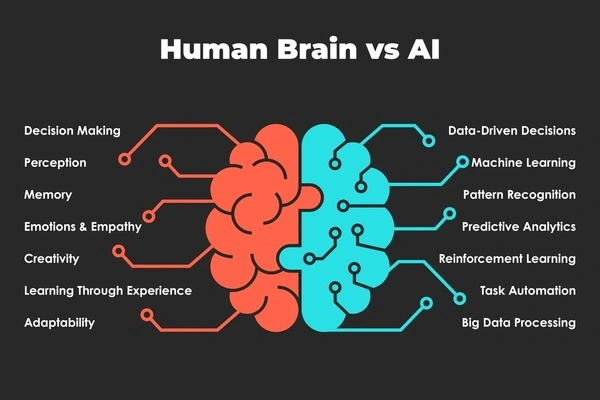
Many argue that transparency is paramount. The proliferation of deepfakes, AI-generated art, and text raises serious concerns about misinformation, manipulation, and the erosion of trust. Without clear disclosure, users might unknowingly consume content that isn't what it seems. “When you can't tell what's real, everything becomes suspect,” one digital ethics expert commented.
This ambiguity can undermine the very fabric of social interaction online, making it harder to discern genuine opinions from algorithmic echoes or outright deception.
Mandatory labeling, proponents suggest, would empower users to make informed decisions.
It provides context, allowing audiences to critically evaluate the source and intent behind a piece of content. It's about protecting integrity and maintaining a baseline of honesty in our shared digital spaces.
AI as a Creative Companion, Not a Deceiver
On the flip side, some believe that demanding an 'AI-disclosed' label is an overreaction. They argue that AI is merely an advanced tool, akin to Photoshop for images or sophisticated word processors for text. If a graphic designer uses AI to generate an initial concept, or a writer uses it for brainstorming, is that content suddenly less 'human-made'?
Isn't the final creative input and curation still undeniably human?
For artists, creators, and marketers, AI often serves as a powerful assistant, enhancing efficiency and expanding creative possibilities.
Imposing blanket disclosure requirements could be seen as an unnecessary burden, potentially stifling innovation and creating a bureaucratic nightmare. Where do you draw the line?
Is a slight AI enhancement on a photo label-worthy, but not a heavy filter? The definition of 'AI-generated' becomes incredibly complex, risking over-regulation of what could simply be a new form of digital craftsmanship.
 Navigating the Nuance: What’s the Middle Ground?
The debate isn't black and white. Perhaps the solution lies in nuance, focusing on intent rather than mere use . If AI is employed to deceive, impersonate, or spread false information, then disclosure should be mandatory, with severe penalties for non-compliance.
However, if AI is used as a generative tool for artistic expression, brainstorming, or minor enhancements, the requirement might be less stringent, or even unnecessary.
Platforms could implement graded labeling systems: for instance, distinguishing between 'AI-assisted' and 'AI-generated' content.
Educating users about AI's capabilities and limitations is also crucial. Ultimately, the goal should be to foster a digital environment where trust can flourish, without unduly restricting the immense potential of AI to enhance human creativity and communication.
 Can We Rebuild Trust in the Algorithmic Age?
The challenge for social media platforms is immense. As AI becomes seamlessly integrated into content creation workflows, the question of authenticity isn't going away.
It forces us to reconsider what 'human-made' truly means in a world where silicon and synapses collaborate.
Our platforms must evolve, not just technologically, but ethically, to ensure that the authenticity we value isn't lost in the digital tide.
The future of social media, and perhaps our shared reality, hinges on these crucial decisions.

Login to comment.
No thots yet. Be the first to share your thoughts!