Swiss Glaciers Vanish: 20% Lost in 5 Years Due to Climate Crisis!

Swiss Glaciers Vanish: 20% Lost in 5 Years Due to Climate Crisis!
Switzerland's iconic glaciers are melting at an alarming rate, with nearly 20% vanishing in just five years. Discover the shocking impact of climate change on the Alpine landscape and what scientists are saying about thi
Switzerland's magnificent glaciers, once symbols of its pristine alpine landscape, are facing an unprecedented crisis, with nearly one-fifth of their ice volume vanishing in just five years. This dramatic loss highlights the severe impact of climate change, turning once-majestic ice formations into "moonlike rock deserts," according to concerned scientists.
The latest annual monitoring report reveals that Swiss glaciers shrank by a staggering 5.5% in the first eight months of 2026 alone. This follows a scorching summer and a winter with minimal snowfall, bringing the total ice loss since 2021 to a shocking 19.4%. While just shy of the record set in 2022, the consistent and rapid decline is a grave indicator of environmental distress.
Matthias Huss, a prominent glaciologist from ETH Zürich and lead author of the report, expressed his dismay at the speed of this retreat. He recounts visiting sites that were once covered by hundreds of meters of ice just a generation ago, now barren rock landscapes with scattered remnants of melting ice. He emphasized that many people don't fully grasp the urgency of the situation.
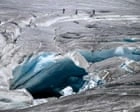
A worrying new phenomenon observed by scientists is the internal collapse of glaciers. Instead of just retreating from surface heat, glaciers are developing "huge holes like cheese" from internal streams, causing their roofs to collapse.
This process, Huss explains, tears the glaciers apart, accelerating their disintegration even further.
Europe is experiencing warming at twice the global average, largely due to the heat-trapping effects of fossil fuel pollution and environmental degradation. Alpine regions, in particular, are bearing the brunt of these rapid changes.
MeteoSwiss reported that the summer half-year from April to September was the hottest and driest since records began in 1864, a period during which humanity has released 1.8 trillion tons of carbon dioxide, heating the planet by approximately 1.4 degrees Celsius.
The impact is starkly visible. The former Plattalvafirn, or Griess glacier, which Huss studied during his PhD, has lost an astounding 99% of its area in just 20 years. He notes the stark contrast to monitoring in the 1950s when melt rates were "normal." Now, scientists are witnessing a "complete explosion of these melt rates," leading to glaciers quite literally falling apart.
The disappearance of these crucial ice masses not only alters breathtaking landscapes but also poses long-term threats to water supplies and ecosystems.
