Ayodhya Temple Control: VHP Leader's Shocking Claims Against Nripendra Misra

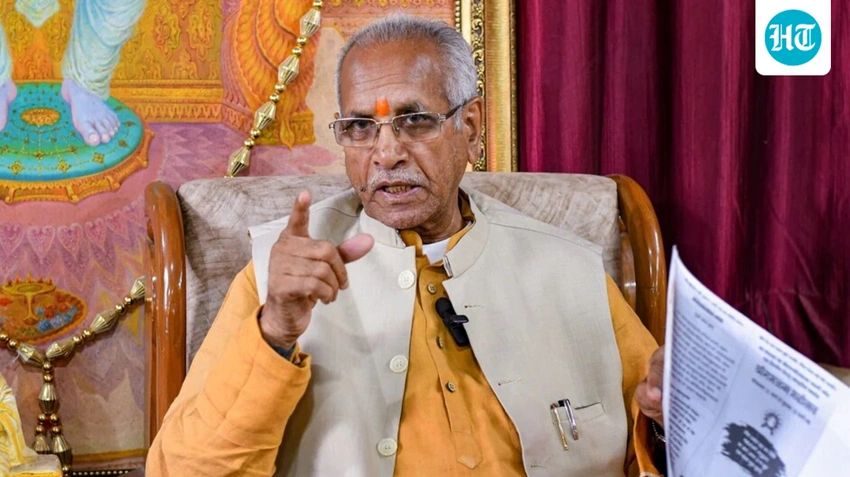
Ayodhya Temple Control: VHP Leader's Shocking Claims Against Nripendra Misra
VHP's Champat Rai alleges Nripendra Misra held "near-complete control" over Ayodhya Ram Temple construction, sparking a political storm. Misra denies controversy.
Former Shri Ram Janmabhoomi Teerth Kshetra Trust (SRJTKT) general secretary and senior Vishwa Hindu Parishad (VHP) leader, Champat Rai, has ignited a significant controversy with an article released on August 18. In his nine-page Hindi piece, shared within VHP media circles, Rai accused Nripendra Misra, the chairman of the temple construction committee, of exercising "near-complete control" over the Ram temple's construction.
Rai claimed that Misra "considered himself the principal authority on all decisions" and that no work on the temple was undertaken without his explicit approval.
According to Rai's article, any decisions made without Misra's involvement were outright rejected.
He further detailed how Misra brought several individuals of his choosing into the temple construction committee to assist him.
Rai noted that one such member visited Ayodhya only once or twice over six years, while another was consulted primarily on security matters.
However, he also mentioned Shri Anoop Mittal, former chairman of NBCC, who regularly attended the committee meetings, held generally monthly or bi-weekly.
Despite his criticisms regarding Misra's perceived singular authority, Rai also acknowledged Misra's crucial role in overcoming various hurdles during the construction process. This nuanced perspective from Rai, a prominent figure within the VHP, adds layers to the ongoing discussion.
In response to the allegations, Nripendra Misra, chairman of the Ram Temple construction committee, dismissed the claims, stating there was "nothing negative or controversial" in Champat Rai's article. This indicates a difference in interpretation or an attempt to downplay the emerging friction.
The controversy has also drawn political commentary.
The Congress party weighed in, suggesting that the dispute was not merely a clash between Rai and Misra but rather a broader power struggle, framing it as "Modi vs. Bhagwat." This perspective elevates the internal disagreement within the temple trust to a higher political echelon.
The background to this construction began after the Supreme Court's verdict on the Ram Janmabhoomi dispute, leading the Union government to constitute the SRJTKT with 15 trustees, with Misra subsequently appointed to oversee construction.
