Navigating the Future: All About INSV Kaundinya’s First Engineless Voyage

Navigating the Future: All About INSV Kaundinya’s First Engineless Voyage
Navigating the Future: All About INSV Kaundinya’s First Engineless Voyage
India's INSV Kaundinya, built with traditional stitched-plank methods, sets sail from Porbandar to Muscat. Engine-free and wind-powered, the voyage retraces ancient Indian Ocean routes and maritime heritage.
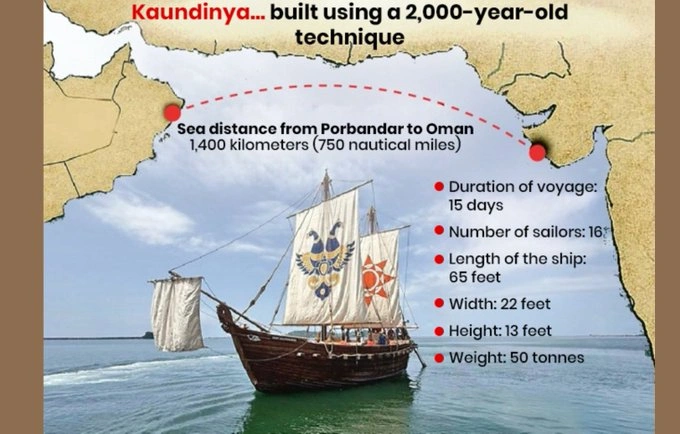
On Monday, the Indian Navy's stitched sailing ship INSV Kaundinya sets out on her first international journey, sailing from Porbandar, Gujarat, to Muscat, Oman. To test traditional shipbuilding methods that predate modern navigation by more than a millennium, the voyage symbolically retraces ancient maritime routes that once connected India with West Asia and the wider Indian Ocean world.
With no engine, no metal fasteners, and no contemporary propulsion systems, the journey represents a unique operational deployment of a vessel constructed entirely using antiquated stitched-plank technology. The ship will only use wind and sails, simulating the circumstances that Indian sailors used to face when making long-distance oceanic expeditions.
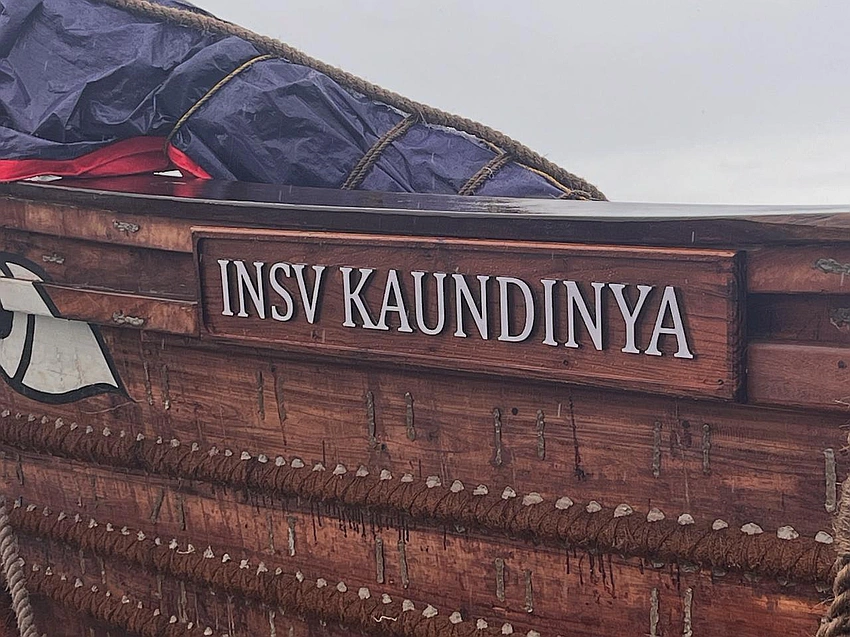
The vessel is named after Kaundinya, a first-century Indian sailor mentioned in Southeast Asian and Chinese records. These accounts say Kaundinya sailed to the Mekong Delta, married Queen Soma, and helped establish the Kingdom of Funan in what is now Cambodia.
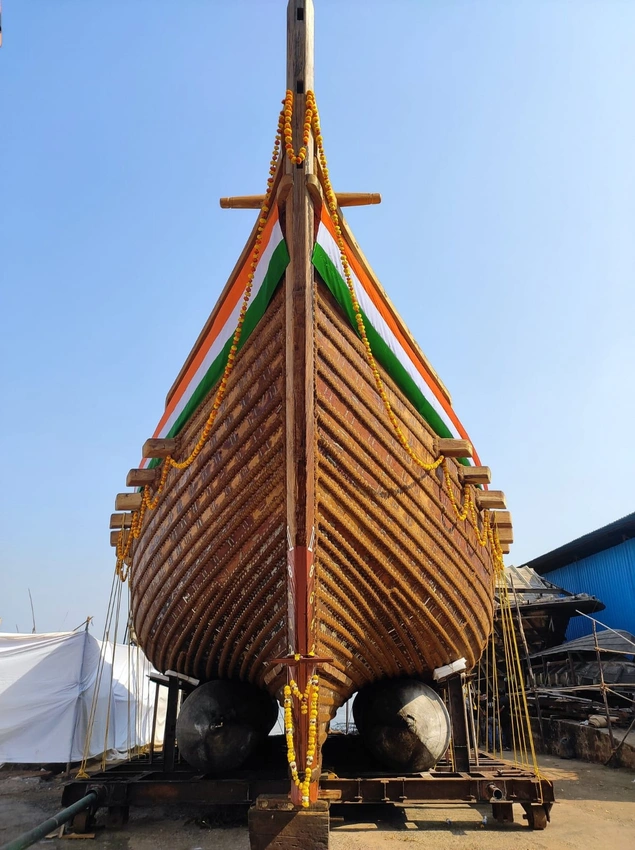
The INSV Kaundinya is a non-combat sailing vessel built using a method of shipbuilding that is thought to have originated at least in the fifth century CE. In contrast to contemporary naval platforms, the vessel's wooden planks are sewn together using coir rope made from coconut fiber and sealed with cotton, oils, and natural resins to guarantee seaworthiness.
Because of the hull's flexibility due to its stitched construction, the ship can absorb wave energy instead of rigidly resisting it. For ancient sailors to navigate the Arabian Sea, the Bay of Bengal, and other choppy waters, such adaptability was essential. The Ajanta cave paintings, descriptions in ancient Indian texts, and testimonies from foreign travelers all served as inspiration for the vessel's design. The Indian Navy recreated the design using scientific validation and visual interpretation since there were no surviving blueprints.
In order to make sure the ship could safely travel across open waters despite its antiquated design, hydrodynamic testing and stability studies were carried out with the assistance of academic institutions, including IIT Madras. With funding from the Ministry of Culture, the project was started in July 2023 under a tripartite memorandum of understanding between the Indian Navy, Hodi Innovations, and the Ministry of Culture. The vessel was completely hand-stitched by traditional Keralan artisans under the direction of master shipwright Babu Sankaran.
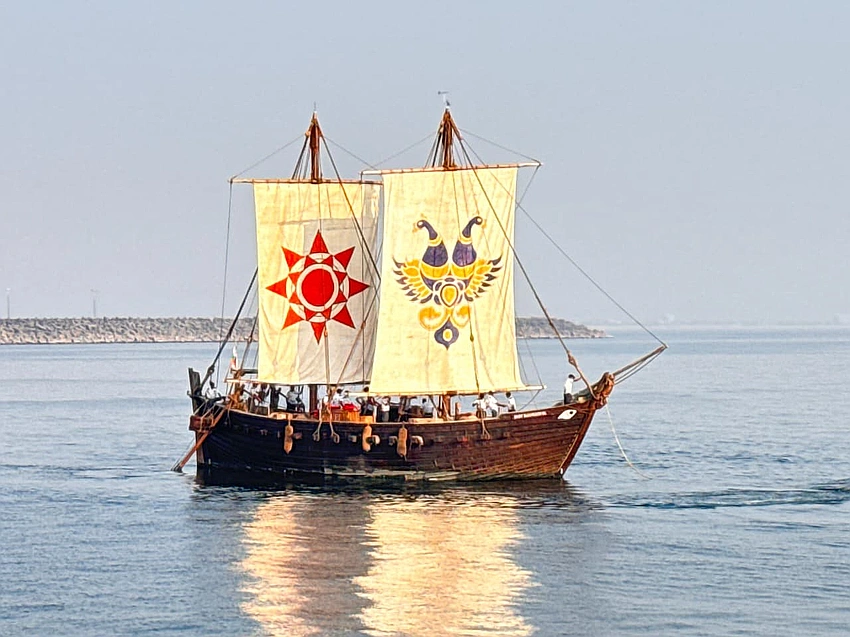
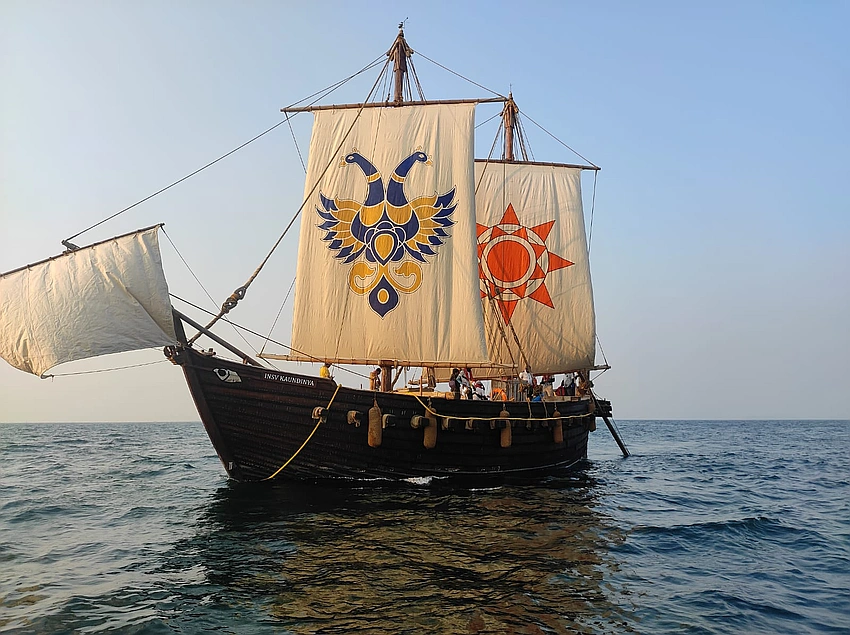
An important step in the revival of indigenous maritime knowledge systems was taken when the ship was launched in February 2025 and formally inducted into the Indian Navy in May at Karwar, Karnataka. INSV Kaundinya features a number of themes related to India's maritime and cultural history. These include sun motifs on the sails, a mythical lion figure from Simha Yali on the bow, a Harappan-style stone anchor on the deck, and the Gandabherunda, the two-headed eagle of the Kadamba dynasty.
Each symbol represents various eras of India's maritime history as well as its long history of international trade and cross-cultural interaction.
The Porbandar to Muscat route used to be an important path for trade and cultural exchange. Indian merchants and sailors traveled these waters to move spices, textiles, and ideas throughout West Asia, Africa, and Southeast Asia. By sailing this route again, INSV Kaundinya aims to show the skill of ancient Indian shipbuilding and navigation. It also highlights India’s enduring identity as a maritime civilization.
['#INSVKaundinya', '#StitchedPlank', '#AncientSeafaring', '#Porbandar', '#MuscatVoyage']
