India's Drones Move from Surveillance to Battlefield Roles

India's Drones Move from Surveillance to Battlefield Roles
India accelerates drone warfare, turning Nagastra and Sheshnaag into combat assets while racing to scale production for battlefield dominance.
Across the globe, warfare is shifting toward swarms of cheap, intelligent drones that can linger over targets and strike with precision. In this new era, the decisive edge increasingly comes from endurance, production capacity, and the ability to scale, not just from flashy hardware. Drones that cost tens of thousands of dollars can threaten assets worth far more, redefining how battles are fought and won.
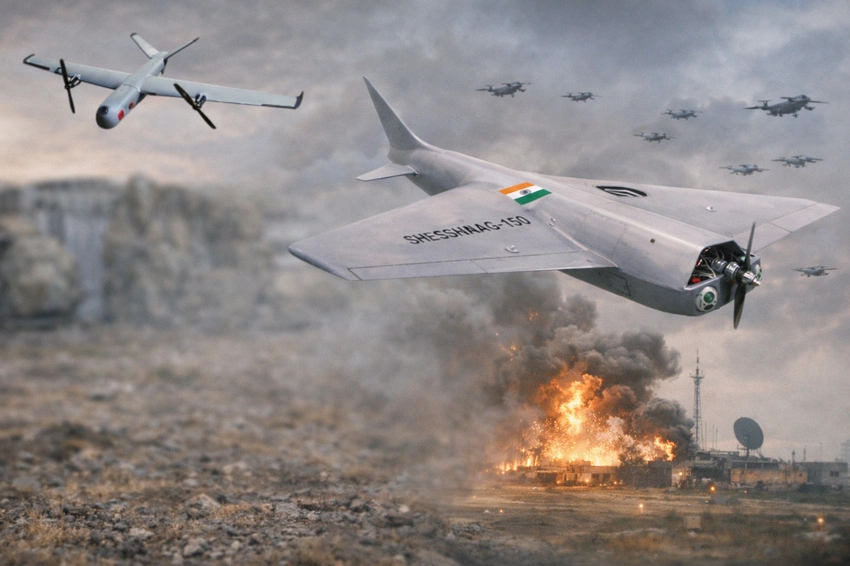
In India, this shift is not merely theoretical. Operation Sindoor in May 2025 marked a turning point, with drones moving from surveillance tools to central actors in planning, execution, and battlefield outcomes. The demonstration showcased capability but also highlighted a persistent challenge: mass production at scale. While India designs advanced platforms like Nagastra and Sheshnaag to address evolving threats, the country still lags behind global powers when it comes to producing them in large numbers.
The broader conflict environment underlines why scale matters. In the Russia-Ukraine war and the US-Iran standoff, loitering munitions—often described as kamikaze drones—have emerged as a cost-effective, high-value option. They blend persistence with lethal precision, and their affordability means air defenses and traditional platforms must contend with racks of affordable drones that can saturate defenses. Against this backdrop, India’s drones are part of a wider debate about how to balance capability with mass production.
For India, the path forward is clear but challenging: bridge the gap to mass production, build a robust domestic drone ecosystem, and ensure that Nagastra and Sheshnaag can operate at scale across varied theaters. This requires not just technology, but a sustained industrial push, policy support, and end-to-end manufacturing capacity. If India can translate prototypes into reliable, high-volume outputs, it could bolster its battlefield doctrine and contribute to a broader shift toward indigenous defence manufacturing under strategic programs.
Ultimately, the coming years will test India’s ability to move from demonstration to deployment, from design boards to production lines, and from paper tactics to sustained, real-world use. The quest is not only to design advanced drones, but to manufacture them at the scale necessary to redefine future warfare.
