Tensions High: UK Jets Intercept Russian Aircraft Near Flagship Carrier

Tensions High: UK Jets Intercept Russian Aircraft Near Flagship Carrier
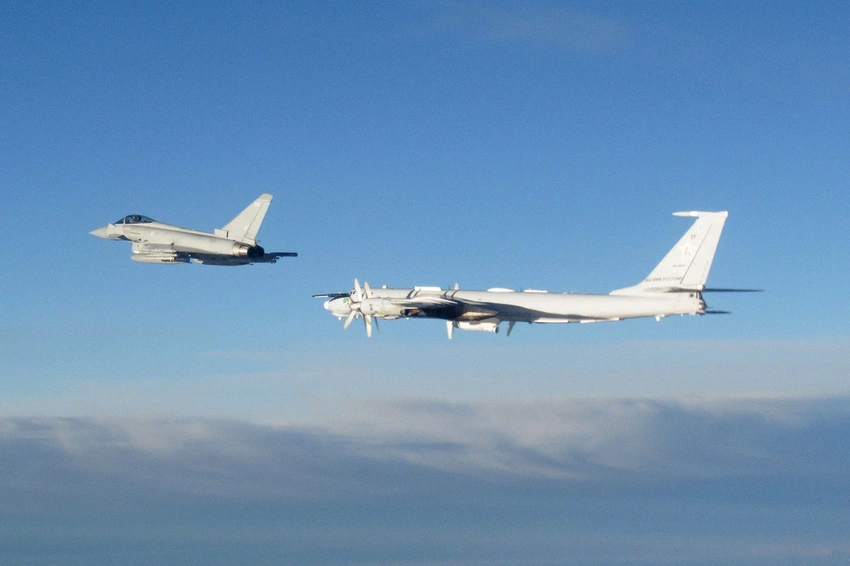
RAF F-35 jets were scrambled to intercept a Russian "Bear F" plane that repeatedly approached HMS Prince of Wales in the Arctic, dropping tracking devices. The MoD deemed the activity "unsafe and unprofessional."
British fighter jets were scrambled recently to intercept a Russian plane that ventured "unnecessarily close" to Britain's flagship aircraft carrier, HMS Prince of Wales, in the Arctic Circle. The Ministry of Defence (MoD) confirmed the operation, stating that a Russian 'Bear F' aircraft "repeatedly approached" the carrier before deploying a "large number" of tracking devices into the water nearby.
The MoD strongly criticized the Russian maritime patrol aircraft's actions, labeling them as "unsafe and unprofessional." Two RAF F-35 jets were dispatched to intercept and escort the Russian plane until it departed the area. An MoD spokesperson elaborated, "While operating in the Norwegian Sea on Operation Firecrest, the UK's carrier strike group was repeatedly approached by a Russian 'Bear-F' maritime patrol aircraft."
They added, "The Bear-F passed at low altitude and unnecessarily close to HMS Prince of Wales and dropped a large number of sonobuoys in close proximity to the carrier. This activity was unsafe and unprofessional. The Russian aircraft was intercepted and escorted by two UK F-35 jets from HMS Prince of Wales until it left the area."
This is not an isolated incident of sonobuoys being dropped near a UK carrier strike group. However, officials noted that this particular instance involved a remarkably large quantity of devices, deployed exceptionally close to the vessel. The 'Bear-F' plane, which serves as a reconnaissance or bomber aircraft, is believed to have released tens of these sonobuoys.
Sonobuoys are essential tools for undersea surveillance, designed to detect, track, and deter submarines and other underwater vessels. HMS Prince of Wales stands as the Royal Navy's largest warship and has been leading its carrier strike group in operations across the North Atlantic and High North since its launch earlier this year. The group, currently deployed off Iceland under NATO command, has 1,500 British personnel on board, underscoring the strategic importance of its presence in the region.
