Delhi’s Last Green Shield: Are We About to Bulldoze It?

Delhi’s Last Green Shield: Are We About to Bulldoze It?
The Supreme Court’s new 100‑meter rule exposes 90% of the Aravallis to mining. Is this the end for Delhi’s clean air?
The Supreme Court’s new 100‑meter rule sounds scientific, but is it a death sentence for Delhi’s lungs? As activists warn, the Aravallis aren’t just hills—they’re the NCR’s natural air purifier. Ignoring their ecological role could mean trading clean air for short‑term profit.
The "Scientific" Loophole
The Supreme Court recently accepted a new definition for the Aravalli hills. It states that only landforms rising 100 meters above local ground level qualify for protection. This sounds reasonable on paper. In reality, it is a logistical nightmare for conservation. Most of the Aravalli range in Haryana and Rajasthan consists of low‑lying hills and ridges. These formations often fall below the arbitrary 100‑meter threshold. By this definition, they are no longer "hills" worth saving. They become open real estate for mining and construction. Legal experts argue this removes the shield from nearly 90% of the range. The LiveLaw report on the ruling 🔗 highlights that this technicality creates a massive loophole for developers.
A "Death Warrant" for Delhi
Activists are calling this ruling a "death warrant" for the National Capital Region. Groups like People for Aravallis warn that we are dismantling our only barrier against the Thar Desert. The Aravallis physically block dust storms from rolling into Delhi. They also act as a critical groundwater recharge zone for a thirsty city. Without these low‑lying hills, the desert will expand eastward. Dust pollution in Delhi will skyrocket beyond current hazardous levels. The cooling effect of the forest cover will vanish. Down To Earth 🔗 notes that these "insignificant" small hills are actually biodiversity hotspots. They host leopards, hyenas, and hundreds of bird species that will lose their homes.
Profit Over Survival?
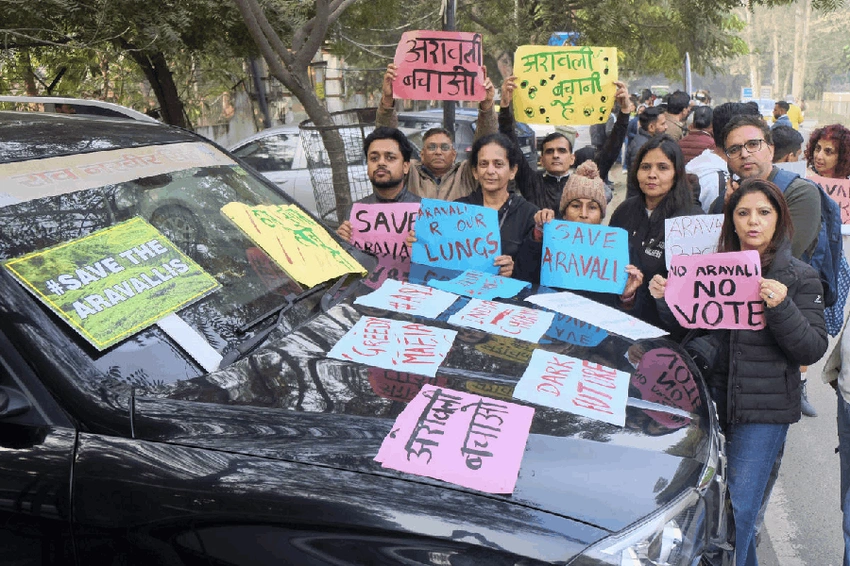
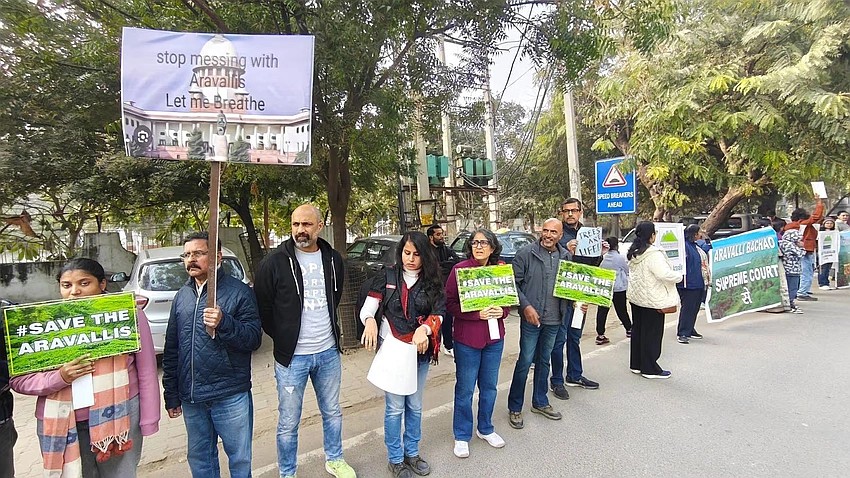
The push for this redefinition comes amid heavy lobbying for mining rights. Construction material is in high demand across the NCR. The stone from these hills feeds the real estate boom. But the cost of this stone is the region's water security. Mining destroys the aquifers that millions depend on. Once these hills are flattened, they are gone forever. You cannot rebuild a 670-million-year-old mountain range. Recent protests in Gurugram and Udaipur highlight the public anger. Citizens fear that "sustainable mining" is just a cover for unchecked exploitation. A report by Hindustan Times 🔗 covers the growing unrest among locals who feel their future is being sold off.
We are standing at a precipice. The choice is between cheaper construction materials and breathable air. This isn't just about saving trees; it is about saving a city’s habitability. If the bulldozers roll in, Delhi loses its last line of defense. The dust storms will get worse. The water table will drop further. The "Green Shield" will turn into a dust bowl. We must ask if a 100‑meter technicality is worth the collapse of an entire ecosystem.
#AravalliRule #AravallisProtection #DelhiAirQuality #SCJudgement #CleanAirNow
